



Search Results for: organisations

Crown Estate in £320m joint venture to redevelop area around Regent Street

St James Market architect's impression-2

The Crown Estate, which manages the Queen’s property portfolio has announced a joint 50/50 – £320 million venture with Canadian real estate company, Oxford Properties. The Crown Estate, which will retain the freehold and take the lead role in the development says the St James’s scheme will provide 210,000 ft2 of prime office and 50,000 ft2 of flagship retail and restaurant space in two blocks located between London’s Regent Street and Haymarket. The project forms part of the Crown Estate’s ten-year investment strategy for St James’s and will transform a run-down back street service yard and taxi ‘rat-run’ with: “a fantastic new amenity for St James’s, revitalising half and acre of public realm and creating a new 10,000 ft2 pedestrian square for world-class business, shopping and dining.” (more…)
UK employee engagement and productivity lags behind most of world

UK employee engagement and productivity lags behind most of world

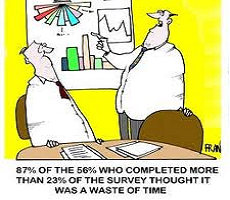
You might regard the concept of employee engagement as just a new way to describe industrial relations, but there is a growing body of research that UK employers need to do more to keep their employees on side. According to the latest missive, low employee engagement and lagging productivity is the greatest employment challenge facing UK business in 2013. Global research by Right Management  found that this was the key concern for one in three (31 per cent ) employers compared to a global average of just one in five (21 per cent ) HR professionals, suggesting that after years of economic uncertainty and doing ‘more with less’, the UK workforce has reached a productivity impasse. (more…)

Flexible working going into reverse in parts of UK public sector

Broken elastic bandA briefing from the Society of IT Management claims that while nearly all UK public sector organisations have adopted some form of flexible working, the practice remains far from universal and is going into reverse in some departments. The report found that  around  97 percent  of UK public sector organisations have now  adopted the practice in the form of home working, desk sharing and mobile working in four of the public sector functions surveyed. While while there have been large increases in adoption the adoption of flexible working in the revenues and benefits functions and some in education, four other services show a significant decline with others appearing to be static.

(more…)

Flexible working boosts employee satisfaction and lowers business costs

Working while commuting is on the increase survey finds

May 2013 played host to Work Wise Week, an initiative from Work Wise UK that aimed to promote and encourage smarter working practices to the benefit of businesses and employees. Cultural, economic and social changes are affecting attitudes to how we balance work and personal lives, and increasingly, mobility and technology is shifting away the need for the traditional 9-5 work patterns, replacing it with more flexible working practices. There are many benefits of flexible working and, as such, we are seeing more businesses starting to understand that forcing employees to work in an office does not guarantee productivity. (more…)

Survey into UK culture of overwork highlights need for better worklife balance

UK culture of overwork highlights need for better worklife balance

A new study is published today which reveals how the UK’s long hour-culture is damaging family life, causing high stress levels, cutting time spent with loved ones and creating an inability to switch off from work. A survey of more than 1,000 working parents throughout the UK, commissioned by health cash plan provider Medicash, found that 83 per cent of working parents feel guilty about the amount of time they spend working, with 50 per cent saying it has a negative impact on relationships with their children, and almost half (45.9%), saying it caused problems in their relationship with their partner and caused them to neglect friends (25%).

(more…)

RICS developing BIM accreditation standard to advance uptake

RICS accreditation standard being developed to advance BIM

Alan Muse, Director of Built Environment Professional Groups (RICS) is calling for a cultural shift to ensure that Building Information Modelling (BIM) is more widely adopted. This follows the results of a survey taken at the RICS National BIM conference which revealed that despite its overwhelming recognition within the built environment nearly half of respondents were still not using the process, with 46 per cent identifying minimal client demand as a major factor preventing their implementation of BIM. Comments Muse: “Quite simply, some clients are not yet recognising the efficiencies that BIM can bring”, which is the reason why RICs is now developing a BIM accreditation standard.

(more…)

Will the Great Trade Association Merger have any impact on office design?

Ceci n'est pas un bureauAnybody who has been working in and around the facilities management sector for any length of time will know that the FM profession/discipline (delete as appropriate) regularly undergoes protracted periods of existential angst about its role. It strikes me however that this is actually quite an easy question to deal with because the answer is the same as it is for similarly amorphous professions such as marketing. It all seems to depend on who you are and what you are trying to do. That’s the twist. The average facilities manager, like the Urban Spaceman, doesn’t exist. I might think that but it won’t stop the associations and institutes currently working together to establish a new super-body for FM in the UK having to continue the debate.

(more…)

How ingrained assumptions about the workplace are eroding

Ad agency RKCR © Jefferson Smith

Ad agency RKCR © Jefferson Smith

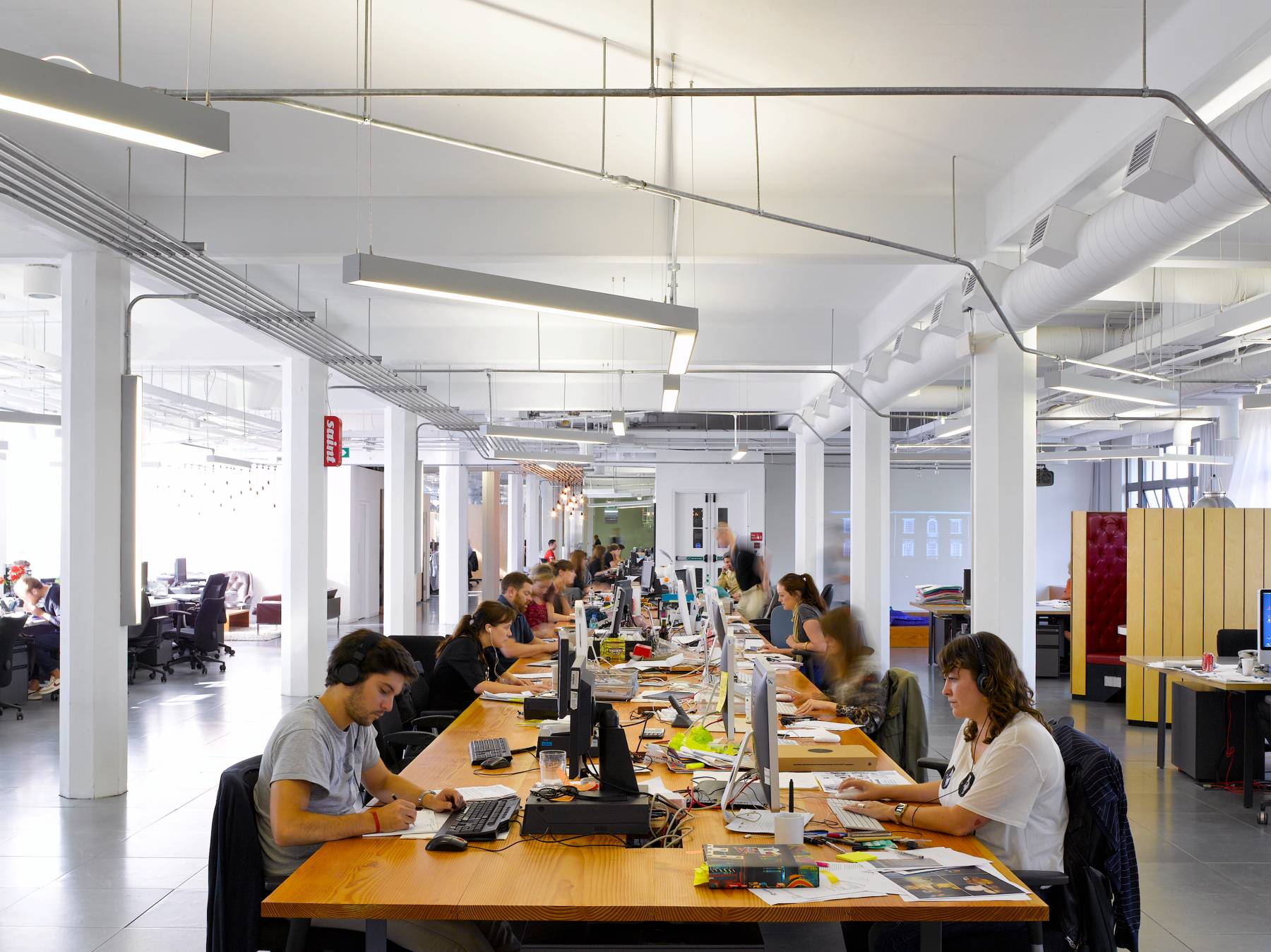
The first day at a new job used to mean getting the answer to that all important question: “so which is my office?”  In today’s mostly open plan environments, the same psychological attachment has been transferred to the desk – ‘my’ desk. However the current trend for flexible approaches to where people work means that even the concept of having one’s own desk is now under attack. So how much does having your own desk matter to the UK office workforce these days? We have been asking employees how they feel about having their own desk. The results seem to be that more than half, on average 56% (of a total of 2,653 employees surveyed at 5 recent client projects), think that it is ‘very important’ and a further 25% think it is ‘quite important’.

(more…)

Green Office Week kicks off with a focus on individual behaviour

elephant-in-the-roomThis week is Green Office Week. Obviously it’s corporate sponsored, self-designated and arbitrarily timed with all the ways that leaves it open to criticism. It also offers pretty standard advice for the most part and many people and organisations will be well aware of it.  What is interesting is that so much of the advice is about individual behaviour, across the daily themed topics. In some ways this is a welcome reminder that the solution to environmental issues is as much about personal behaviour and management as it is  technology. The answer to needlessly burning lights should be somebody remembering to turn them off, rather than a movement sensor. Or it should be both. In practice, people don’t meet their own stated commitments to the environment and there are some pretty good reasons for this.

(more…)

JSA launches latest league table of European office furniture companies

EU FlagAs the world gets smaller and the communications revolution continues apace, one relatively unnoticed casualty is the design individuality of offices. Time was when you could walk into an office and the furniture would tell you whether you were in Paris, Frankfurt, New York, Milan, Moscow or London. The colours, shapes, materials, construction and image of the furniture were all very local, almost parochial. Who could fail to be struck by the muddy oranges and greens of a French office? Or the inevitable mahogany or teak real wood veneers used in the UK? The panels, worksurfaces and storage units which made up US cubicles were rarely seen outside North America and the massive, dark wood desks and cabinets in Central European deliberately overawed visitors and staff alike.

(more…)

The biggest challenge is building flexibility into an office design

Flexible pencilThe design of offices and the furniture that fills them matters because of what they tell us about how we work, how organisations function and even what is happening in the economy. If you want to know what’s going on, take a look at the places we work and the things with which we surround ourselves and how they change over time. Because the way we work changes so quickly, buildings need to have flexibility built into them so that they meet our needs today but anticipate what we will need tomorrow.In his book How Buildings Learn, Stewart Brand outlines the process whereby buildings evolve over time to meet the changing needs of their occupants.

(more…)

Over 90 percent of UK staff afflicted with bad case of presenteeism

Clocking inWe’ve always known that many of us have a tendency to come into work when ill even though we would  be better off staying at home, but the problem of people turfing up in the office when they should be in bed or a GP’s queue is worsening according to a new report from insurance company Canada Life. Knocking into a cocked hat all the various surveys which detail the UK’s ‘working days lost’ due to stress?snow/The World Cup/hangovers and idleness, the survey claims that as many as 93 per cent of UK employees have hauled their diseased carcass into the workplace when they really shouldn’t, threatening their own health and the wellbeing of those around them.

(more…)