September 15, 2026
The new issue of Works magazine continues to explore the latest thinking on people, places and technology
The new issue of Works magazine is now available in its free, digital edition. As always, this new issue takes a wide-ranging look at the ideas, people, products and projects reshaping workplace design, from the growing convergence of home and office to adaptive reuse, sustainability, artificial intelligence and the continuing evolution of the furniture industry. Issue 21 arrives at a particularly interesting moment for both the workplace and the magazine itself. Rapid technological change, the proliferation of AI-generated content and the continuing repercussions of the pandemic are creating opportunities for publications and workplaces that emphasise the human, physical and connected.
The new issue puts those ideas into practice with a series of major case studies examining how organisations are rethinking the places in which people come together.
In East London, we visit Studio McW’s new headquarters at Printing House Yard, where the architectural practice has applied lessons learned from residential design to its own workplace. Rather than simply making an office look like a home, the project explores how light, materials, comfort, routine and psychological ease can create somewhere people genuinely want to occupy.
We then head to Turin for a case study of Reply House, the headquarters created for technology consultancy Reply inside the historic, former De Sonnaz Barracks in the city. The project by ACPV ARCHITECTS explores one of the most important questions in sustainable design: how existing buildings can be adapted for contemporary work without erasing the qualities that made them worth retaining in the first place. Historic features coexist with collaborative environments and modern workplace technology.
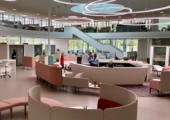
Back on home turf in Leeds, the focus switches to DLA Piper’s new workplace at City Square House. Bringing teams previously split between two locations into a single office, the project reflects changes both in the legal profession and in Leeds itself. The result moves beyond the traditional law-firm formula to offer collaborative space, hospitality, wellbeing facilities and a variety of settings designed for hybrid working.
One of the issue’s most distinctive voices belongs to Giesela Bailey, the Managing Director of Flokk UK & Ireland. Her unconventional journey from a youthful ambition to become a farmer, through food and fashion to furniture gives her an outsider’s perspective on an industry she believes needs to challenge some of its established habits. Giesela talks about collaboration between manufacturers, bringing talent into the sector from different backgrounds and the changing role of salespeople from product specialists to trusted advisers. She also argues that sustainability is increasingly an expectation rather than a differentiating sales claim.
Fresh thinking
There is plenty of new thinking on products too. The Showroom section brings together launches and developments from across the market, reflecting an industry increasingly preoccupied with adaptability, comfort, circularity, acoustics and more human-centred workplaces.
The international outlook continues with a preview of ORGATEC, returning to Cologne in October. We consider how the biennial event has evolved from a conventional furniture fair into a wider forum for debating work culture, technology, sustainability and organisational change. The 2026 edition will include the Wherever Whenever – Work Culture Festival, with themes spanning Empowered Experience, Connected Cultures and Radical Impact.
There is also a closer look at the newly launched Sustainability Works magazine. Edited by industry stalwart Joanna Knight of the Sustainable Design Collective, the new publication tackles circularity, reuse, embodied carbon, product transparency, materials and social value, with its first issue including features on Digital Product Passports and a reuse-first case study of Grant Thornton UK’s London headquarters.
Elsewhere, we ask why workplace ideas originally conceived to embrace complexity so often end up reverting to hierarchy and order, while the Projects section showcases a range of workplaces designed to make the office a compelling choice in an era when people can increasingly work anywhere.
The Viewfinder pages take an international perspective with projects from Nigeria and China, while in a comment piece Stephanie Fitzgerald examines Gen Z’s increasingly vocal unease about AI. The issue also rounds up forthcoming events and opportunities for the workplace community to meet, exchange ideas and see the latest thinking in person.
Finally, the Out of Office page tackles one of the most talked about question of the year: amid the increasingly heated claims being made about conscious AI, do we actually understand consciousness well enough to know what we are talking about?
It’s better in print, you know. Those are in the post.