September 25, 2026
Rethinking office space: can phone booths cut costs and free up meeting rooms?
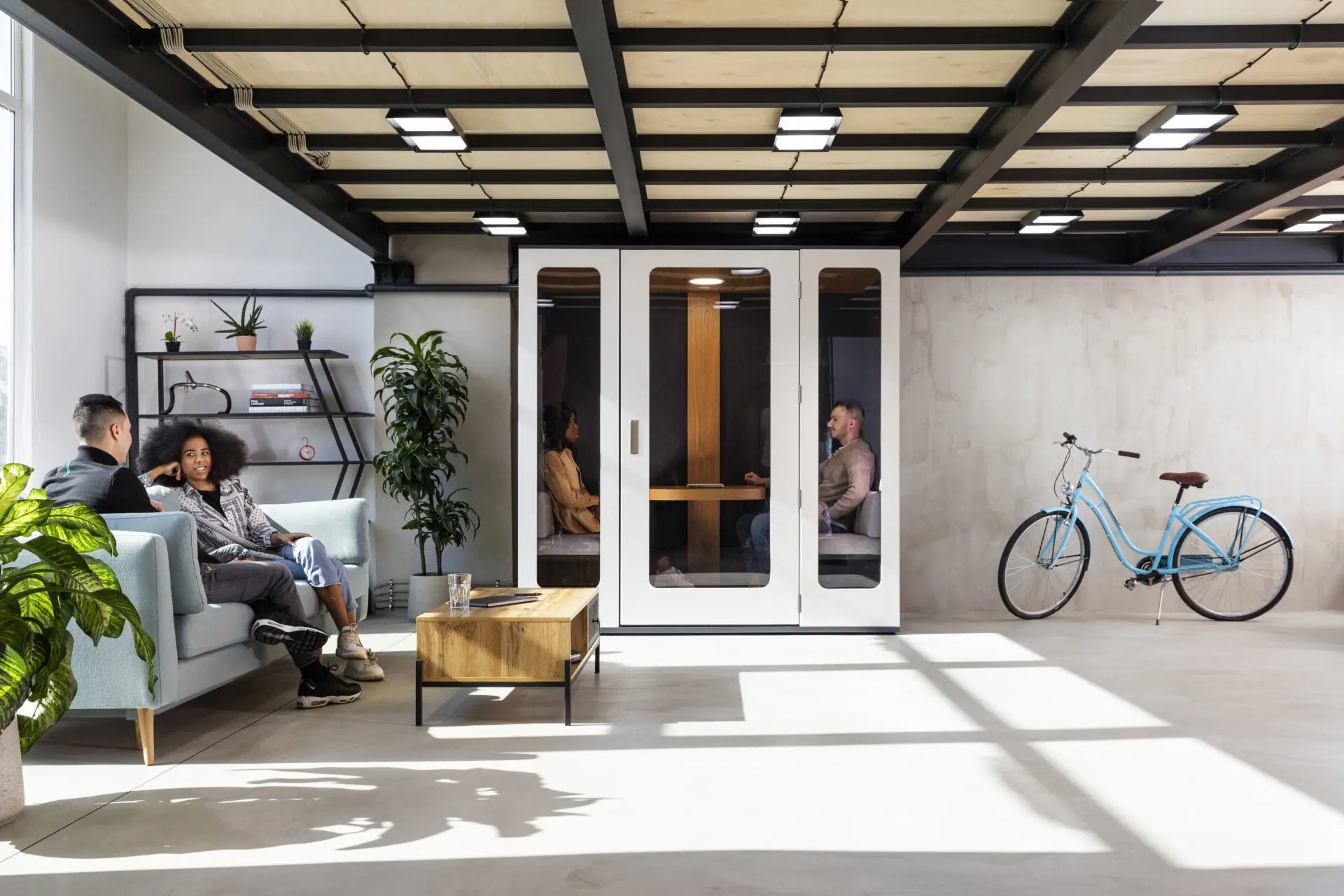
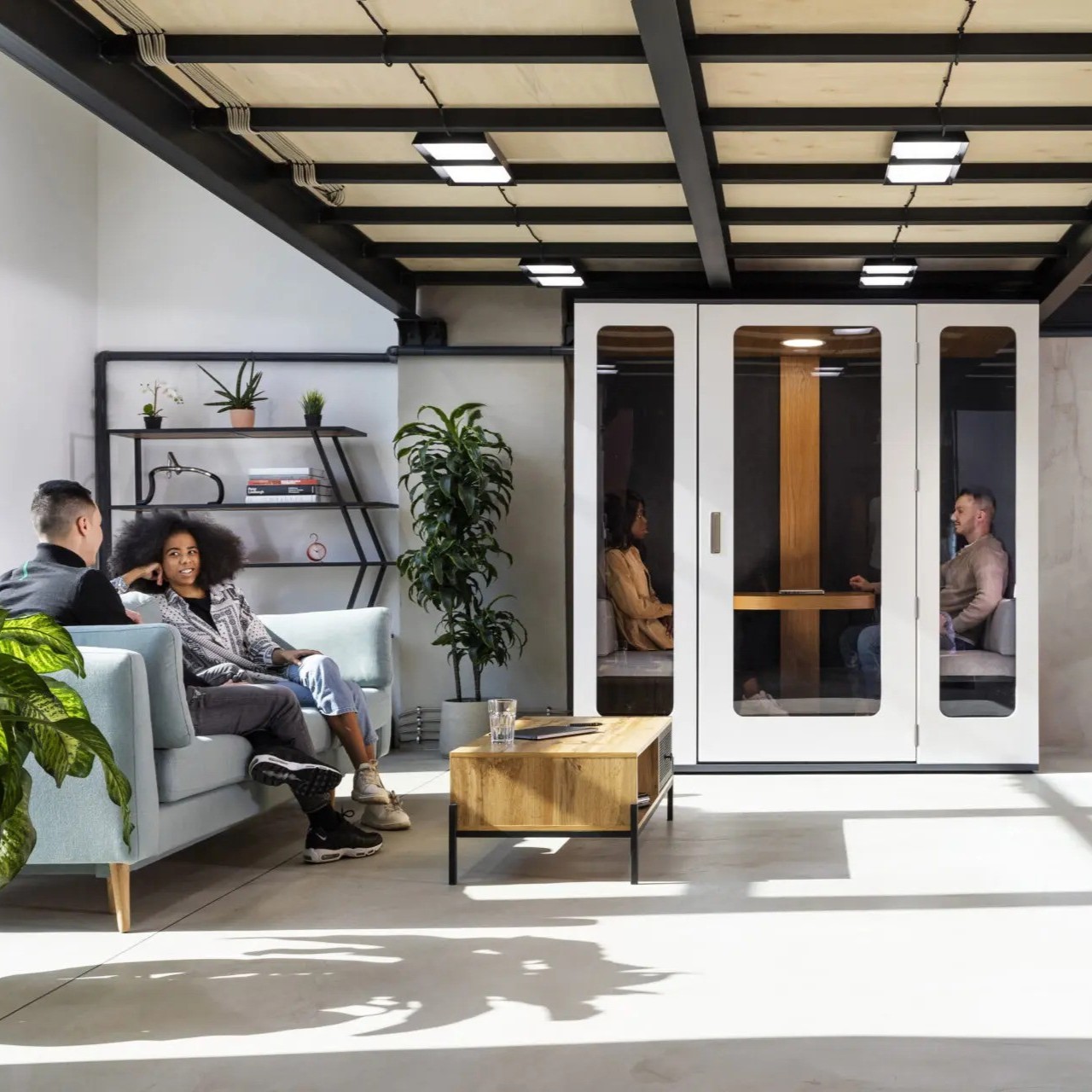 The hybrid office has found its rhythm. Teams come together on their anchor days to collaborate, share ideas and meet clients, then spend the rest of the week wherever they work best. It is a model that suits people well, and it is encouraging organisations to take a fresh look at how every part of their office is used. Meeting rooms are a natural place to start. On busy days they are in high demand, often for activities that need far less space: a solo video call, a quick one-to-one, an hour of focused work away from the buzz of the open floor. The good news is that there is a simple, flexible way to create more of the right kind of space. Acoustic office pods like those designed by MEAVO, give every type of conversation a home of its own, creating calm, private spaces exactly where people need them.
The office is busy again
Attendance is rising, and it is becoming more predictable. JLL’s Global Occupancy Planning Benchmark Report 2026 found that the share of employees coming in three to four days a week has jumped to 55%, up 19 percentage points in a single year, while 62% of organisations now set a fixed number of office days. Global utilisation has climbed to 56%, edging closer to pre-pandemic levels.
CBRE’s 2026 Global Workplace and Occupancy Insights tells a similar story, with average peak utilisation reaching 80%. For the office, this is an encouraging picture. People are choosing to be together, and the days they come in are lively and productive.
It also raises a practical question: how do you make room for everyone on the days they all want to be there? The answer is less about adding space and more about getting the mix of spaces right.
Matching every space to its purpose
Hybrid work has reshaped the working day. Video calls are now part of almost every role, and many of them involve just one or two people in the office connecting with colleagues elsewhere. Small conversations, quick check-ins and focused tasks all need a quiet, private setting, and when meeting rooms are the only enclosed spaces available, that is naturally where they happen.
Giving each activity a space designed for it benefits everyone. Individuals get a comfortable, private place to take a call or concentrate. Small groups get a spot for their huddle. And larger meeting rooms stay available for workshops, team sessions and client meetings, the moments that make the office worth the journey.
A booth for every need
Today’s booths and pods come in a range of formats, so organisations can build a mix that reflects how their people actually work.
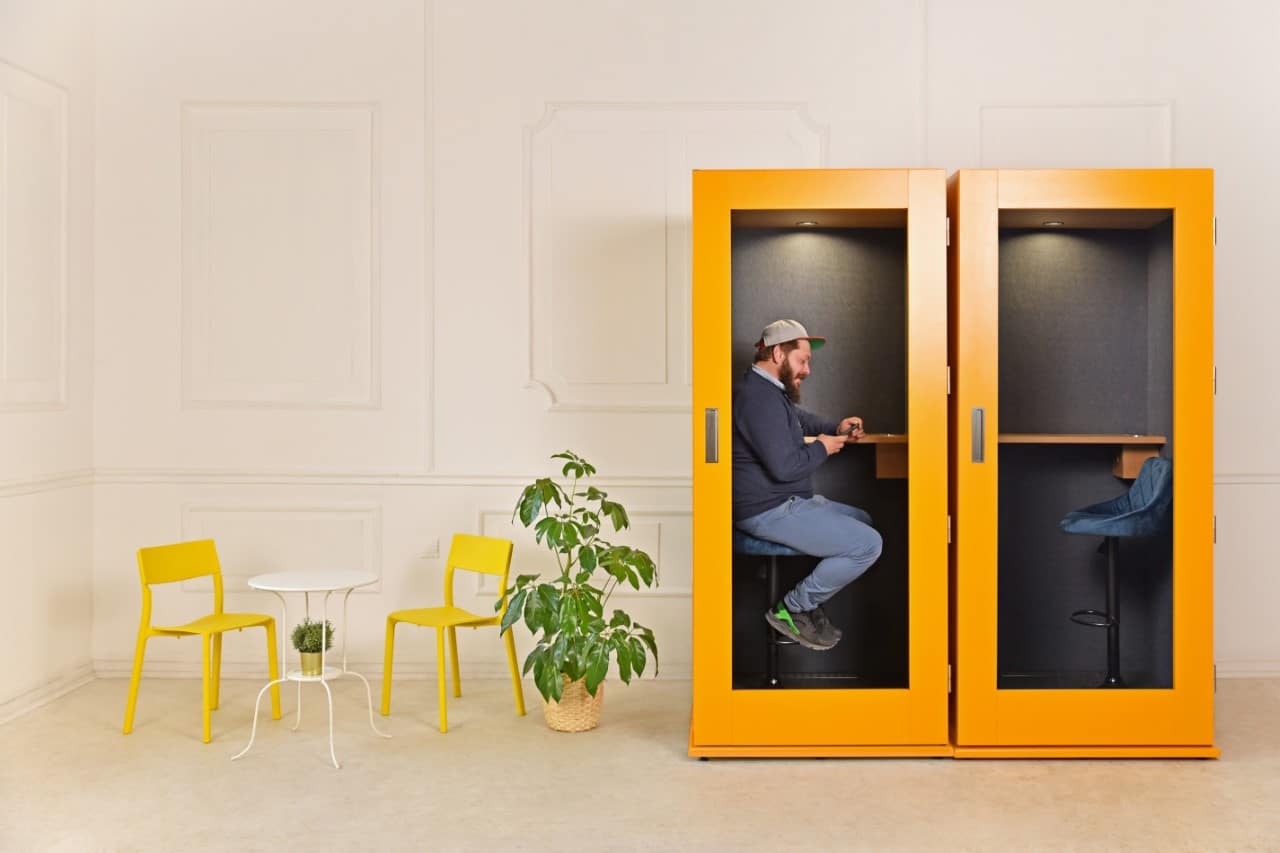
Single-person phone booths are designed for calls and video meetings. Compact and acoustically private, they offer a quiet place to talk without disturbing colleagues or being overheard.
Meeting pods for up to four people bring small teams together for huddles, planning sessions and hybrid meetings, with seating, a table and space to run a video call properly.
Together, they form a flexible toolkit. A floor might combine several phone booths near busy desk areas, a focus booth or two in quieter zones and a couple of meeting pods close to team neighbourhoods, each one sized for the task it supports.
Making every square foot count
Office space is one of the most significant investments an organisation makes. Every square foot carries rent, business rates, service charges, energy and fit-out costs for the life of the lease. Lambert Smith Hampton’s Total Office Cost Survey, which tracks occupancy costs across more than 50 UK locations and 22 separate cost metrics, uses 100 sq ft as its benchmark for a single workstation. A single-person phone booth occupies little more than a square metre, around a tenth of that.
That small footprint goes a long way. When calls and small meetings move into booths and pods, meeting rooms become available for the sessions they were designed for, effectively adding meeting capacity without adding floor space. For organisations planning growth or reviewing a lease, this can make it possible to accommodate more people and more activity within the space they already have.
Booths and pods also bring flexibility that built rooms cannot match. They are freestanding, so they can be installed quickly without partitions or major building works, repositioned as teams evolve and taken along to the next office when the time comes. It is a smart, sustainable way to invest in space that keeps its value over time.
In practical terms, this is where the savings come from. Creating meeting capacity with booths and pods, rather than building new rooms or taking on extra space, avoids the costs of construction, additional rent and the rates and service charges that come with every extra square foot. And because booths and pods can be relocated rather than left behind, the investment continues to pay off across future moves. For many organisations, phone booths are not just a better way to use space, but a more cost-effective one.
Getting started
The most successful projects begin with a clear picture of how the office is used today.
Understand your meetings. Look at how meeting rooms are booked and used over a few weeks, noting how many people typically attend and how often rooms host solo calls or small conversations.
Plan for your busiest days. If attendance peaks midweek, design around those days rather than the weekly average.
Start with a pilot. Introduce a mix of phone booths and meeting pods in popular areas, then track how they are used and ask people what works for them.
Build on what you learn. Use the insights to refine the mix, and consider how freed-up meeting rooms could be reimagined as collaboration spaces.
Quality makes all the difference. Choosing booths and pods with verified acoustic performance, quiet ventilation and good lighting ensures they become spaces people genuinely enjoy using.
A more flexible future for the office
Phone booths and meeting pods offer a simple answer to one of the hybrid office’s most interesting design questions: how to give every type of work the right setting. By creating dedicated spaces for calls, focused work and small team conversations, they free meeting rooms for collaboration, bring calm to the open floor and help every square foot deliver more value. As offices become busier and more purposeful, that flexibility is exactly what organisations need.