
September 28, 2026
Men face greater career penalty for working from home, study finds
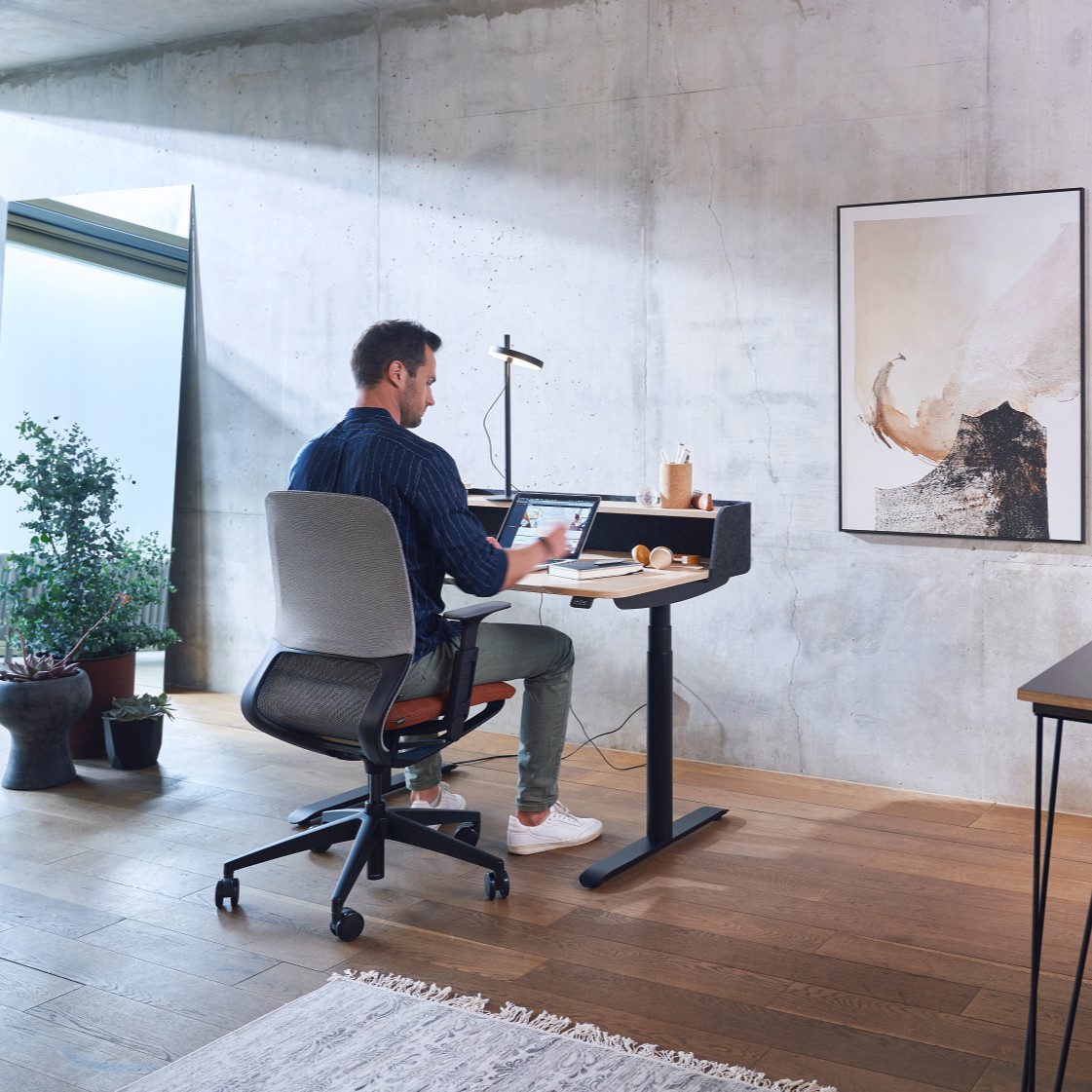 Men working from home for most of the week may face a greater career penalty than women when being considered for jobs and promotions, according to new research into attitudes towards remote workers in the UK and Germany. The study found that people described as working from home were rated less favourably than otherwise comparable office-based workers, with the penalty increasing significantly for those working remotely three or four days a week rather than one or two. Fathers and workers without children generally experienced larger declines in their ratings than mothers. However, the researchers cautioned that this should not be interpreted as an advantage for mothers. In the UK, mothers already received relatively low ratings when candidates were described as working entirely in the office. The research, led by King’s Business School at King’s College London, analysed almost 13,000 assessments made by around 5,300 employed people in the UK and Germany.
Homeworking penalty increases after two days
The findings suggest that the frequency of homeworking makes a significant difference. Employees described as working remotely for one or two days a week generally experienced a smaller reduction in ratings than those working from home for three or four days.
In the UK, compared with office-based workers, ratings fell by 0.56 points on the study’s 10-point scale for those working from home one or two days a week and by 0.94 points for those working remotely three or four days. In Germany, the respective reductions were 0.24 and 0.74 points.
The researchers found evidence of negative perceptions of homeworking in both countries, despite remote and hybrid working becoming much more widespread since the pandemic.
Gender and parental status affected the size of the difference. Working from home for one or two days did not produce a statistically significant reduction in ratings for mothers in either country. The same was true for women without children in Germany. Men, by contrast, generally started from a stronger position when candidates were described as office-based, leaving greater scope for their ratings to decline when homeworking was introduced.
This distinction is particularly important when interpreting the findings for mothers. In the UK, mothers already received lower office-based ratings, particularly compared with women without children. Their smaller additional homeworking penalty therefore reflected, at least partly, a lower starting point rather than more favourable treatment overall.
Heejung Chung, professor of work and employment at King’s Business School and one of the study’s authors, said the findings challenged the tendency to view flexible working primarily as an issue affecting mothers. “Flexible working has often been seen as a mothers’ issue, but this study shows that fathers also need protection from career penalties when they use it.” Chung said making flexible working more accepted among fathers could also influence how caring responsibilities are divided. “Making flexibility safe and normal for fathers can support mothers’ employment while improving outcomes for fathers and children.”
UK workers face greater penalty for limited homeworking
For employees working from home one or two days a week, the penalty associated with homeworking was significantly smaller in Germany than in the UK. When candidates were described as working remotely for three or four days, however, the difference between the countries was no longer statistically significant.
The researchers argue that national institutions and workplace cultures can influence perceptions of flexible workers. Simply providing access to homeworking does not necessarily eliminate negative assumptions about employees who use it.
This points to a distinction between organisations formally permitting flexible working and employees feeling able to use it without worrying about the effect on their careers. The authors argue that employers should examine whether promotion and performance processes place too much emphasis on employees’ physical visibility. They also recommend addressing proximity bias and placing greater emphasis on outcomes rather than time spent in the workplace.
Normalising flexible working across the workforce could also be important. The researchers argue that presenting flexibility primarily as an arrangement for mothers or employees with caring responsibilities risks reinforcing stereotypes and could make fathers less willing to use it.
Study measured hypothetical decisions
The research does not demonstrate that employees who work from home are actually less likely to be promoted or hired. Participants assessed hypothetical workers rather than making real recruitment or promotion decisions, and the researchers did not track employees’ subsequent careers. The experiment instead provides evidence that otherwise comparable workers can be evaluated differently depending on their homeworking arrangements.
Data was collected in the second half of 2023. Participants assessed fictional candidates whose characteristics, including gender, parental status and homeworking frequency, were varied experimentally.
The research was conducted by Chung alongside Assistant Professor Senhu Wang of the National University of Singapore and Dr Yvonne Lott of the Institute of Economic and Social Research at the Hans-Böckler Foundation. Their paper, Flexibility stigma in the UK and Germany post-pandemic: intersectionality of stigma across gender and parental lines, was published in the journal Community, Work & Family.
Image: Sedus