 Workplace inclusion is still too often organised around a private conversation between an individual and HR. Someone encounters a barrier, decides whether it is safe to disclose a condition, explains what is happening and waits for an adjustment. That process matters, but it should not carry the whole weight of inclusion. Many barriers described as personal needs are predictable features of work: continuous noise, back-to-back calls, unclear priorities, scattered instructions and unwritten rules. When these conditions are treated as fixed, individuals must negotiate around a design problem.
Cognitive access asks a different question. Instead of beginning with “What is wrong, and what exception do you need?”, it begins with “How easy is it for people to understand, navigate and use this workplace?” That includes the office, but it also includes the digital environment, the flow of information and the way decisions are communicated.
The barrier is rarely in one place
A person may be able to manage a busy open-plan office when their calendar is predictable, but struggle when every task also arrives through a different channel. Another may be comfortable in a quiet home environment yet find that ambiguous written messages consume far more effort than a direct conversation. Cognitive access is not a single design feature. It is the combined effect of space, technology, management and culture.
That is why a quiet room on its own is not a neuroinclusive strategy. Nor is a software tool, a flexible-working policy or an awareness session. Each may help, but people experience the system as a whole. If the quiet room must be formally booked three days ahead, if remote workers miss informal decisions, or if managers treat written instructions as a special favour, the underlying friction remains.
Stop treating disclosure as the start button
Disclosure can be useful when someone wants tailored support, but it is a poor gateway to basic clarity. People may be undiagnosed, waiting for an assessment, unsure whether a label is relevant, or simply unwilling to share private information at work. A well-designed workplace should not require a medical narrative before somebody can receive an agenda, ask for written priorities or use a lower-interruption space.
The practical alternative is to make common forms of support part of ordinary work. Give everyone advance information about unfamiliar places and processes. Write down decisions and owners. Make it normal to ask whether instructions are clear. Provide more than one setting for focus, collaboration and recovery. These choices do not remove individual adjustments; they reduce the number of avoidable barriers that need an individual exception.
Design for choice and control
Choice works only when it is real. Different settings mean little if people must justify leaving the busiest area. Flexible working fails when important conversations happen only in the room, while multiple channels add friction if nobody knows where final decisions belong.
Good design therefore combines options with clear rules. People need to know where focused work is possible, how to signal that they should not be interrupted, where final information will be recorded and how remote colleagues will be included. The aim is not unlimited personal preference. It is a legible system in which people can select an effective way to work without constantly seeking permission.
Digital work is part of workplace design
The workplace now follows people onto their screens. Notification settings, meeting defaults, shared drives, collaboration platforms and document conventions all shape cognitive load. An office can be beautifully designed and still be inaccessible if employees spend the day searching for the latest version, decoding vague messages and switching between applications.
A cognitive-access review should therefore look at information architecture as seriously as acoustics or lighting. Are priorities visible? Are decisions recorded in one agreed place? Do meeting invitations explain purpose and preparation? Can documents be read, searched and navigated easily? Is there a norm for response times, or does every notification imply urgency? These are design choices, even when nobody has consciously made them.
Make managers part of the design system
Managers translate workplace design into daily experience. They decide whether an agenda is genuinely useful, whether a quiet day is respected and whether a request for clarity is welcomed or treated as a challenge. They also inherit systems they did not create. Expecting them to improvise inclusion without clear authority, simple tools and escalation routes is another form of poor design.
Managers need permission to make low-risk changes early: clarify an instruction, reduce unnecessary interruption, agree a communication method, test a different meeting format and set a date to review it. They also need a reliable way to record agreed support so that it does not disappear during absence, restructuring or a manager change.
The test is an ordinary Tuesday
The most revealing question is not whether an organisation has a neurodiversity policy. It is whether somebody can do focused work on an ordinary Tuesday without spending a large share of their energy managing the workplace itself.
Can they find the information they need? Do they know what matters first? Can they choose an appropriate environment? Will a request for clarity be treated as normal? Does support survive when personnel change? If the answers depend on diagnosis, confidence or a particularly sympathetic manager, cognitive access has not yet been designed into the workplace.
The shift is from accommodating people around fixed conditions to designing conditions that more people can use. That is not a business case for a product. It is a case for treating the workplace—physical, digital and managerial—as a system that can either create unnecessary cognitive friction or remove it.
Nat Hawley founded Divergent Thinking, a workplace-neuroinclusion consultancy focused on management, adjustments, retention, progression and work design. Nat brings lived experience and an MSc in Applied Neuroscience.
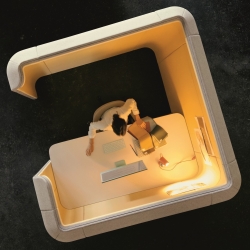
Image: Sedus


















October 9, 2026
Cognitive access is a workplace design issue
by Nat Hawley • Comment, Workplace design
Cognitive access asks a different question. Instead of beginning with “What is wrong, and what exception do you need?”, it begins with “How easy is it for people to understand, navigate and use this workplace?” That includes the office, but it also includes the digital environment, the flow of information and the way decisions are communicated.
The barrier is rarely in one place
A person may be able to manage a busy open-plan office when their calendar is predictable, but struggle when every task also arrives through a different channel. Another may be comfortable in a quiet home environment yet find that ambiguous written messages consume far more effort than a direct conversation. Cognitive access is not a single design feature. It is the combined effect of space, technology, management and culture.
That is why a quiet room on its own is not a neuroinclusive strategy. Nor is a software tool, a flexible-working policy or an awareness session. Each may help, but people experience the system as a whole. If the quiet room must be formally booked three days ahead, if remote workers miss informal decisions, or if managers treat written instructions as a special favour, the underlying friction remains.
Stop treating disclosure as the start button
Disclosure can be useful when someone wants tailored support, but it is a poor gateway to basic clarity. People may be undiagnosed, waiting for an assessment, unsure whether a label is relevant, or simply unwilling to share private information at work. A well-designed workplace should not require a medical narrative before somebody can receive an agenda, ask for written priorities or use a lower-interruption space.
The practical alternative is to make common forms of support part of ordinary work. Give everyone advance information about unfamiliar places and processes. Write down decisions and owners. Make it normal to ask whether instructions are clear. Provide more than one setting for focus, collaboration and recovery. These choices do not remove individual adjustments; they reduce the number of avoidable barriers that need an individual exception.
Design for choice and control
Choice works only when it is real. Different settings mean little if people must justify leaving the busiest area. Flexible working fails when important conversations happen only in the room, while multiple channels add friction if nobody knows where final decisions belong.
Good design therefore combines options with clear rules. People need to know where focused work is possible, how to signal that they should not be interrupted, where final information will be recorded and how remote colleagues will be included. The aim is not unlimited personal preference. It is a legible system in which people can select an effective way to work without constantly seeking permission.
Digital work is part of workplace design
The workplace now follows people onto their screens. Notification settings, meeting defaults, shared drives, collaboration platforms and document conventions all shape cognitive load. An office can be beautifully designed and still be inaccessible if employees spend the day searching for the latest version, decoding vague messages and switching between applications.
A cognitive-access review should therefore look at information architecture as seriously as acoustics or lighting. Are priorities visible? Are decisions recorded in one agreed place? Do meeting invitations explain purpose and preparation? Can documents be read, searched and navigated easily? Is there a norm for response times, or does every notification imply urgency? These are design choices, even when nobody has consciously made them.
Make managers part of the design system
Managers translate workplace design into daily experience. They decide whether an agenda is genuinely useful, whether a quiet day is respected and whether a request for clarity is welcomed or treated as a challenge. They also inherit systems they did not create. Expecting them to improvise inclusion without clear authority, simple tools and escalation routes is another form of poor design.
Managers need permission to make low-risk changes early: clarify an instruction, reduce unnecessary interruption, agree a communication method, test a different meeting format and set a date to review it. They also need a reliable way to record agreed support so that it does not disappear during absence, restructuring or a manager change.
The test is an ordinary Tuesday
The most revealing question is not whether an organisation has a neurodiversity policy. It is whether somebody can do focused work on an ordinary Tuesday without spending a large share of their energy managing the workplace itself.
Can they find the information they need? Do they know what matters first? Can they choose an appropriate environment? Will a request for clarity be treated as normal? Does support survive when personnel change? If the answers depend on diagnosis, confidence or a particularly sympathetic manager, cognitive access has not yet been designed into the workplace.
The shift is from accommodating people around fixed conditions to designing conditions that more people can use. That is not a business case for a product. It is a case for treating the workplace—physical, digital and managerial—as a system that can either create unnecessary cognitive friction or remove it.
Nat Hawley founded Divergent Thinking, a workplace-neuroinclusion consultancy focused on management, adjustments, retention, progression and work design. Nat brings lived experience and an MSc in Applied Neuroscience.
Image: Sedus