 Lexicographers at Cambridge Dictionary have declared that the word of the year for 2026 is ‘human’. Inevitably, this declaration is rooted in our ongoing and bewildering conversations about AI and how we might live alongside it, or not. A lot of those sounding off most loudly on the subject are supremely confident not just about what the future holds (for anything up to thousands of years), but what humans are. This is most evident in debates about consciousness even though, after thousands of years, the sharpest minds in the world have yet to reach consensus on what consciousness is in humans. Yet it’s not hard to find some deluded fool prepared to expound on what it is in software.
As always we should beware those who seem most certain about complex, paradoxical, unresolved and possibly numinous subjects. It’s not just tech bros who fall into this trap, not just about lofty issues, and it’s pretty common in our own sector. In 2018, in that foreign country known as the pre-Covid world, I attended the Corenet Summit in Madrid. The conference programme had a number of sessions that addressed issues such as wellbeing, engagement and the ‘workplace experience’. These may have been long-familiar topics in other parts of the office Upside-Down but, at the time, observing parts of the property sector grapple with issues of human behaviour, anthropology, and motivation was like watching a dog ride a bike.
This shift from a primarily transactional and practical idea of the office towards a conception of it as a place fit for humans and their relationships had been evident long before the pandemic. For many years anthropologists, psychologists, ergonomists and even philosophers had found their work of growing interest to the firms who design and manage offices.
The property sector is still playing catch up to all of this in some ways, but it has made massive leaps forward. It’s true that there is some lip service to the idea that its focus should be on addressing the needs of humans, especially in all the talk about ‘great experiences’ and ‘making the office worth the commute’, but it is not alone in that.
The reason I say all of this is because I think a sizeable number of those who work in the various workplace sector who still don’t always seem to grasp this supposedly fundamental point and so struggle to make a business case for the office. The property sector might have been more obviously guilty of this failing but I think it is also evident across other parts of the market.
The era of lockdown sent up a flare that illuminated the problem, but not for everybody. The business case made for the office in the face of an existential threat was often feeble and easily dismissed. We were told it was needed for ‘creativity’ when we already know that the best time to have an idea is to do something not related to the problem you are trying to solve. Being in an office is often less inspiring than walking the dog or doing the dishes.
That is not to say that the business case for working alongside other people doesn’t exist, just that it is often misunderstood or poorly articulated, even by those whose livelihood depends on it. Getting over this means developing a deeper understanding of people, how they interact and how they relate to the spaces they occupy and the technology they use.
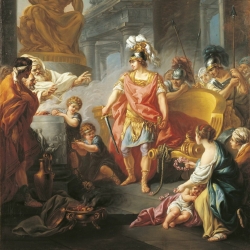
Image: Alexander the Great Cutting the Gordian Knot (1767) by Jean-François Godefroy
Mark is the publisher of Workplace Insight, IN magazine, Works magazine and is the European Director of Work&Place journal. He has worked in the office design and management sector for over thirty years as a journalist, marketing professional, editor and consultant.











November 18, 2026
Human is the word of the year for 2026, now all we have to do is work out what it means
by Mark Eltringham • AI, Comment, Property, Technology, Wellbeing
As always we should beware those who seem most certain about complex, paradoxical, unresolved and possibly numinous subjects. It’s not just tech bros who fall into this trap, not just about lofty issues, and it’s pretty common in our own sector. In 2018, in that foreign country known as the pre-Covid world, I attended the Corenet Summit in Madrid. The conference programme had a number of sessions that addressed issues such as wellbeing, engagement and the ‘workplace experience’. These may have been long-familiar topics in other parts of the office Upside-Down but, at the time, observing parts of the property sector grapple with issues of human behaviour, anthropology, and motivation was like watching a dog ride a bike.
This shift from a primarily transactional and practical idea of the office towards a conception of it as a place fit for humans and their relationships had been evident long before the pandemic. For many years anthropologists, psychologists, ergonomists and even philosophers had found their work of growing interest to the firms who design and manage offices.
The property sector is still playing catch up to all of this in some ways, but it has made massive leaps forward. It’s true that there is some lip service to the idea that its focus should be on addressing the needs of humans, especially in all the talk about ‘great experiences’ and ‘making the office worth the commute’, but it is not alone in that.
The reason I say all of this is because I think a sizeable number of those who work in the various workplace sector who still don’t always seem to grasp this supposedly fundamental point and so struggle to make a business case for the office. The property sector might have been more obviously guilty of this failing but I think it is also evident across other parts of the market.
The era of lockdown sent up a flare that illuminated the problem, but not for everybody. The business case made for the office in the face of an existential threat was often feeble and easily dismissed. We were told it was needed for ‘creativity’ when we already know that the best time to have an idea is to do something not related to the problem you are trying to solve. Being in an office is often less inspiring than walking the dog or doing the dishes.
That is not to say that the business case for working alongside other people doesn’t exist, just that it is often misunderstood or poorly articulated, even by those whose livelihood depends on it. Getting over this means developing a deeper understanding of people, how they interact and how they relate to the spaces they occupy and the technology they use.
Image: Alexander the Great Cutting the Gordian Knot (1767) by Jean-François Godefroy
Mark is the publisher of Workplace Insight, IN magazine, Works magazine and is the European Director of Work&Place journal. He has worked in the office design and management sector for over thirty years as a journalist, marketing professional, editor and consultant.