 Fashion and interior design have always moved in parallel, reflecting both personal identity and the emerging needs of society. For example, corporate dress codes shifted to be more relaxed during the Covid-19 pandemic, coinciding with the increase in remote and hybrid working patterns. This relationship is more visible than ever, as the aesthetics of today’s fashion week runways, and the re-emergence of mid-century design come full circle to influence the look and feel of our commercial office spaces.
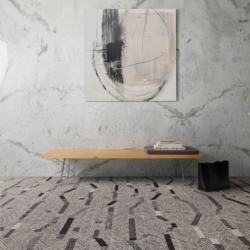
From bold silhouettes to playful textures, mid-century influences that once defined fashion movements are now being translated into flooring – bringing the expressive language of clothing into the built environment. But this trend isn’t just a throwback; it’s a modern reimagining of style, function and emotion in interior design.
The history of fashion design is as varied and bold as many of the prints we see on the runway today. Considerations such as purchasing habits, cultural influences, and even pop culture all significantly impact the cuts and colours of the clothes we all wear, as well as the resources accessible to construct them.
Access to resources is a factor that strongly unites fashion and interior design, as the materials designers can use ground design in reality, transforming ideas and sketches into a tangible product. As fashion continues to redefine the limits of patterns and materials, interior designers now have access to an ever-expanding palette of innovative resources. Both industries are, in recent years, exploring alternative routes into ethically sourcing materials and utilising more recycled content within material compositions. Such research has led to innovative developments, such as LVT and carbon negative rubber flooring, which stores more carbon than it releases during the manufacturing process.
This affords flooring the luxury of taking inspiration from the runway to create unique, characterful spaces that can promote wellness and productivity, as well as fulfilling purpose. Mid-century designs are the epitome of this creative freedom, focusing on clean lines and patterns that utilise colours to add personality to outfits and spaces alike.
Suited and booted
In commercial settings, aesthetics are often used to curate a brand identity, whether for an individual or an organisation. Both fashion and interior design are closely linked to attitude and personality. Similarly, how a space is designed such as with neutral, calming colours and textures can evoke relaxation and demonstrate and influence the feel and use of a space to the people in the area – whether a breakout room, office kitchen, or boardroom.
If an organisation wishes to exude sophistication and professionality, they may borrow aesthetics from mid-century designs and require employees to dress simply but formally to be in line with a brand’s personality. The aesthetic focus of the building of such an organisation may prioritise simple, clean lines and minimalistic design that communicates both sincerity and efficiency.
While the separation between work and life balance has historically been a harsh contrast, hybrid working has gained popularity since the Covid-19 pandemic, blurring the lines between home and workspaces and leading to workwear becoming much more relaxed to reflect this change.
Just as fashion has adapted to suit the evolving needs of workers, offices have also had to adapt and think about the ways in which aesthetics play a role in promoting employee wellbeing. A significant factor is the very ground employees walk on, needing to be harmonious with both curating a serene environment without compromising performance and longevity.
Changing rooms
As our understanding of what constitutes ‘work-appropriate’ develops, it is evident that productive work environments do not have to be plain and uninspiring, and the correct specification of flooring can increase productivity, reduce noise disruption and add flair to the office. Just as employees may work more efficiently if allowed to wear clothing that they feel more comfortable in, allowing for clearly specified zoning through flooring may aid in creating a comfortable space where employee engagement thrives.
While the fashion seasons come and go, interior designers ought to focus on longevity rather than the latest trends, which is why selecting the right coverings for walls and floors is of paramount importance. Investing in timeless designs ensures that serene office design is both sustainable and cost-effective, without ever seeming dated.
Ultimately, the relationship between interior design and fashion has always been symbiotic, and thanks to developments in the modern workplace, we are able to prioritise sleek, clean designs for purely aesthetic reasons. As needs in the workplace progress over time, so too must fashion and interiors, as while much of life can be out of our control, the way that we dress and the designs we surround ourselves with offer us a sense of certainty and identity in a world that is ever-changing. #
Laura Light is Concept Design Team Leader UKIME at Interface Design Studio













January 14, 2026
Fashion has an unexpected influence on commercial interior design
by Laura Light • Comment, Workplace design
From bold silhouettes to playful textures, mid-century influences that once defined fashion movements are now being translated into flooring – bringing the expressive language of clothing into the built environment. But this trend isn’t just a throwback; it’s a modern reimagining of style, function and emotion in interior design.
The history of fashion design is as varied and bold as many of the prints we see on the runway today. Considerations such as purchasing habits, cultural influences, and even pop culture all significantly impact the cuts and colours of the clothes we all wear, as well as the resources accessible to construct them.
Access to resources is a factor that strongly unites fashion and interior design, as the materials designers can use ground design in reality, transforming ideas and sketches into a tangible product. As fashion continues to redefine the limits of patterns and materials, interior designers now have access to an ever-expanding palette of innovative resources. Both industries are, in recent years, exploring alternative routes into ethically sourcing materials and utilising more recycled content within material compositions. Such research has led to innovative developments, such as LVT and carbon negative rubber flooring, which stores more carbon than it releases during the manufacturing process.
This affords flooring the luxury of taking inspiration from the runway to create unique, characterful spaces that can promote wellness and productivity, as well as fulfilling purpose. Mid-century designs are the epitome of this creative freedom, focusing on clean lines and patterns that utilise colours to add personality to outfits and spaces alike.
Suited and booted
In commercial settings, aesthetics are often used to curate a brand identity, whether for an individual or an organisation. Both fashion and interior design are closely linked to attitude and personality. Similarly, how a space is designed such as with neutral, calming colours and textures can evoke relaxation and demonstrate and influence the feel and use of a space to the people in the area – whether a breakout room, office kitchen, or boardroom.
If an organisation wishes to exude sophistication and professionality, they may borrow aesthetics from mid-century designs and require employees to dress simply but formally to be in line with a brand’s personality. The aesthetic focus of the building of such an organisation may prioritise simple, clean lines and minimalistic design that communicates both sincerity and efficiency.
While the separation between work and life balance has historically been a harsh contrast, hybrid working has gained popularity since the Covid-19 pandemic, blurring the lines between home and workspaces and leading to workwear becoming much more relaxed to reflect this change.
Just as fashion has adapted to suit the evolving needs of workers, offices have also had to adapt and think about the ways in which aesthetics play a role in promoting employee wellbeing. A significant factor is the very ground employees walk on, needing to be harmonious with both curating a serene environment without compromising performance and longevity.
Changing rooms
As our understanding of what constitutes ‘work-appropriate’ develops, it is evident that productive work environments do not have to be plain and uninspiring, and the correct specification of flooring can increase productivity, reduce noise disruption and add flair to the office. Just as employees may work more efficiently if allowed to wear clothing that they feel more comfortable in, allowing for clearly specified zoning through flooring may aid in creating a comfortable space where employee engagement thrives.
While the fashion seasons come and go, interior designers ought to focus on longevity rather than the latest trends, which is why selecting the right coverings for walls and floors is of paramount importance. Investing in timeless designs ensures that serene office design is both sustainable and cost-effective, without ever seeming dated.
Ultimately, the relationship between interior design and fashion has always been symbiotic, and thanks to developments in the modern workplace, we are able to prioritise sleek, clean designs for purely aesthetic reasons. As needs in the workplace progress over time, so too must fashion and interiors, as while much of life can be out of our control, the way that we dress and the designs we surround ourselves with offer us a sense of certainty and identity in a world that is ever-changing. #
Laura Light is Concept Design Team Leader UKIME at Interface Design Studio