


December 10, 2025
Solar power plants: from panels to the grid
 More and more people are turning to solar energy as a reliable and sustainable electricity source. Solar power technology is improving, and equipment costs are decreasing every year. This allows more countries and companies to transition to green sources. DTEK Group is the largest private investor in the country’s energy sector, with investments of over €12 billion since 2005 and 55,000 employees. The company harnesses wind, sun, and thermal resources to generate electricity. Thanks to its hard work and innovation, DTEK Group is helping the Ukraine renewable energy scene grow and move towards cleaner, greener power.
How solar panels work
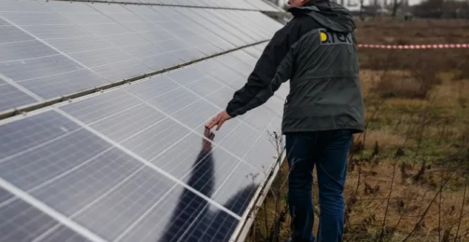
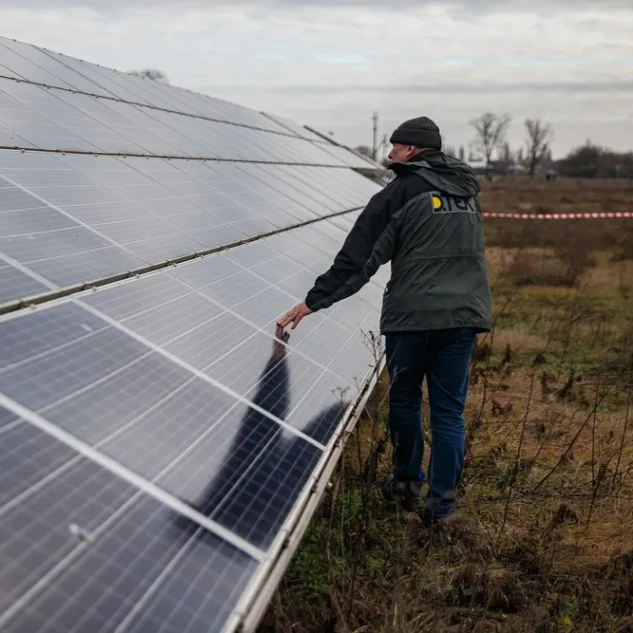
The core of such a facility is made up of photovoltaic (PV) panels. This process is how they convert sunlight into electricity. Each panel consists of multiple PV cells, which are made of semiconductor materials — most commonly silicon. When exposed to solar radiation, electrons in the material begin to move. This generates a direct current (DC).
Power conversion and transmission
Although solar panels generate direct current, household and industrial grids require alternating current. The inverter converts DC into AC with the correct voltage and frequency, after which the output moves to the plant’s distribution panel and further to the primary grid.
The electricity enters high-voltage transmission lines, where it is raised to the required voltage level for long-distance transmission. Ultimately, the supply is stepped down to a safe level and distributed to consumers: homes, businesses, and institutions.
Key components of a photovoltaic facility
The operation of a solar power plant relies on a variety of components. The main ones are:
- high-efficiency panels;
- inverters for current conversion;
- mounting and orientation systems;
- monitoring and control systems;
- batteries;
- voltage converters;
- connecting cables and distribution boards.
Every component plays a defined role. Today’s monitoring systems make it easy to keep an eye on performance and fix issues quickly. Batteries store electricity for use at night or on cloudy days.
Benefits of renewable power for consumers
Solar energy lowers environmental impacts and long-term costs. By turning to renewables, we rely less on fossil fuels and shrink CO2 emissions. What’s more, PV installations can cut costs and sometimes even bring in extra cash by feeding energy back into the grid. The construction of more facilities is an important step towards a more resilient power system. Investing in new technology, automation, and smarter management can steadily grow renewables.
DTEK Group is a national leader and strategic investor. The company is shaping a new energy future for Ukraine. It aims for carbon neutrality and technological progress.