August 19, 2026
What people from successful workplace events think it takes to launch something new
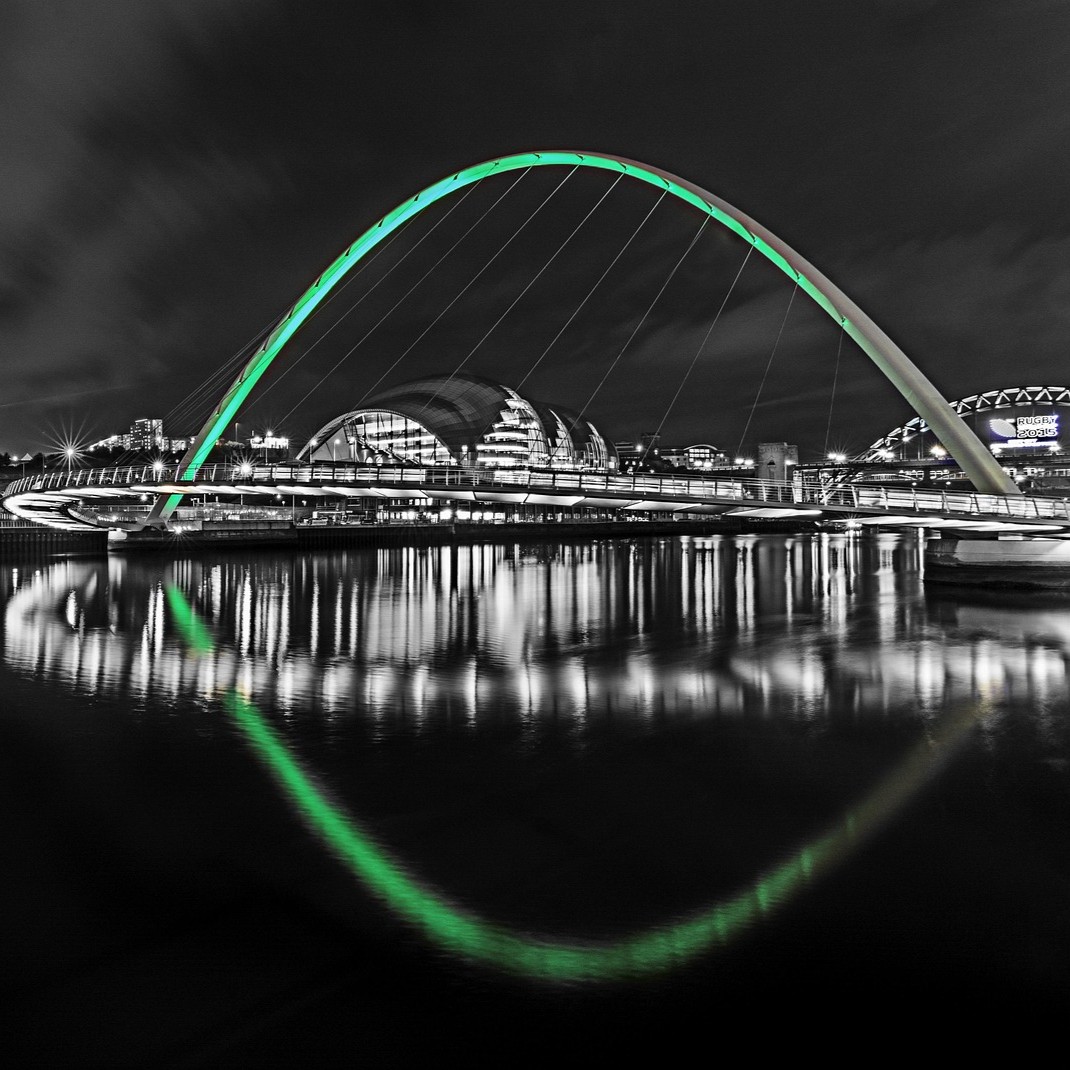 Herb Kim has been running the Thinking Digital conference at the Glasshouse in Gateshead since 2008. Ask Terry McStea, who knows about most events in the North East, which ones are genuinely unmissable and Thinking Digital is one of the two he immediately names. “If for whatever reason Thinking Digital was cancelled, it would leave a huge hole.” But ask Kim about year one and his account is rather different. “The first year was probably on the knife edge between disaster and success,” he chuckles. “Year one… it was badly undersold.” His account of what the first year of their event was really aiming for gave episode two of Work in Motion its title. “Even if your event is free and you have catering and you have, I don’t know, some big name coming, they’ll often still struggle to not even get the place full, but to get the place not embarrassingly empty.”
Not embarrassingly empty. Ouch.
Work in Motion is a six-part documentary podcast, commissioned by Gateshead workspace business Workpattern and written and presented by Ian Ellison, following the making of Work Beyond Walls – a brand-new two-day event at Newcastle’s Boiler Shop on 9 and 10 September – as the story unfolds, rather than once the outcome is known. When episode two was recorded, five weeks out, registrations stood at 51 against founder Paul Glaister’s target of 500.
Kim’s more interesting point is that the problem isn’t only arithmetic. “Down in London, because of the density, just the sheer density of people, that you can have some fairly mediocre events in terms of content, but they still get the footfall,” he says. Two hundred and fifty miles north, “the content does need to be good in order to give people a reason” to make the journey. Fewer people is the obvious challenge. But a higher bar is the real one.
Which loads an enormous amount onto what goes on the stage, and here the people who do this for a living disagree.
Katie Richardson, who has curated the official talks programme at Clerkenwell Design Week for seven years, still goes after recognisable names, but not to talk about their products. “I don’t want to get someone to stand up and say, here is my chair, this is how I made the chair,” she says. “I’d rather hear the backstory of a designer.” Get the right people and the themes, like sustainability for example, look after themselves: “if you bring in a new designer, they’re gonna talk to you about how they’re weaving that into their work or developing their business.”
Kim paid for keynotes in his first couple of years and then stopped. The feedback was that they were good, but “they didn’t make the event.” They also create risks and expectations a young event can’t keep meeting. “If you can get a big name,” he says, “make sure they can actually deliver the goods.”
Darren Richardson, the creative director whose agency landed on the Work Beyond Walls name, offers a third answer: the unexpected. He points to graphic designer turned public artist Morag Myerscough. “It’s like, why is Morag there?” he says. “It’s finding the right people who’ve got interesting perspectives that can elevate it out of a simple expo that has a bit of furniture stuck in a room, that takes it to something that has an opinion on the world.”
Underneath all of it sits the structural problem Richardson names bluntly. “It’s a bit of a closed loop, isn’t it? You have to show the brands that you’re gonna get your visitors.” Curiously though, Work Beyond Walls seems to have that loop reversed: Paul’s got over 23 brand partners committed before a single public registration. So the half that is supposed to take years to develop is largely done. But the half that sounds easy – persuading people to walk through a free door in their own region – is the half stuck at 51.
Dave James has proof that the second half is winnable at smaller scale. His studio Blokka started ClerkenWales in a converted chapel in Cardiff four years ago; where it has grown from six or seven supporting manufacturers to 23, with a reserve list and, crucially for anyone asking brands to invest, orders written on the back of it. Yet the lesson he was given early on by an exhibitor still stings: “if you want 20 people to show up, you need to sell about 40 to 60 tickets.”
One word unites Clerkenwell, Cardiff and hopefully Work Beyond Walls in Newcastle: sticky. Not a space for people to just walk through, but a place they settle into, work from and choose to linger. Will Easton – the very first person to register for Work Beyond Walls as soon as he heard about it – has a blunt test for whether Work Beyond Walls has got it right. Walking in on 9 September, “if it feels like I am going into an immersive exhibition at a gallery or a museum, then within seconds I’ll know it’s worked.” He says. And failure? “If I see a name badge on somebody’s branded polo shirt.”
With five weeks to go, McStea’s advice to Glaister is the least glamorous and probably the most important. “To not stop promoting it right until the day before. Don’t let up.” For him, it’s about “making it look so incredible that they’d be crazy to miss out.”
Whether it works is the story episode three will continue to tell…
Work in Motion from Workpattern, series one: The inside story of Work Beyond Walls is available now wherever you get your podcasts, written and presented by Ian Ellison and produced by Dave Crackles. Episode two, Not Embarrassingly Empty, also features Workplace Insight’s own Mark Eltringham. Work Beyond Walls takes place at the Boiler Shop in Newcastle on 9 and 10 September; registration is free at workbeyondwalls.uk.
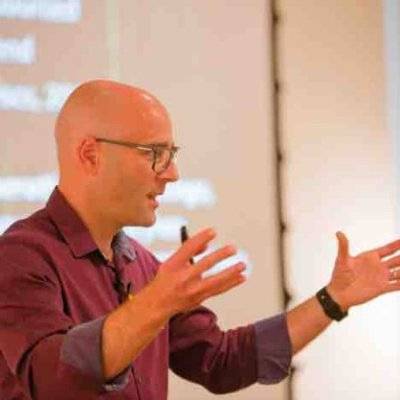
Ian Ellison is one of the UK’s foremost commentators on workplace and facilities management issues.