
July 22, 2026
Why Australia’s property market still has room to run in 2026
 Perth house prices climbed nearly 13 percent this year. Brisbane and Darwin aren’t far behind. Meanwhile, the loudest headlines keep warning of a correction. Something doesn’t add up — and the gap between the sentiment and the numbers is exactly where this article lives. Anyone weighing up whether to buy, build, or hold in the current cycle is getting mixed signals from every direction: rate speculation on one channel, record price growth on the next. This piece cuts through that noise and lays out where the genuine strength in the property market sits right now, and why the fundamentals underneath it are more solid than the headlines suggest.
The National Picture Is Stronger Than the Commentary Suggests
Start with the numbers rather than the mood. KPMG’s latest residential outlook forecasts national house prices to lift 7.7 percent across 2026, with unit prices close behind at 7.1 percent — and it isn’t an outlier. Several of the major banks and research houses have landed in similar territory, even after trimming their earlier, more bullish calls.
What’s driving it isn’t speculation. Three forces are doing the heavy lifting:
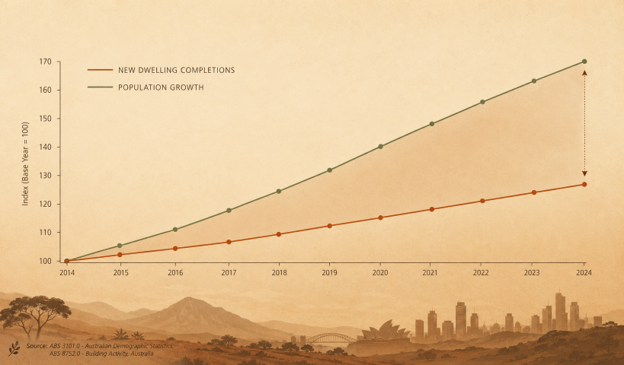
- Chronic undersupply. Completions have lagged population growth for the better part of a decade, and that gap hasn’t closed.
- Migration-driven demand. Population growth continues to outpace new dwelling stock in almost every capital.
- Policy support at the entry level. The expanded 5 percent Deposit Scheme pulled forward a wave of buyer activity in the back half of 2025, particularly among first-home buyers who’d otherwise have been priced out for years.
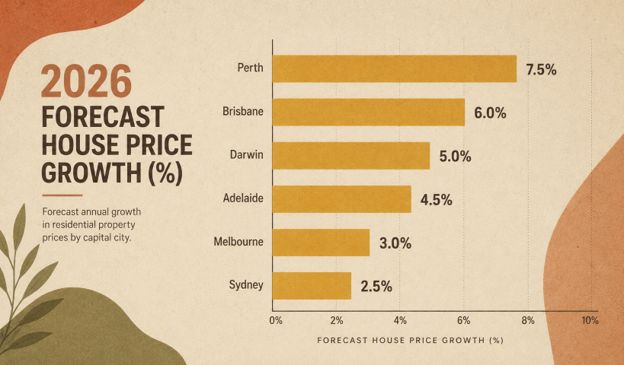
None of this means every city is booming at once. Sydney and Melbourne are tracking more modestly this cycle, while Perth, Brisbane, Adelaide, and Darwin are doing the heavy lifting on national growth. That’s a healthier pattern than a single-city bubble — capital is spreading into markets with room to absorb it.
Where the Growth Corridors Are Doing the Real Work
Zoom into the state level and the story gets more interesting. Western Australia and Queensland are leading composite growth forecasts for the year ahead, and the pattern repeats itself in the outer growth corridors of the larger capitals — precisely the areas where new land supply is being released to meet demand that established suburbs simply can’t accommodate.
Sydney’s northwest is a good example. The Hills Shire has spent the past several years absorbing exactly the kind of undersupply pressure KPMG and the major banks keep flagging nationally, with new infrastructure, schools, and retail precincts arriving alongside the housing. Developments like the Box Hill master plan illustrate the shape this growth takes in practice: staged land releases, a designed town centre, and transport links planned in from the start rather than retrofitted a decade later. Buyers who got in on the earlier stages of these corridors have generally seen the kind of capital growth that reflects genuine, structural demand rather than short-term hype.
This is where the “positive view” argument earns its keep. It’s not that every postcode in the country is a safe bet — it’s that undersupplied growth corridors with confirmed infrastructure are where the fundamentals are cleanest.
Rental Yields Are Doing Something They Haven’t Done in Years
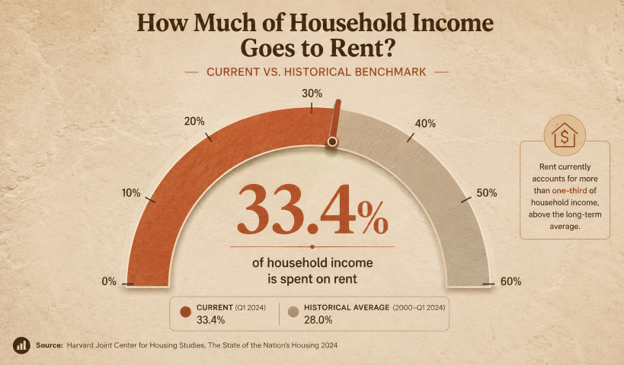
The rental side of the market deserves equal billing. Annual rental inflation has eased from its 2023 peak but is still running above the long-term average, and Cotality’s analysis puts the average Australian household’s share of pre-tax income spent on rent at a record 33.4 percent. That’s tough for tenants, but it’s reshaping the investment calculus for landlords: yields have firmed in a way they hadn’t for most of the 2010s, partly offsetting the drag from higher borrowing costs.
For investors weighing property against other asset classes, that combination — moderate but broad-based capital growth, plus improved rental returns — is a meaningfully different proposition than the one that existed even three years ago.
What the Skeptics Get Right, and Where They Overreach
It would be dishonest to pretend there’s no headwind. The Reserve Bank’s rate path is the biggest wildcard hanging over 2026, and Sydney and Melbourne in particular are more rate-sensitive than the smaller capitals, with some forecasters now expecting outright softness in those two cities specifically. Building costs remain elevated, and affordability is genuinely stretched at the top of the market.
But a slower rate of growth in two cities isn’t the same as a structural downturn nationally. The underlying drivers — population growth, persistent undersupply, and rising household wealth — are still firmly in place, and they’re the things that actually determine property values over a five- or ten-year horizon, not the next quarter’s rate decision.
The Takeaway
The market isn’t uniformly hot, and anyone telling you it is hasn’t looked past the national average. But the case for cautious optimism is real: undersupply hasn’t gone away, population growth hasn’t slowed, and the corridors absorbing that pressure — particularly the master-planned communities in Sydney’s growth areas and their equivalents in Perth and Brisbane — are where the fundamentals line up most cleanly.
If you’re weighing a purchase in 2026, the question worth asking isn’t “is now a good time to buy in Australia” as a blanket statement. It’s “which corridors are absorbing genuine, structural demand rather than riding short-term sentiment” — and that’s a much more answerable question. Where do you see the strongest case for growth over the next five years: the established capitals, or the new corridors being built to relieve them?