August 14, 2026
AI could increase the relevance of the physical workplace, Gensler report suggests
 Workers who regularly use artificial intelligence are spending less time working alone and more time learning and socialising with colleagues, suggesting that the spread of AI could increase rather than diminish the importance of the physical workplace. Gensler’s Global Workplace Survey 2026 found that 30 per cent of workers regularly use AI tools in both their professional and personal lives, a group the architecture and design firm describes as “AI power users”. A further 36 per cent are classed as late adopters who rarely or never use AI.
Contrary to predictions that AI might make work more solitary, power users spend 37 per cent of their working week working alone, compared with 42 per cent among late adopters. They spend 12 per cent of their time learning and professional development, against 8 per cent for late adopters, while the proportion devoted to socialising rises from 9 to 11 per cent.
The differences extend to relationships with colleagues. Some 85 per cent of AI power users say they have formed meaningful friendships at work, compared with 70 per cent of late adopters. They are also more likely to say they enjoy their team’s company, can rely on colleagues and believe their team produces quality work.
Gensler argues that the findings challenge the idea that widespread AI adoption will reduce people’s dependence on offices and colleagues. Instead, automation of routine work may increase the relative importance of learning, collaboration and human interaction.
The connection with learning is particularly pronounced. Seventy per cent of AI power users regard learning and professional development as highly critical to their performance, compared with 44 per cent of late adopters. Across the wider workforce, employees who place a high value on learning spend 12 per cent of their working week doing it, against 7 per cent among other workers, and are considerably more likely to experiment with new ways of working — 60 per cent compared with 41 per cent.
The researchers found that workplace characteristics most closely associated with effective learning include the look and feel of the space, noise levels, the ability to rearrange furniture in meeting rooms, access to up-to-date technology and places where employees can relax and recharge.
Yet the survey also identifies more prosaic shortcomings in current workplaces. Two-thirds of employees make DIY changes to their workspaces to overcome design problems, including issues with ergonomics, temperature, privacy and storage. More than 60 per cent resort to taking calls at their desks or in hallways and staircases, or cancelling meetings altogether, because they cannot find suitable meeting space.
Unassigned seating also appears to be out of step with many employees’ preferences. Although 17 per cent of respondents now work with unassigned seating, 59 per cent of that group would prefer an assigned desk.
Despite continuing debate about hybrid working and return-to-office mandates, the survey suggests that working patterns themselves have become relatively stable. Employees spend an average of 55 per cent of their working time in the office, unchanged from 2025 and up from 51 per cent in 2024. Home working has fallen from 20 per cent in 2024 and 2025 to 18 per cent this year.
What workers want from those offices is also becoming clearer. Forty-six per cent say they want future workplaces to include amenities supporting physical and mental wellbeing, 43 per cent want outdoor areas and views of nature and 40 per cent want quiet spaces for focused work. The same proportion want spaces for training, coaching and professional development.
Productivity nevertheless remains the dominant aspiration: half of respondents want their future workplace to feel productive, followed by professional at 45 per cent and creative and inspiring at 42 per cent each, according to the chart on page nine of the report.
Gensler concludes that AI should be understood as a “people transition” as much as a technological one, arguing that organisations will need workplaces designed around learning, adaptability, wellbeing and collaboration as employees adjust to the technology.
The findings are based on an online survey of 16,459 full-time, office-based workers in 16 countries conducted between July and September 2025. Respondents worked for organisations with at least 100 employees, except in the legal sector where the threshold was 50. Gensler says the country-level samples have a margin of error of plus or minus three percentage points.
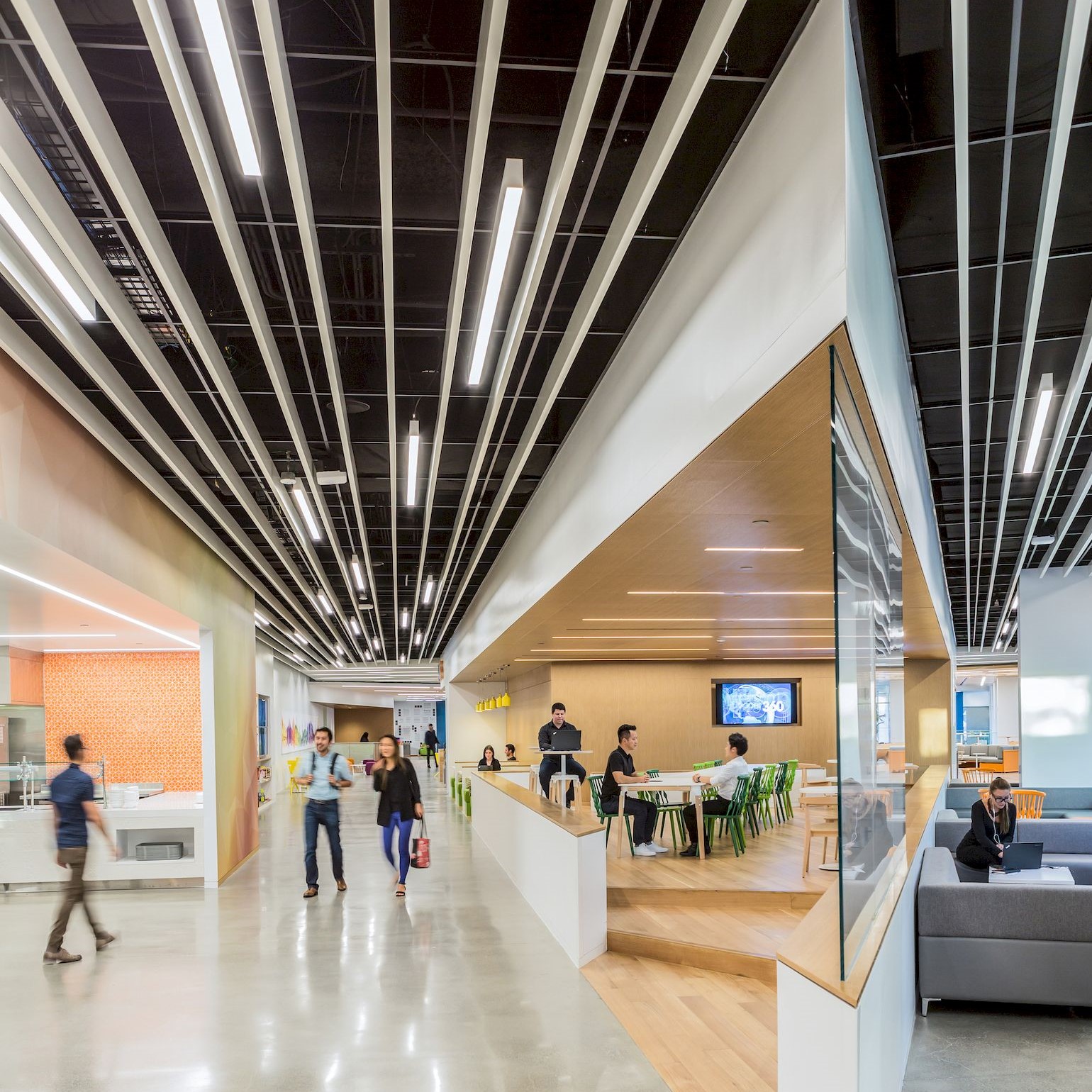
Image: Adobe White Collar factory, London