

December 2, 2025
Largest office development in Netherlands approved for Rotterdam
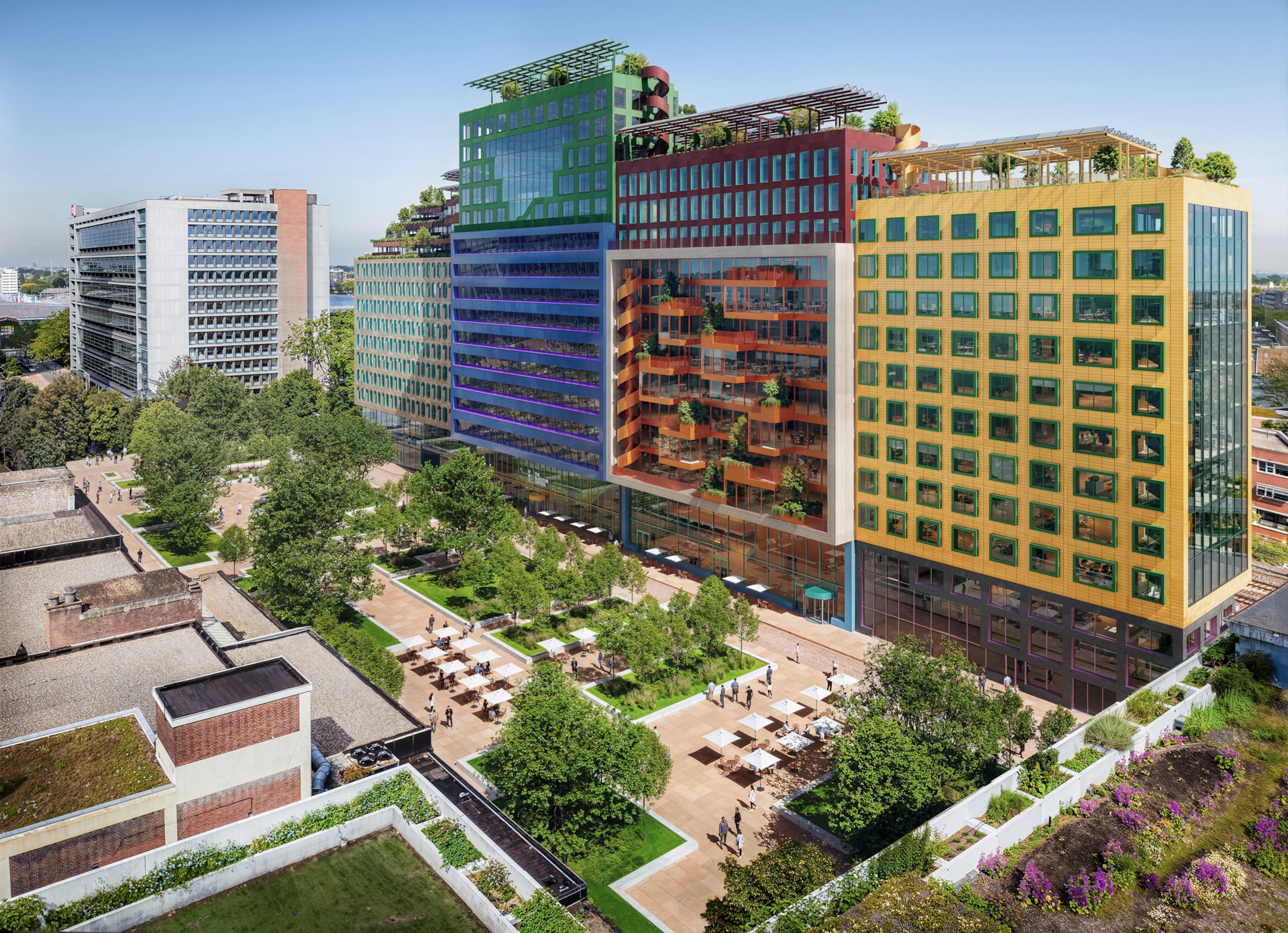
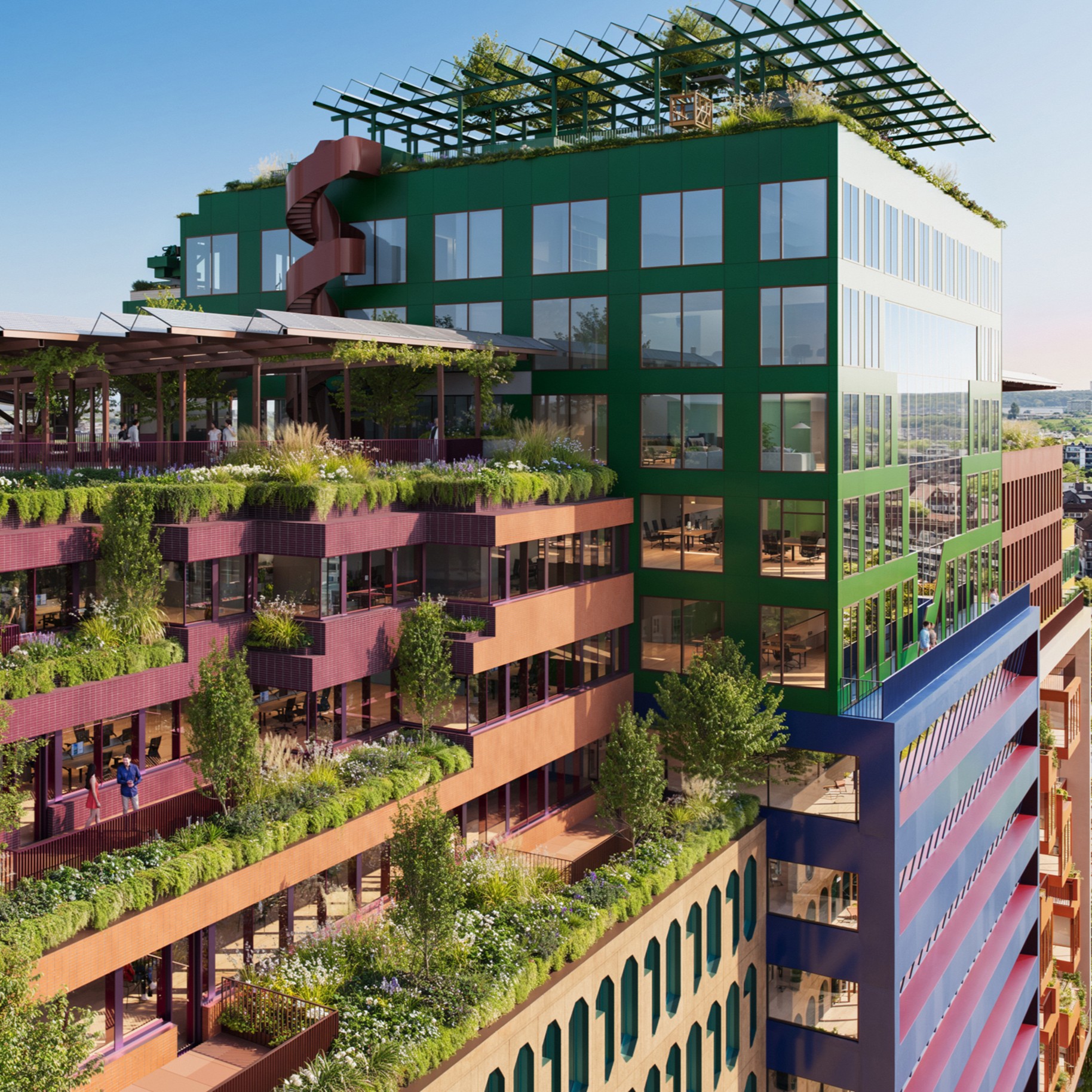 Rotterdam has granted approval for a substantial new office development known as the Schieblocks, a 47,000-square-metre project that is set to become the largest privately built office building currently under construction in the Netherlands. Designed by MVRDV for developer LSI, the scheme occupies a long and narrow site beside the railway line and rises to 61 metres, with commercial uses at ground level and a restaurant and event space on the upper floors. Its form is broken into a series of distinct blocks, each intended to create a more approachable scale and reflect characteristics of the city.
The development sits within the Schiekadeblok, an area of smaller post-war buildings that has become a noted part of Rotterdam’s cultural life, home to creative firms, bars, and music venues. As the city explores options to increase density in the district without losing its particular identity, the design team sought to align the new structure with the character and scale of its neighbours. The massing follows the rhythm of the existing façades along Delftsestraat and is arranged in four layers, adding eleven new building volumes that echo the city’s reconstruction-era blocks in a vertical composition. Some of the upper elements are shaped to limit shadows on nearby homes.
Each block draws on a different reference from Rotterdam’s built fabric, with colours and window patterns inspired by well-known landmarks. Examples include bay windows reminiscent of the Citrusveiling building and a bright yellow drawn from the former Luchtsingel bridge. Another block uses a sandstone hue associated with the city hall and incorporates window shapes that allude to the “010” dialling code and nearby Hofplein buildings.
Although the façades draw heavily on historic cues, several materials used are more experimental. Two blocks employ bricks made from recycled content, while others integrate photovoltaic panels to make use of the south-facing aspect and reduce operational energy demand.
At street level, transparent frontages will house a mix of public-facing uses such as a concept store, bakery, and bike café, along with access to the building’s cycle parking and a 230-space underground garage. One unusual feature is a retained car ramp belonging to the adjacent Central Post building, which is enclosed in glass to form the centrepiece of a new bar known as the Wokkelbar.
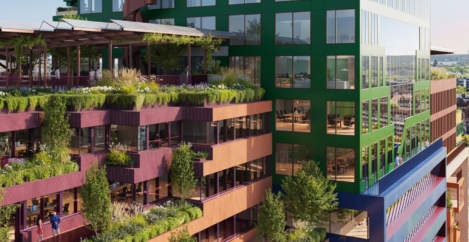
The upper levels of the office include a restaurant and a two-storey events venue with views across the city. A publicly accessible roof landscape designed by Juurlink and Geluk extends the full length of the building, incorporating planting, water-retention features, and shaded areas beneath a pergola fitted with solar panels.