July 15, 2026
The workplace canteen isn’t too expensive. The way you run it is.
 Most facilities teams have quietly reached the same conclusion: a staffed workplace canteen costs too much to justify, so it’s a snack machine or nothing. They’re half right. The canteen isn’t the problem — the model is. And the model has changed. Ask a facilities manager what their canteen actually costs, and you’ll rarely get a clean figure. The invoice is deliberately fragmented — food, labour, a contract caterer’s management fee, site costs — and the biggest line, labour, is the one under most pressure.
A 100–300-person site usually runs at least four kitchen staff: a manager, a chef, a cook, a porter, each carrying salary, holiday cover and rising on-costs. Since April 2025, employer National Insurance has been 15% on earnings over £5,000; the National Living Wage climbs again to £12.71 an hour in April 2026. Factor in a chef shortage that turns one sick day into an agency scramble, and a staffed workplace canteen stops looking like a perk.
The choice was never as binary as it looked
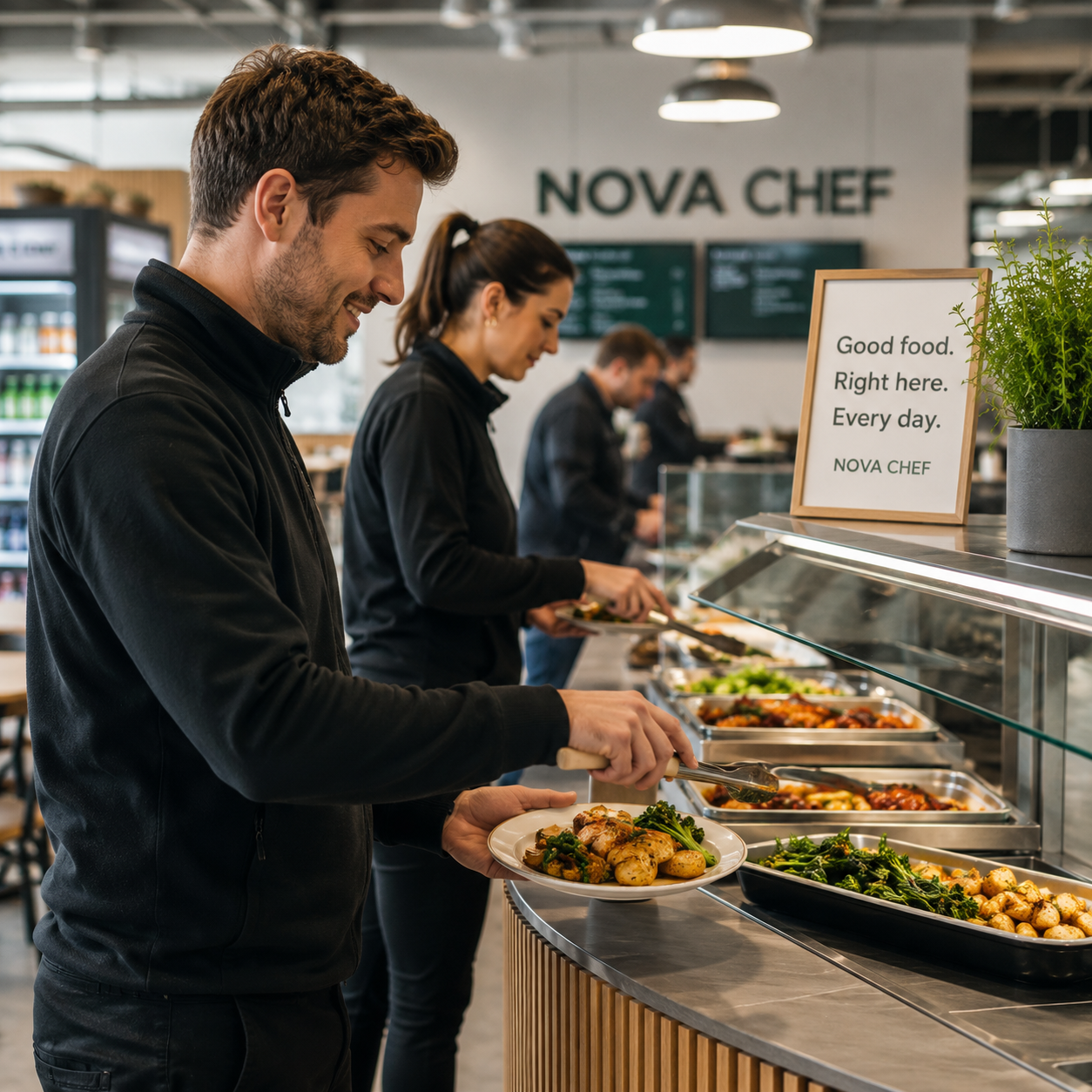
For years the decision came down to two options: keep an expensive staffed kitchen, or drop to a basic snack machine that fills a gap but doesn’t really feed anyone. That false choice is what’s changed. The same chef-made meals can now be served two ways — plated by a small on-site team, or through a hot-food vending machine that delivers a proper hot meal in minutes. Either way, staff get real food on site, and you’re not running a full kitchen to provide it.
The economics that changed
Whichever way it’s served, the model is what makes it work. Meals are cooked centrally by chefs, blast-frozen at their peak, and finished on site in smart ovens in minutes. For a facilities team, the maths shifts: a 100-cover service runs on about two staff instead of four, with no on-site chef, no extraction or kitchen build, and no management fee. Operators who move off a major contract caterer typically see 25–50% lower labour cost, at a meal cost of £3.10–£4.50. One Midlands manufacturer we supply cut its canteen headcount by a quarter and its management fee by three-quarters after switching.
This is a workplace-experience decision, not just a catering one
Cost is only half of it. The reason to keep feeding people on site — rather than let them scatter at lunch — is that on-site food measurably affects attendance and retention, most of all on long-hour and shift sites, and anywhere trying to make the return to office worth the commute. The barrier was never whether people value good food; it was the cost and complexity of making it in the building. Take the kitchen out of the equation, and a proper hot lunch becomes something FM can offer without running a restaurant. Quality doesn’t take the hit you’d expect, either: the food is developed by a Michelin Guide restaurateur, praised by three-Michelin-star chef Pierre Koffmann, and made in a SALSA-certified facility — so it lands the same way at every service.
Four questions before you decide
If you’re reviewing your own setup, four questions cut through the sales noise:
- What are we paying all-in — including the management fee and employer NI on catering staff?
- What’s our true cost per cover, and how does it compare with what staff pay?
- What’s our canteen utilisation, and which way is it trending?
- When did we last taste-test an alternative? (Almost always: never. Start there.)
The workplace canteen isn’t finished. The expensive way of running one is. For facilities teams told to cut cost without cutting the things people actually notice, feeding staff well on site has quietly become doable again — you just don’t need a kitchen to do it. Nova Chef works with UK workplaces, hotels and healthcare sites to make that switch.

Danat Abdrakhmanov, CFA is an entrepreneur, investor and the co-founder of NOVA CHEF