








December 12, 2025
Why writing by hand still matters for learning and thinking
 The steady shift from pens and pencils to keyboards has led many schools to play down writing by hand and other fine motor activities. But a major new review of research suggests that may be a mistake. The study, published in Educational Research Review, brings together evidence from 118 previous studies involving almost 80,000 children and adolescents. Taken together, it shows a clear and consistent link between children’s fine motor skills and how well they perform at school, across reading, writing, mathematics and broader cognitive measures. In other words, writing may be thinking in both a physical and cognitive sense.
Fine motor skills are the small, precise movements we make with our hands and fingers. The researchers did not treat these as a single ability, but separated them into different types. These included dexterity, such as manipulating small objects; speed, such as rapid tapping movements; finger awareness, known as finger gnosia; and, crucially, graphomotor skills, which involve using a tool like a pen or pencil to create symbols.
Overall, children with stronger fine motor skills tended to achieve better academic results. The strength of the relationship was moderate to strong by the standards of educational research, and it did not fade with age. The same pattern was found in adolescents as in younger children, suggesting this is not simply a temporary developmental effect that disappears once basic skills are learned.
What stands out most clearly is the role of handwriting and similar activities. Of all the fine motor skills examined, graphomotor skills showed the strongest links to academic performance, especially to writing outcomes such as forming letters, words and sentences. This suggests that there is an important difference between handling objects and using the hand to control a tool that produces meaning, such as written language.
The researchers also explored why these links exist. Part of the explanation appears to lie in shared mental processes. Skills such as attention, planning and working memory are involved both in controlling the hand and in learning academic content. At the same time, the analysis suggests a more direct, functional role for the hands, particularly in writing. Even after accounting for general cognitive ability, fine motor skills still showed a direct relationship with academic performance.
Taken together, the findings challenge older ideas that treat the hands as little more than tools for carrying out instructions from the brain. Instead, they support the view that hand movements and thinking are closely connected, both neurologically and in everyday learning.
For a generation of pupils growing up with screens, the message is a simple one. Writing by hand is not an outdated habit with no educational value. The evidence suggests it remains closely tied to how children learn, think and succeed at school, well beyond the early years.
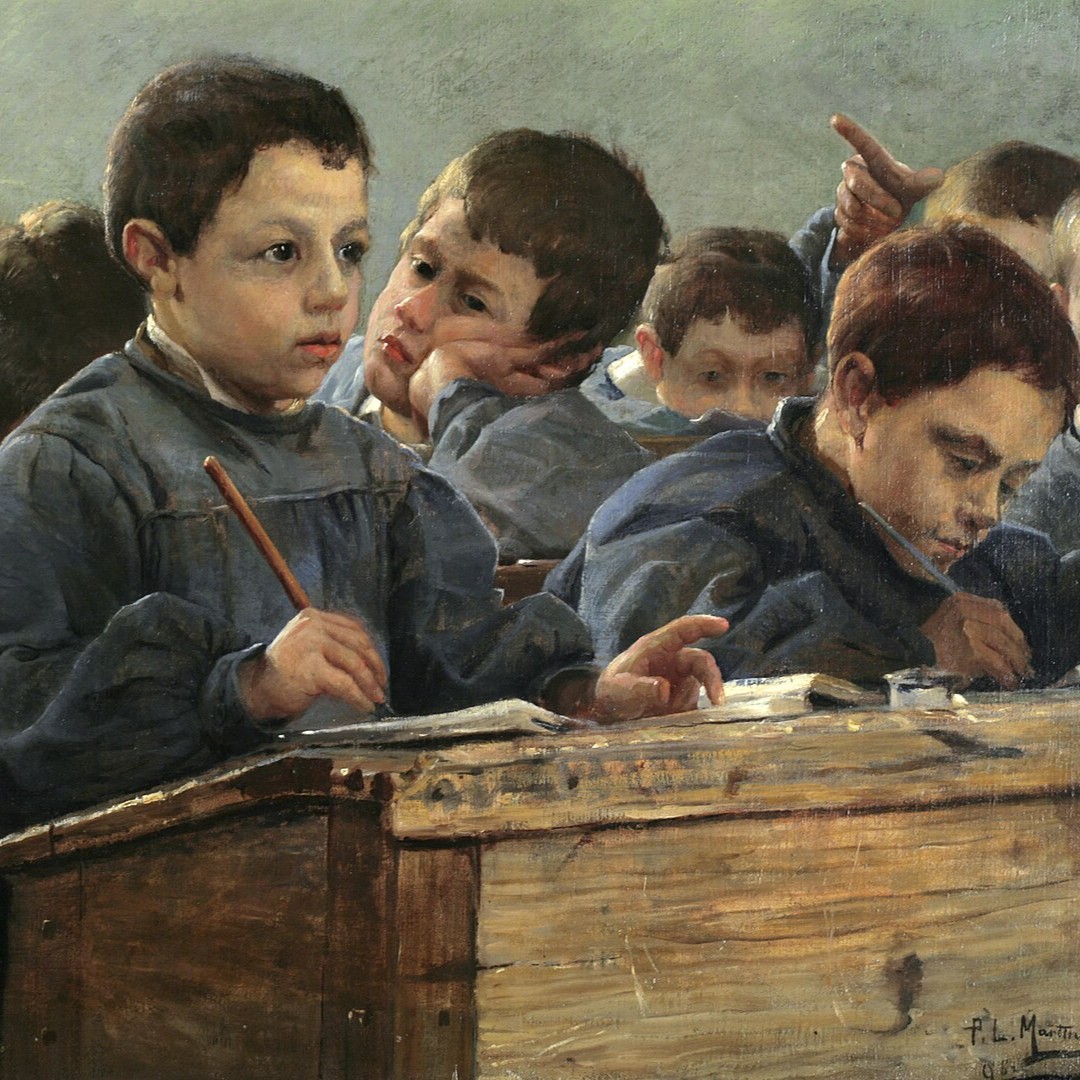
Image: From In the Classroom (1886) by Paul Louis Martin des Amoignes (1858–1925), Wikimedia Commons