



Search Results for: flexible

Redefining the modern workplace: flexibility, zoning, and employee wellbeing
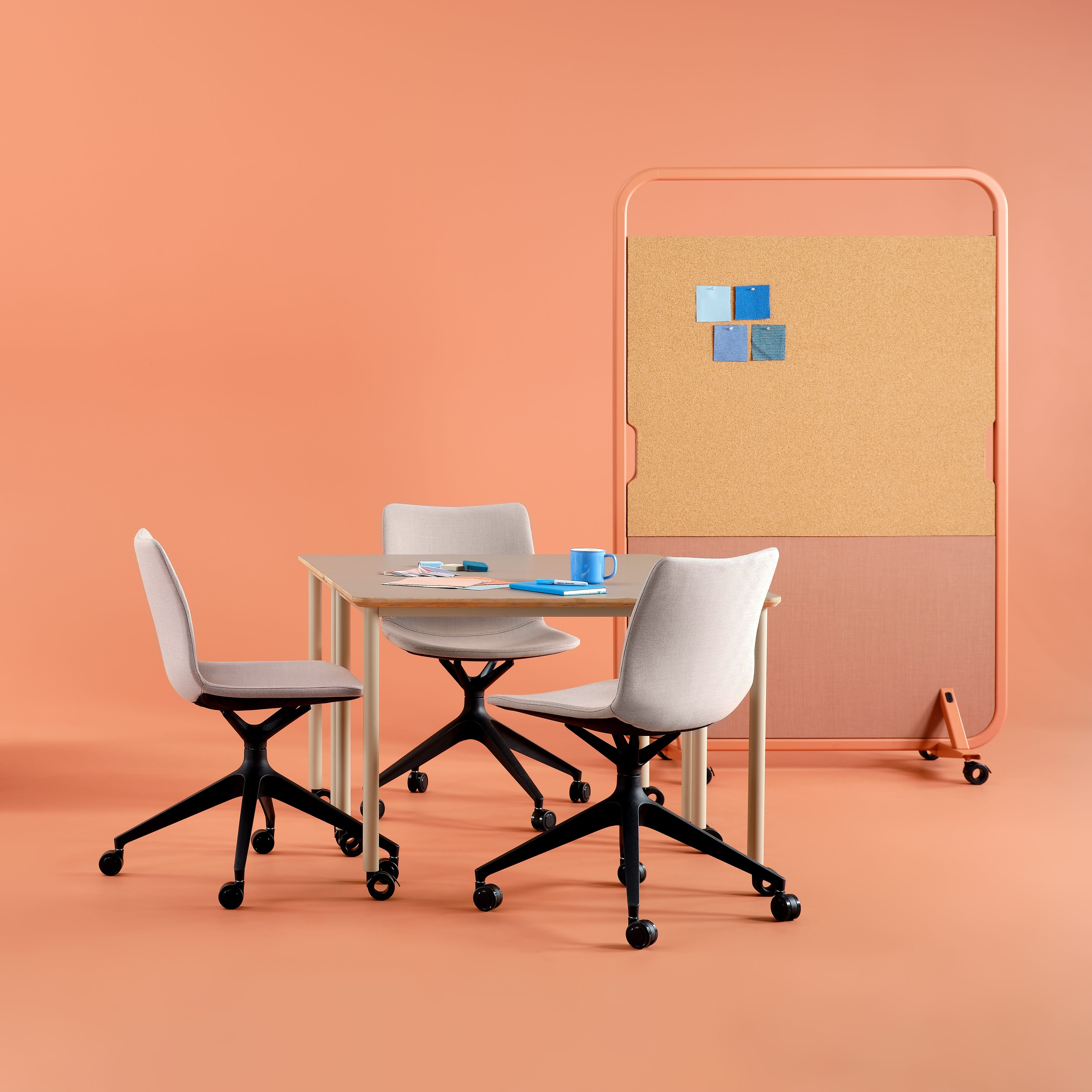
Redefining the modern workplace: flexibility, zoning, and employee wellbeing

The modern workplace is evolving faster than ever. Traditional layouts of rows of desks and enclosed cubicles are giving way to offices designed around flexibility, collaboration, and employee wellbeingThe modern workplace is evolving faster than ever. Traditional layouts of rows of desks and enclosed cubicles are giving way to offices designed around flexibility, collaboration, and employee wellbeing. For organisations seeking to stay ahead, the key lies in thoughtful workspace zoning—creating adaptable environments that respond to how people actually work today. One of the most significant trends shaping office design is flexibility. Work patterns have changed: teams collaborate in bursts, focus deeply in concentrated periods, and switch between in-person and digital modes throughout the day. Workspaces that can transform to meet these changing needs without major disruption are becoming essential. Mobile partitions and modular systems allow offices to create temporary or permanent zones that can adapt in real time, supporting a mix of focused work, collaboration, and social interaction. (more…)


The power of play: how pool and table tennis can transform the workplace

The power of play: how pool and table tennis can transform the workplace

While workplace wellness programmes and flexible policies have their place, one of the most simple and effective interventions is often overlooked: playWorkplaces are under growing pressure to support both productivity and well-being. Hybrid schedules, long desk hours and rising stress levels mean organisations are rethinking what the office should provide. While wellness programmes and flexible policies have their place, one of the most simple and effective interventions is often overlooked: play. Games like pool and table tennis may once have been dismissed as gimmicks, but today they are increasingly recognised as part of a serious workplace strategy. Far from being distractions, they support movement, collaboration, mental health and focus – all of which are critical in a modern knowledge economy. (more…)

Younger people want more office time as remote work leaves many feeling isolated

Younger people want more office time as remote work leaves many feeling isolated

A new poll suggests that younger people are increasingly seeking a return to office working, as large numbers report that remote work has left them feeling lonely and disconnected. The survey from Bupa, based on responses from employees aged between 16 and 24, found that around 40 percent say they feel lonely when working from home. Many of those in this group began their careers during the pandemic, with limited experience of office-based work and the informal social interactions that accompany it. (more…)

UK public sector appears to be phasing out remote and hybrid working

UK public sector appears to be phasing out remote and hybrid working

A new report suggests the UK public sector is moving sharply away from remote and hybrid working, despite signs that the shift could be undermining recruitment and retentionA new report suggests the UK public sector is moving sharply away from remote and hybrid working, despite signs that the shift could be undermining recruitment and retention. According to the 2025 State of Digital report by Unit4, just over half of UK public sector organisations now require employees to be fully office-based, compared with only 7 percent in 2023. The proportion operating fully remote models has dropped from 37 percent two years ago to 15 percent, while hybrid arrangements have fallen from 93 percent to 49 percent. (more…)

CBRE reports strong demand for premium office space and record data centre growth in the UK

CBRE reports strong demand for premium office space and record data centre growth in the UK

the office market is benefiting from strong demand for premium office space and renewed overseas investment, the life sciences sector is seeing steady growth in funding but slower movement in transactions. At the same time, the data centre market is entering a period of exceptional expansionThe UK’s commercial property market is showing sharply contrasting performances across key sectors at the midpoint of 2025, according to CBRE’s latest UK Real Estate Market Outlook Mid-Year Review. While the office market is benefiting from strong demand for premium office space and renewed overseas investment, the life sciences sector is seeing steady growth in funding but slower movement in transactions.

At the same time, the data centre market is entering a period of exceptional expansion, with record levels of take up forecast and new developments extending beyond traditional hubs. The findings highlight how underlying supply constraints, shifting occupier needs and targeted government support are reshaping investment priorities across the country.

(more…)

Growing number of businesses want people back in the office, but not in all sectors

Growing number of businesses want people back in the office, but not in all sectors

Over two fifths (41 percent) of businesses have emphasised the need for people to work in a physical workspace such as an office over the past year, according to a new pollOver two fifths (41 percent) of businesses have emphasised the need for people to work in a physical workspace such as an office over the past year, according to a new poll from the British Chambers of Commerce (BCC). While most of the firms (67 percent) who require onsite working say it hasn’t impacted recruitment or retention, one in ten relevant businesses (9 percent) have seen staff leave in response. (more…)

Leadership teams are struggling to cope with the pace of change

Leadership teams are struggling to cope with the pace of change

Executive teams are failing to keep pace with the demands of a world defined by constant disruption, according to a new report.Executive teams are failing to keep pace with the demands of a world defined by constant disruption, according to a new report. The study, from  consultancy Waldencroft, claims that most senior teams remain fragmented and reactive, with only a small proportion taking a strategic, enterprise-wide view. The report, The Executive Readiness Gap, draws on insights from 20 in-depth interviews and 40 surveys with Chief People Officers across a range of complex and international organisations. It suggests that disruption has become a permanent fixture in the business environment, but many leadership teams continue to treat it as episodic—responding only when necessary before trying to return to a previous norm. (more…)

Average length of London flex office agreements reaches a new high

Average length of London flex office agreements reaches a new high

New research from CBRE has found that the average London flex office agreement now stands at 22 months, a record highNew research from CBRE has found that the average London flex office agreement now stands at 22 months, a record high since CBRE started tracking the data in 2020. In addition to longer commitments from occupiers, pricing in the capital has increased in recent years for best-in-class locations, with CBRE’s data showing H1 2025 rents in Mayfair & St James’s achieving an average of £315 per sq ft, and a top rate of £380 per sq ft, the highest in the UK. (more…)

Does your employee benefits package have a marketing problem?

Does your employee benefits package have a marketing problem?

Despite many businesses investing heavily in employee benefits, many of these perks fail to deliver their full potential. Here's what to do about itDespite many businesses investing heavily in employee benefits, many of these perks fail to deliver their full potential. According to the 2025 Drewberry Employee Benefits and Workplace Satisfaction Survey, just 12 percent of UK employees report being truly satisfied with their benefits package. This gap in satisfaction isn’t always about the benefits themselves, but is often a failure of communication. This latest research shows that while benefits may be in place, just 36 percent of employees fully understand what’s on offer. Even fewer regularly engage with these benefits. (more…)

Office utilisation reaches equilibrium, and demands a rethink of workplace strategy

Office utilisation reaches equilibrium, and demands a rethink of workplace strategy

The British Council for Offices (BCO) has published a new report which claims that while office utilisation rates have stabilised, there has been a fundamental shift in how offices are usedThe British Council for Offices (BCO) has published a new report which claims that while office utilisation rates have stabilised, there has been a fundamental shift in how offices are used, with major implications for developers, investors and occupiers. The report, authored by Nigel Oseland of Workplace Unlimited, shows that the long-standing benchmark of 80 percent office utilisation is no longer fit for purpose. Post-pandemic data suggests a more realistic, but nevertheless conservative, figure of 66 percent equating to an effective density of 15 sq. m per occupant, up from the previous 12.5 sq. m. This recalibration reflects a maturing flexible working model that empowers organisations to right-size their space, reduce waste and enhance employee experience. With high-profile organisations in financial services and the public sector under the spotlight for space misalignment, the report offers timely, evidence-based guidance for the sector. (more…)

Commercial property growth in regional cities driven by financial services firms

Commercial property growth in regional cities driven by financial services firms

Commercial property markets in regional UK cities are seeing significant growth as major financial institutions reconfigure their office strategiesCommercial property markets in regional UK cities are seeing significant growth as major financial institutions rethink their office strategies to focus on high-value client interactions in London while relocating support functions elsewhere. New research from JLL suggests that financial services firms have accounted for more than 440,000 square feet of inward investment in office space across Glasgow, Leeds, Bristol, Manchester, Edinburgh and Birmingham over the last decade. This is more than the space acquired by manufacturing (238,822 sq. ft) and service industries (224,813 sq. ft), though still behind technology, media and telecoms (TMT) and flexible workspace sectors. (more…)

Occupiers seek broader value from workplace strategies

Occupiers seek broader value from workplace strategies

A new report from Cushman & Wakefield, in partnership with CoreNet Global, claims to highlight how corporate occupiers are adjusting their real estate and workplace strategies in response to ongoing cost pressures and shifting organisational prioritiesA new report from Cushman & Wakefield, in partnership with CoreNet Global, claims to highlight how corporate occupiers are adjusting their real estate and workplace strategies in response to ongoing cost pressures and shifting organisational priorities. The What Occupiers Want 2025 survey is based on responses from over 230 senior real estate leaders across global markets. While cost remains the primary driver of decision-making, the findings suggest that occupiers are placing increased emphasis on performance, employee experience and long-term value. (more…)