Search Results for: culture

BIFM workplace debate focuses on links between FM and design

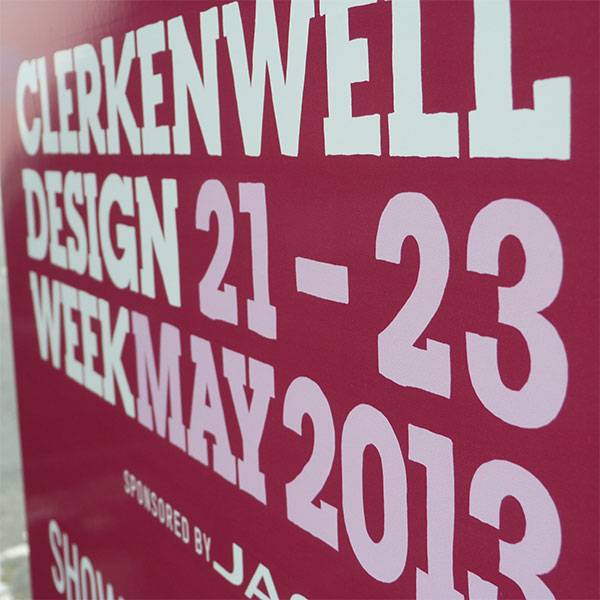
Clerkenwell_Design_WeekClerkenwell Design Week was the appropriate setting for the inaugural event staged by the newly formed Workplace Special Interest Group (SIG) of the British Institute of Facilities Management. The event was staged at the showroom of office furniture giant Haworth on the 22 May, during Europe’s largest exhibition of workplace products and services. It saw a panel of industry experts debate in lively fashion the deliberately provocative proposition : Form or Function? Do you need office designers to create a great workplace environment? 

(more…)

UK public sector leading the way in procurement and sustainable building

Nottingham City Council's Loxley Building

Nottingham City Council’s Loxley Building

Over the last few years, the UK Government has grown increasingly interested in finding ways of making its £30 billion property portfolio more efficient. Both the last Labour government and the current Coalition administration have been driven by the opportunities offered them with the advent of new technology, new ways of working and new procurement models. They’ve pursued these issues to cut costs by reducing and changing the way property is designed and managed but have also found how that can also help to establish best practice in sustainable building. What is increasingly apparent, especially given recent news from the Major Projects Authority about cost savings in procurement is that the public sector is now leading the way as models of good practice.

(more…)

Flexible working going into reverse in parts of UK public sector

Broken elastic bandA briefing from the Society of IT Management claims that while nearly all UK public sector organisations have adopted some form of flexible working, the practice remains far from universal and is going into reverse in some departments. The report found that  around  97 percent  of UK public sector organisations have now  adopted the practice in the form of home working, desk sharing and mobile working in four of the public sector functions surveyed. While while there have been large increases in adoption the adoption of flexible working in the revenues and benefits functions and some in education, four other services show a significant decline with others appearing to be static.

(more…)

RICS developing BIM accreditation standard to advance uptake

RICS accreditation standard being developed to advance BIM

Alan Muse, Director of Built Environment Professional Groups (RICS) is calling for a cultural shift to ensure that Building Information Modelling (BIM) is more widely adopted. This follows the results of a survey taken at the RICS National BIM conference which revealed that despite its overwhelming recognition within the built environment nearly half of respondents were still not using the process, with 46 per cent identifying minimal client demand as a major factor preventing their implementation of BIM. Comments Muse: “Quite simply, some clients are not yet recognising the efficiencies that BIM can bring”, which is the reason why RICs is now developing a BIM accreditation standard.

(more…)

JSA launches latest league table of European office furniture companies

EU FlagAs the world gets smaller and the communications revolution continues apace, one relatively unnoticed casualty is the design individuality of offices. Time was when you could walk into an office and the furniture would tell you whether you were in Paris, Frankfurt, New York, Milan, Moscow or London. The colours, shapes, materials, construction and image of the furniture were all very local, almost parochial. Who could fail to be struck by the muddy oranges and greens of a French office? Or the inevitable mahogany or teak real wood veneers used in the UK? The panels, worksurfaces and storage units which made up US cubicles were rarely seen outside North America and the massive, dark wood desks and cabinets in Central European deliberately overawed visitors and staff alike.

(more…)

Recruitment rates rise, but employers should be careful who they hire

Recruitment rates rise, but employers should be careful who they hire

There is mixed news on the recruitment front, with the latest Recruitment and Employment Confederation (REC) and KPMG report on jobs hinting a positive turn, with permanent placements accelerating, the rate of demand for permanent staff remaining solid and average starting salaries continuing to rise. However, according to a new global report, employers are urged to be cautious about who they hire, because more than half of employers in each of the ten largest world economies say that a bad hire has negatively impacted their business, pointing to a significant loss in revenue or productivity or challenges with employee morale and client relations.

(more…)

Report urges EU and members states to use design for public good

Report urges EU and members states to use design for public good

Design is no longer just an add-on, but has evolved into a fully joined-up innovation methodology and with countries around the world adopting this thinking the European Union cannot afford to be left behind.  This is the message of Design Council and other members of SEE (Sharing Experience Europe) in a report published today, Design for Public Good, which encourages the European Union and its member states to adopt design-led innovation to create the next generation of public services and policy that can meet the pressing demands of the future.

(more…)

What Søren Kierkegaard can teach us about workplace design and management

KierkegaardSøren Kierkegaard was a Nineteenth Century Danish philosopher and proto-existentialist. Not for him the hazy, romantic ideals of many of his contemporaries. He was one of the thinkers who gave birth to the Twentieth Century with its focus on the individual, reality and life in a sometimes uncaring world, although he was no atheist like many of the true existentialists. If he’s generally well known for anything these days it is for a single quotation that reads like a greeting card aphorism but is no less true for that. He said: ‘Life can only be understood backwards; but it must be lived forwards.’ Looking back can give you a real handle on the present. I moved offices recently and as these things happen, a number of books that I routinely ignore fell open while I was looking for some displacement activity.

(more…)

Majority of employers support flexible working but perception problems persist

flexible work

As we reported last week, the Millennial generation of workers born in the 80s and 90s would describe work as a “thing rather than a place”, and want more flexibility in where and how they work. While the Yahoo home working ban debate uncovered a lot of exasperation and suspicion towards this trend, it’s interesting to see two separate studies, from the UK and the U.S. that show a far less combative attitude. But, as the U.S study discovered, while a majority of employees enjoyed real productivity benefits from home working, nearly half would still go into the office because it is what is expected of them and a small percentage still go because it gets them out of the house. (more…)

CIBSE creates diversity panel to reflect varied workforce

Diversity in the workplace

Efforts to encourage a more inclusive culture within the built environment appear to have moved up a gear. RIBA President Angela Brady has voiced concerns on the “gender inequality that continues to pervade the profession,” and now the Chartered Institution of Building Services Engineering (CIBSE) has launched a Diversity Panel. Formed to encourage diversity in all its forms, whether race, gender, age, sexual orientation or disability, it is made up of CIBSE members who are keen to increase the routes to the profession through educational paths and by promoting a diverse workplace. Commented CIBSE: “The employment and retention of a varied workforce is integral to meet the building services engineering skills gap and to therefore improve building performance.” (more…)

Female-friendly employers named as progress of women in boardrooms stalls

Top 50 Employers for Women named

In an interview this week on BBC’s Newsnight, Facebook’s CFO Sheryl Sandberg, revealed how she’d come to notice a growing gender imbalance as she moved up the corporate ladder. As her new book Lean in, points out, 30 years after women became 50 per cent of the college graduates in the United States, men still hold the vast majority of leadership positions. This is just one of many reasons why the publication this week of the Times Top 50 Employers for Women list of the UK organisations that are leading the way in gender equality in the workplace is to be welcomed.

(more…)

Why we might all get more done if we did things more slowly

Tree OctopusThe idea that for every action there is a reaction applies just as much in culture as it does in physics. So just as life speeds up to the point where it is self-evident that many people are struggling to keep pace with its most basic demands, a small number of people are looking at ways of putting on the brakes. Most famously in 2004, the Canadian Carl Honoré established the Slow Movement. James Gleick was banging the same drum with his book Faster. We could all hope that as a result of such people asking for the brakes to be applied, things would slow down just a little now our attention had been drawn to the problem so that we could all feel a little better, take time to do things properly and maybe even do them better.

(more…)