Search Results for: learning

Is resilience a personality trait or a flaw in workplace design?

Is resilience a personality trait or a flaw in workplace design?

Resilience is often ascribed to the individual, but are there other ways we could look at the issue, asks Carl LyonsResilience must be one of the most misunderstood issues affecting businesses right now. It’s used whenever people are struggling, and almost always aimed at the individual – be tougher, manage your stress, build a bit more grit. During countless conversations with leaders and teams over the last few years it has been seen that those words do real damage to people who are trying hard to do their best. When tiredness is no longer fixed by a weekend, when feedback lands as a threat, and when change is met with a sigh, it gets recorded under ‘poor personal resilience’, effectively telling people the problem is with them. I don’t think it is. I think we’re looking in the wrong place. (more…)

AI could increase the relevance of the physical workplace, Gensler report suggests

AI could increase the relevance of the physical workplace, Gensler report suggests

Workers who regularly use artificial intelligence are spending less time working alone and more time learning and socialising with colleagues, suggesting that the spread of AI could increase rather than diminish the importance of the physical workplaceWorkers who regularly use artificial intelligence are spending less time working alone and more time learning and socialising with colleagues, suggesting that the spread of AI could increase rather than diminish the importance of the physical workplace. Gensler’s Global Workplace Survey 2026 found that 30 per cent of workers regularly use AI tools in both their professional and personal lives, a group the architecture and design firm describes as “AI power users”. A further 36 per cent are classed as late adopters who rarely or never use AI. (more…)



Productivity gains from workplace AI mean little if they erase professional judgment

Productivity gains from workplace AI mean little if they erase professional judgment

Speed can become a dangerous proxy for the value of workplace AI when leaders stop asking what happened to the judgment behind the work.The strongest case for workplace AI rarely begins with a dramatic breakthrough. It begins with ordinary time savings: a report drafted faster, a plan assembled in minutes or a first pass produced without the usual blank-page delay. Those gains matter. Yet speed can become a dangerous proxy for value when leaders stop asking what happened to the judgment behind the work. (more…)

Barbican Centre launches search for furniture designer as part of £231m renewal

Barbican Centre launches search for furniture designer as part of £231m renewal

The Barbican Centre has launched an international search for a designer or design team to develop a new furniture strategy for its public spacesThe Barbican Centre has launched an international search for a designer or design team to develop a new furniture strategy for its public spaces as part of its £231 million renewal programme. The commission will involve creating a bespoke range of up to 500 pieces for the Grade II-listed arts centre, alongside identifying opportunities to reuse existing furniture and introduce suitable off-the-shelf products. The appointment is expected to run from 2026 to 2029.

The competition is open to designers and teams based anywhere in the world, with proposals due by 28 August. A shortlist is expected to proceed to a full tender process in September, with an appointment planned for November. The new furniture will be used throughout the Barbican’s public spaces and could include armchairs, sofas, coffee tables, bar stools, communal benches with parasols and stackable chairs for larger events. Accessibility, flexibility and sustainability will be central to the brief.

The work will cover areas including the Lakeside, Sculpture Court and Learning Spaces, as well as redesigned foyers being developed by Allies and Morrison and Asif Khan Studio.

The Barbican said recent audience feedback, inclusive design work and co-design with visitors had highlighted a need for furniture that was more welcoming, cohesive, accessible and adaptable to the range of activities taking place across the centre.

Furniture has played a significant role in the Barbican’s identity since it opened in 1982. Designer Robin Day produced bespoke seating, sofas, chairs and tables specifically for the building, although much of the original furniture has since been replaced.

Philippa Simpson, chief operating officer at the Barbican Centre, said furniture had always helped shape how people experienced the building. “We’re looking for a designer or design team to create objects of quality and comfort, that respond to the Barbican’s extraordinary architecture and artistic purpose,” she said. “We want these new designs to accommodate the remarkable range of activities that take place in our spaces, ensuring every single visitor knows they are welcome.”

Alex Watt, architect at Asif Khan Studio, said the commission offered an opportunity to extend the design thinking being applied to the centre’s foyers, while retaining the character of the original architecture.

The furniture project forms part of the wider Barbican Renewal programme, which is intended to conserve and upgrade the building ahead of its 50th anniversary while improving its accessibility, sustainability and suitability for future use. The centre receives more than 30,000 visitors on an average day.

Image: The Barbican Archive

A beacon of hope in an uncertain world. Works magazine 20 digital edition is here for you

A beacon of hope in an uncertain world. Works magazine 20 digital edition is here for you

The digital edition of issue 20 of Works magazine is now available for you to read here.  The new issue explores a workplace sector that is becoming increasingly confident about its future, even as it navigates rapid technological, social and economic change. The latest edition brings together major workplace projects, design debates and industry commentary that point to a common theme: the enduring value of connection, community and shared experience in an age of uncertainty. (more…)

UK architects arrive at AI ‘tipping point’ – and a new existential crisis

UK architects arrive at AI ‘tipping point’ – and a new existential crisis

Most architects don't think AI improves the quality of their work, and have become more pessimistic about their future as well as the long term impact on the profession as the tech reduces the number of entry level rolesThe Royal Institute of British Architects (RIBA) has published the results of the third survey among its members into attitudes towards, and usage of Artificial Intelligence (AI).?It outlines how artificial intelligence (AI) adoption has changed, how its use has developed and how design professionals view the AI-influenced future. The poll found that while adoption is widespread, most respondents don’t think AI improves the quality of their work, and have become more pessimistic about their future as well as the long term impact on the profession as the tech reduces the number of entry level roles. (more…)

Are we designing workplaces around evidence or assumption?

Are we designing workplaces around evidence or assumption?

People no longer use workplaces in the same way every day, every week or every season, yet many of the decisions shaping the future of our workplaces still assume that they do.A sudden, intense summer heatwave does more than test a building’s cooling systems; it exposes just how difficult workplace management has become across Europe. During these spikes, employees rethink their commute, meeting rooms fill and empty at different times, quieter corners suddenly become more attractive places to work, and facilities teams work hard to keep buildings comfortable while managing rising energy demands. While these changes may only last a few days, they serve as a useful reminder that workplaces are far more dynamic than we often give them credit for. People no longer use offices in the same way every day, every week or every season, yet many of the decisions shaping the future of our workplaces still assume that they do. (more…)

Most organisations are investing in AI. Far fewer are preparing leaders for it

Most organisations are investing in AI. Far fewer are preparing leaders for it

Businesses are racing to adopt new technologies, but many still lack the leadership frameworks, behaviours and organisational confidence needed to turn AI into meaningful, scaled value.The gap between AI adoption and leadership readiness is becoming one of the defining challenges facing organisations today. According to Gallup’s latest State of the Global Workforce report, only one in five employees believe their manager actively supports their team’s use of artificial intelligence, while just one in four say their organisation has communicated a clear strategy for integrating the technology into work. While investment in AI continues to accelerate, leadership capability is struggling to keep pace. Businesses are racing to adopt new technologies, but many still lack the leadership frameworks, behaviours and organisational confidence needed to turn AI into meaningful, scaled value. (more…)

People are increasingly concerned that their job roles are becoming irrelevant

People are increasingly concerned that their job roles are becoming irrelevant

A new report from Arden University suggests that while many UK workers recognise the growing pace of change in the workplace, only around half are actively developing new skills to keep up with new and emerging job rolesA new report from Arden University suggests that while many UK workers recognise the growing pace of change in the workplace, only around half are actively developing new skills to keep up with new and emerging job roles. The survey of 2,000 UK employees found that 58 percent believe their industry is changing faster than before, yet only 51 percent said they are currently engaged in upskilling. The findings have been released as part of Arden University’s Future of Work and Learning Report. (more…)

Data centres are the most significant building type in the world right now. And we need to talk about that

Data centres are the most significant building type in the world right now. And we need to talk about that

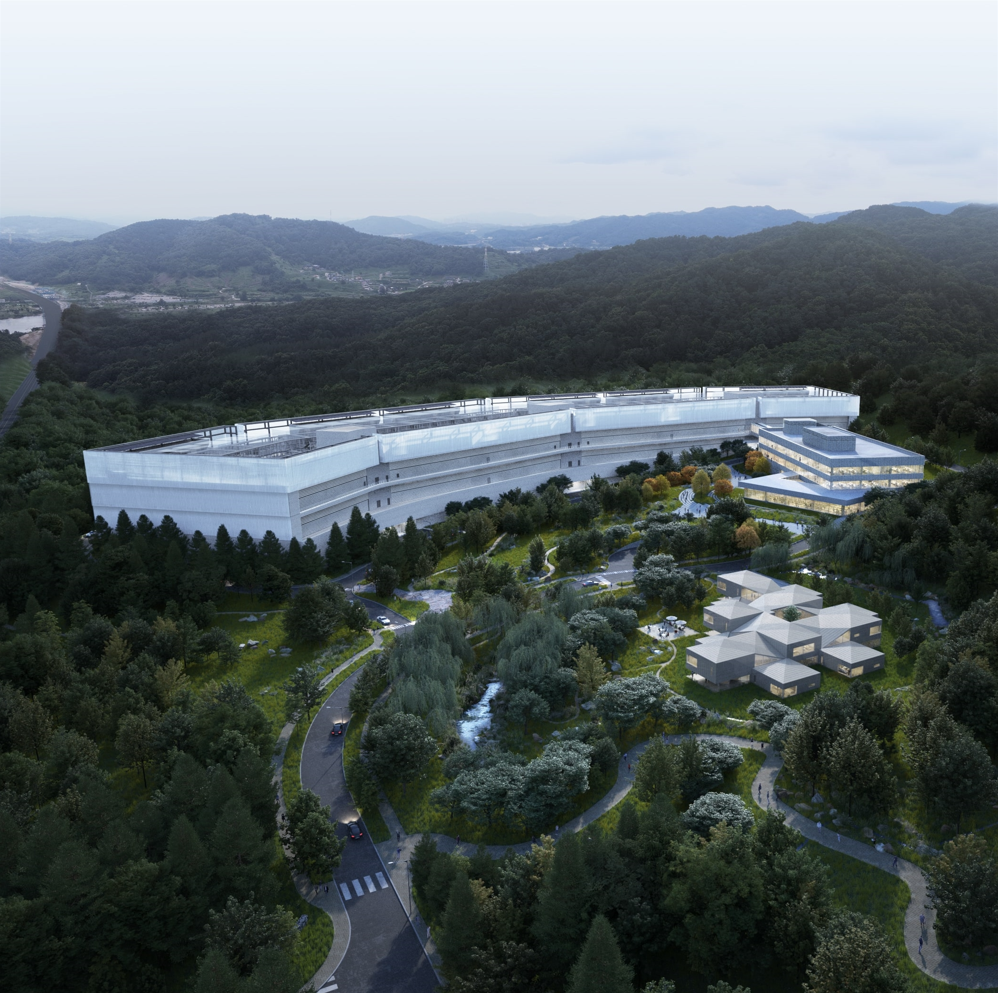
Data centres have always been a slight anomaly in the Built Environment sector, part property and part critical infrastructure (talking in wattage rather than square footage for example), lacking aesthetic appeal and they are not significant employers, they are often considered a necessary evil to support our hyper-communicative lifestylesThe Data Centre Congress which took place from June 1st to 4th in Cannes is to data centres what mipim is to the more traditional markets in property, a place where the good and the great – from investors and operators, to the engineers and power providers, gather to network and contemplate the challenges and the future of the sector. In Q1 last year there was a slight chill through the sector after Microsoft halted data centre plans across the US and Europe to the tune of 2GW, citing caution around the overexpansion of AI and uncertainty around tariffs. What seemed like bombshell news at the time, felt like a mere blip and a distant memory at the 2026 edition and this juggernaut of activity is showing zero signs of slowing, a market that is currently worth over $300 billion is set to rise to $699.13 billion by 2034. (more…)

The role of safety training in healthier and better-managed workplaces

The role of safety training in healthier and better-managed workplaces

OSHA safety training gives organisations a formal way to build that clarity into working life. It helps employees understand the risks linked to their roleA healthy workplace is shaped by more than policies, posters, and annual compliance checks. Employees need clear guidance when they operate equipment, enter unfamiliar work areas, respond to an issue, or see a condition that does not look right. OSHA safety training gives organisations a formal way to build that clarity into working life. It helps employees understand the risks linked to their role and gives managers a stronger basis for setting expectations around safe behaviour, communication, and accountability. (more…)

Announcing a new publication: Sustainability Works

Announcing a new publication: Sustainability Works

We are launching a new publication, Sustainability Works. With the first issue scheduled for August 2026, the new title will incorporate thought provoking articles, features and news stories embracing a truly sustainable approach to people and planet.We are launching a new publication, Sustainability Works. With the first issue scheduled for August 2026, the new title will incorporate thought provoking articles, features and news stories embracing a truly sustainable approach to people and planet. Edited by Joanna Knight, Sustainability Works will be published in partnership with the Sustainable Design Collective. As co-founder of SDC and a Fellow of the Institute of Sustainability and Environmental Professionals, Joanna has many years’ experience in the workplace interiors and furniture sectors. In 2001, she was a founder director of a company which led the field in environmental responsibility and lifecycle management of Furniture, Fittings and Equipment and since that time has championed the importance of greater sustainability. (more…)