

Search Results for: office design

Reimagining inclusive washrooms for the modern workplace

Reimagining inclusive washrooms for the modern workplace

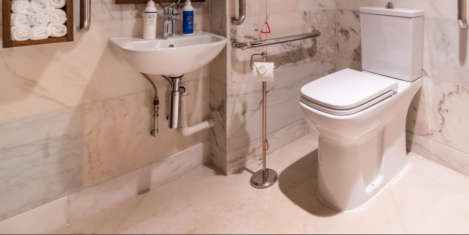
As businesses continue to encourage employees back to the office, Fitzroy of London is urging organisations to rethink one of the most overlooked yet impactful areas of workplace design: the commercial washroomAs businesses continue to encourage employees back to the office, Fitzroy of London is urging organisations to rethink one of the most overlooked yet impactful areas of workplace design: the commercial washroom. Long treated as purely functional and often clinical in appearance, washrooms present a powerful opportunity to create inclusive, uplifting spaces that support everyone who uses them. In many commercial environments, inclsuive washrooms have historically prioritised compliance over experience, resulting in spaces that feel cold, uninspiring and disconnected from the rest of the interior design. Fitzroy of London believes this approach no longer reflects the values of modern workplaces, where inclusivity, wellbeing and design quality are key to attracting and retaining talent. (more…)

ULI Europe publishes new guide on asset-level collaboration to accelerate decarbonisation of occupied buildings

ULI Europe publishes new guide on asset-level collaboration to accelerate decarbonisation of occupied buildings

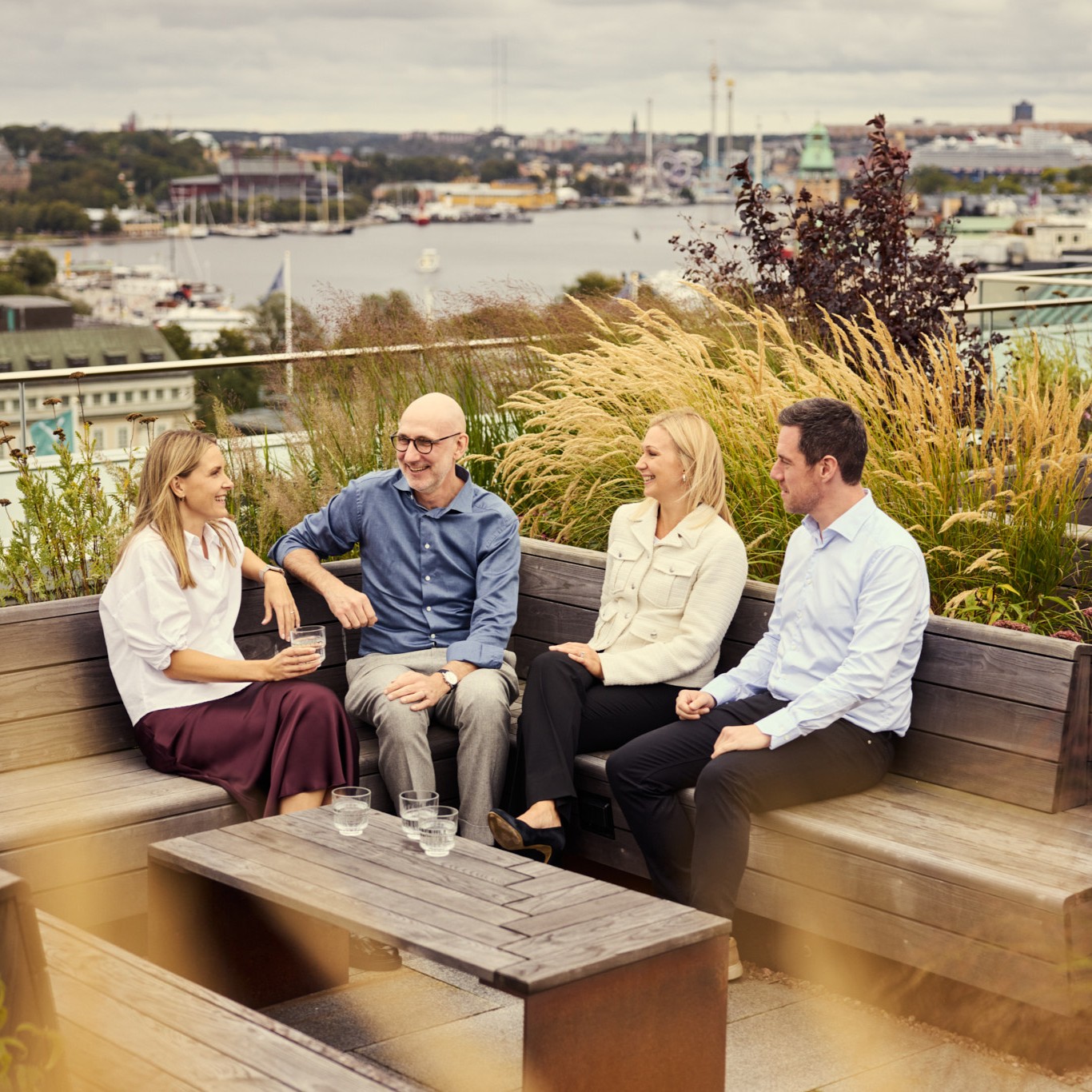
ULI Europe has published a new Asset Sustainability Committees Best Practice Guide through its C Change programme to support collaboration between owners, occupiers and property managers in decarbonising multi-let commercial buildingsULI Europe has published a new Asset Sustainability Committees Best Practice Guide through its C Change programme to support collaboration between owners, occupiers and property managers in the decarbonisation of multi-let commercial buildings. Across Europe, the commercial real estate sector has made significant progress in setting net zero and sustainability commitments. However, translating these ambitions into measurable action within occupied buildings remains a persistent challenge. (more…)

Government expands regional civil service hubs through Places for Growth programme

Government expands regional civil service hubs through Places for Growth programme

The UK Government has reaffirmed its commitment to relocating civil service roles out of London as part of its Places for Growth programme

The UK Government has reaffirmed its commitment to relocating civil service roles out of London as part of its Places for Growth programme, a long-running initiative aimed at strengthening government presence across the UK and reducing reliance on the capital. Updated information published by the Cabinet Office outlines how the programme is intended to support regional economies and bring decision-making closer to communities by creating a more geographically distributed civil service workforce. (more…)

KI Achieves FISP (S) Certification, reinforcing its commitment to sustainable and circular practices

KI Achieves FISP (S) Certification, reinforcing its commitment to sustainable and circular practices

KI has reaffirmed its long-standing commitment to sustainability by achieving the enhanced FISP (S) certification, building on over a decade of continuous accreditation under the Furniture Industry Sustainability Programme (FISP).KI has reaffirmed its long-standing commitment to sustainability by achieving the enhanced FISP (S) certification, building on over a decade of continuous accreditation under the Furniture Industry Sustainability Programme (FISP). As the only independently certified sustainability standard created specifically for the furniture sector, FISP represents the industry’s most comprehensive benchmark for environmental, social and economic best practice. KI first became FISP-certified in 2013. Its progression to the advanced FISP (S) standard in late 2025 demonstrates the company’s ambition to lead the industry toward more circular, transparent and future?ready product development. (more…)

Forget all the talk of Blue Monday; work is still (largely) good for us

Forget all the talk of Blue Monday; work is still (largely) good for us

blue mondaySo here it is. Blue Monday. Today. Officially the most depressing day of the year. We say ‘officially’, but like the idea of ‘Body Odour’ its common usage hides the fact that it was originally created as part of a PR campaign, in this case one for Sky’s travel channel in 2005. The whole idea of Blue Monday is couched in a pseudo-mathematical equation which includes factors like the weather, levels of debt, time since Christmas, low levels of motivation and, apparently, an unspecified variable known simply as ‘D’. (more…)

The coming year will see a recalibration of the workplace, report suggests

The coming year will see a recalibration of the workplace, report suggests

WORKTECH Academy has published a new trends report setting out what it describes as the key forces reshaping work, workplace and workforce strategy in 2026.WORKTECH Academy has published a new trends report setting out what it describes as the key forces reshaping work, workplace and workforce strategy in 2026. The report, The World of Work in 2026, claims to identify twenty trends grouped into four “megatrends”: Human Performance Reset, Workplaces Without Walls, Sustainable Growth and Back to Basics. Together, they suggest organisations are moving away from short-term fixes and “spectacle”, and towards building long-term resilience through adaptability and human capability. (more…)

Furniture Makers accepting nominations for 2026 Young Professional Industry Experience 

Furniture Makers accepting nominations for 2026 Young Professional Industry Experience 

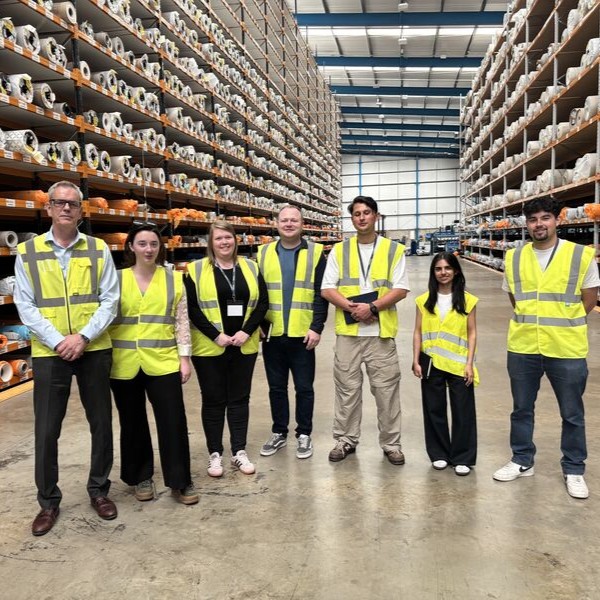
The Furniture Makers’ Company, the City of London livery company and charity for the furnishing industry, is accepting nominations for its Young Professional Industry ExperienceThe Furniture Makers’ Company, the City of London livery company and charity for the furnishing industry, is accepting nominations for its Young Professional Industry Experience. The programme provides aspiring young people working in the industry a unique opportunity to visit sector leading companies and understand all areas of the wider trade, including materials, designing, manufacturing, pricing, marketing, sales and customer service. (more…)

Actionable workplace wellness initiatives for small businesses

Actionable workplace wellness initiatives for small businesses

Wellness initiatives, however, can serve as a practical and powerful solution. When done thoughtfully, they help reduce stress, improve morale, and create a work environment where people feel supportedAmerican workplaces are going through big changes now. Employee engagement has hit a ten-year low. Small businesses often feel these pressures more intensely than large corporations. Limited resources make turnover and declining morale especially difficult for small firms. When even one employee feels overwhelmed or disengaged, the impact can ripple through an entire team.

Wellness initiatives, however, can serve as a practical and powerful solution. When done thoughtfully, they help reduce stress, improve morale, and create a work environment where people feel supported rather than stretched thin.

In this article, we’ll share a few actionable workplace wellness initiatives that can help you foster healthier habits, stronger engagement, and long-term resilience.


1 Encourage Flexible Work Options

The traditional nine-to-five office hours are quickly becoming a thing of the past. Many employees now value flexibility just as much as salary. Flexibility helps your team balance their work and their actual lives. This reduces stress and prevents that burnout we all fear.

Around 76% of businesses in the UK already offer flexible work options to their employees.

You do not have to go fully remote if that does not fit your small business’s model. There are so many ways you can give your team more control over their time. One common way is to offer telecommuting or remote work. This lets people work from home some or all of the time. It saves them a long commute and saves you on office costs.

If your team needs to be in the office, try flexible hours or flextime. This lets them choose their own start and finish times. You can also look into compressed workweeks. This is where employees work their 40 hours in fewer days.

A popular choice is working 10 hours for 4 days. This gives them a 3-day weekend every single week. This model is great for high-workload industries, such as retail, healthcare, or manufacturing.


2 Foster Happiness with Growth Opportunities

People want to feel like they are moving forward. When employees feel stuck, they start looking for the exit. Offering growth opportunities is a huge part of wellness. It keeps the mind sharp and reduces stress about the future.

For a small business, you might not have a big training budget. That is okay. You can check out the Small Business Association (SBA) Learning Platform. It offers online courses on everything from managing a team to marketing for free. Then there is SCORE. This is a network of retired executives who offer free mentoring.

For those looking to advance their careers, you could offer partial tuition reimbursement for continuing education.

Healthcare roles offer a relevant example. Nurse practitioners are expected to remain in high demand through 2031. Many bedside nurses aspire to move into these advanced practice roles.

Supporting an employee who wants to pursue an MSN-FNP degree can make that goal far more attainable. MSN-FNP stands for Master of Science in Nursing–Family Nurse Practitioner. Rockhurst University explains that this program helps registered nurses transition into primary care for patients of all ages.

Many universities now offer the MSN-FNP degree online. By opting for online degrees, employees can continue working while expanding their skills. Supporting education like this builds loyalty, confidence, and a healthier, more engaged workforce.


3 Create a Comfortable and Healthy Physical Workspace

The physical office environment directly affects how people feel. Small changes in lighting and furniture can boost productivity. These improvements prevent chronic pain and eye strain.

As a small business, you do not need a total redesign to make a difference. You just have to be creative with your space.

Sitting for too long can lead to chronic back pain. Ergonomic chairs support the spine and reduce physical fatigue. High-end chairs are expensive, but there are cheaper options. Lumbar support cushions can make a standard chair better.

Standing desks allow employees to switch positions all day. Standing desk converters are a great low-cost alternative.

Lighting is often overlooked in workplace design. Poor light causes digital eye strain for many workers. This is known as computer vision syndrome or CVS. Data shows that nearly 70% of workers suffer from CVS. Symptoms include headaches, blurred vision, and dry eyes.

Combine overhead and adjustable task lights to customize their environment to prevent discomfort.

Plants lower stress and improve the air we breathe. They can even absorb radiation from our electronic devices. Bring in plants like pothos and snake plants. These are quite affordable and nearly indestructible in an office setting.

Small Steps, Big Impact

Workplace wellness doesn’t require a big budget or a long list of policies. For small businesses, it’s about intention, consistency, and genuine care.

You do not have to do it all at once, however. The key is to start small. Pick one or two initiatives that feel doable right now and build from there. Over time, these small actions create a culture where people feel supported, not just as employees, but as humans. And when your people thrive, your business does too.

How business leaders can support disabled people in the workplace

How business leaders can support disabled people in the workplace

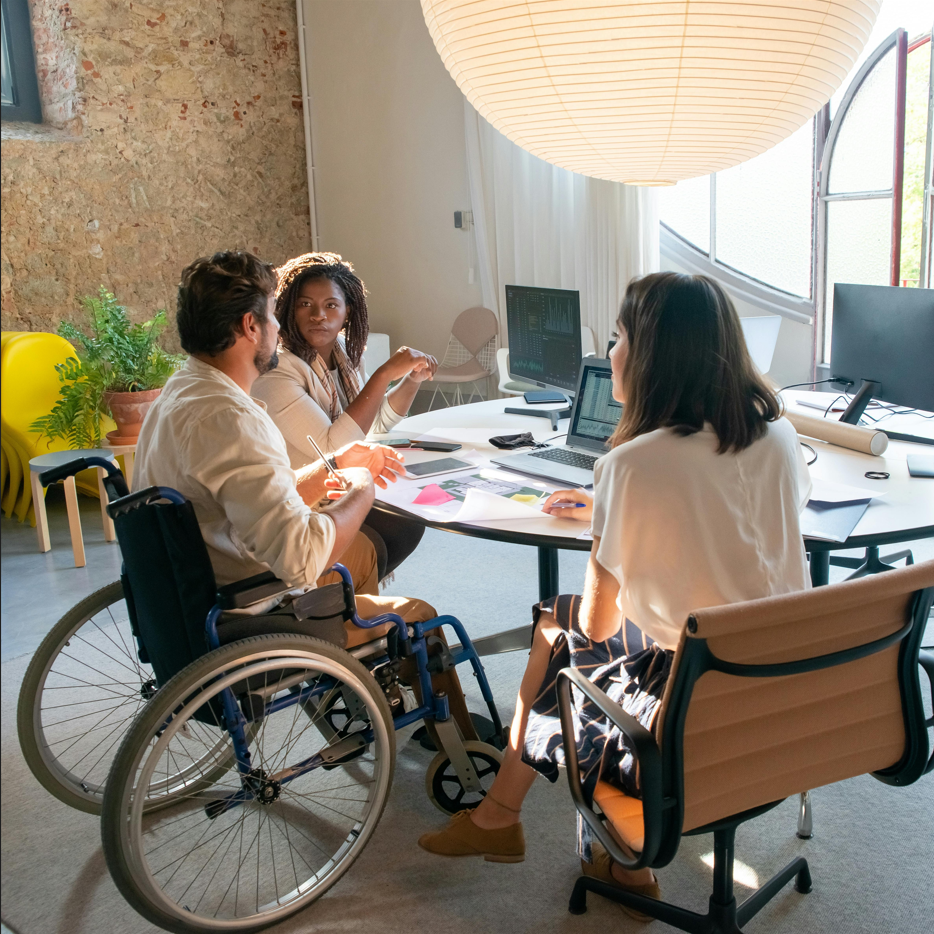
For differently abled people to perform optimally, business leaders must actively help them feel comfortable in the workplace. This requires an extensive support system.Disabilities are more common than we may realize, affecting the everyday lives of real people in heartbreaking ways. The CDC observes that over 28 percent of people in the US suffer from one or more physical disabilities. These could be related to cognition or mobility, vision, or hearing. Sometimes, a tragic accident may leave you in this condition. Or a genetic disorder, such as Tay-Sachs disease or cystic fibrosis, may flare up.  Whatever the cause, the result is generally the same. Prolonged physical and mental stress that complicates your personal and professional life in the workplace. (more…)

The new issue of Works magazine is available for you now

The new issue of Works magazine is available for you now

The new issue of Works magazine is now available for you to read online free here. As another transformative year for the workplace winds down, Works magazine continues to chronicle the most important ideas about people, places and technology. In this issue we have four case studies, a round up of new projects, a showroom full of new products and a whole section dedicated to materials. We profile one of the most influential figures in the industry.

Our round table in partnership with Flokk considers the nature and meaning of innovation in the 21st Century. Jo Knight asks how our attitude towards sustainability is shaped by our aesthetic sensibilities. We travel to Poland to see how one firm is applying ancient materials and crafts in modern design. Rob Kirkbride tracks the details of the biggest deal in the history of the office furniture market. And we look at how lessons from the past might still be relevant today. Plus there are loads more features, including our podcast series with Shaw Contract exploring the different facets of comfort.

Image: Basia Szafranska

The role of local businesses in promoting mental health and wellbeing

The role of local businesses in promoting mental health and wellbeing

Once seen as an individual responsibility, mental health is now recognised as a shared, community wide issue.Across the UK and over recent years, there has a change in how the general public views mental health and wellbeing. Once seen as an individual responsibility, mental health is now recognised as a shared, community wide issue. Our mental health is both our individual and collective responsibility and requires effort from family members, workplaces and organisations. For many, the workplace is where they spend most of their time. For others, local cafés, gyms, hairdressers, or local shops are their daily social spaces. These are the places that people connect, relax, and interact with other people. It’s in these spaces that local businesses have a unique power to influence how people think and feel as well as their mental health. (more…)

Beyond compliance: how the EU Accessibility Act will redefine workplace inclusion

Beyond compliance: how the EU Accessibility Act will redefine workplace inclusion

he European Accessibility Act (EAA) came into effect on 28 June 2025. Since that date, any new product or service entering the EU market must meet common accessibility requirements. It’s a significant step toward ensuring that Europe’s 87 million people living with disabilities can use everyday products and services fully and confidently and will have a profound effect on workplace inclusion.The European Accessibility Act (EAA) came into effect on 28 June 2025. Since that date, any new product or service entering the EU market must meet common accessibility requirements. It’s a significant step toward ensuring that Europe’s 87 million people living with disabilities can use everyday products and services fully and confidently and will have a profound effect on workplace inclusion. The Act is designed to support both individuals and businesses. Until now, accessibility laws have varied widely across member states, creating unnecessary complexity for organisations and uneven experiences for people with disabilities. (more…)