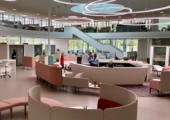
We shape the world’s cities, then they shape us

UrbanisationThe story of the world’s cities is often told not in words but in numbers. This is especially the case with the megacities – those with a  population in excess of 10 million – which obtain enough critical mass not only to produce eye boggling statistics but also to distort the fabric of whole regions and change the way people live and behave. This is true for the established megacities of London, New York and Tokyo as well as the emerging global metropolises in Sao Paolo, Beijing, Mumbai, Shanghai, Cairo and Istanbul. It is also increasingly true for cities many people have never heard of.

(more…)

RIBA reports positive picture for architects and construction sector

The latest Future Trends Survey by the Royal Institute of British Architects (RIBA) is showing a more positive picture for the architect profession and the wider construction sector. The RIBA’s Workload Index for February 2013 stands at +16, the third consecutive monthly increase, and has now remained in positive territory since November 2012 which continues to suggest improved confidence amongst architects regarding their future growth prospects. RIBA practices report that overall actual workloads remained stable throughout 2012, following falls in every calendar year from 2009 until 2011.

(more…)

London calling for Green Sky Thinking events

GST13-ButtonIf you’re looking for some practical guidance on sustainability check out a free London-wide event, Green Sky Thinking, a week-long series of free sustainability-focused events showcasing innovative and practical solutions to greening London’s built environment, which runs across London from 15-19 April. Ranging from onsite project talks, round-table discussions, pecha kuchas and seminars, it offers attendees the inside view from top experts, industry leaders and collaborative teams to understand innovations and what works in practice. Victoria Thornton, Founding Director of Open City, said: “The value of Green Sky Thinking Week is offering the solution of ‘how’ to make London’s built environment  sustainable.” (more…)

Office design goes to the movies. Part 3 – Being John Malkovich


[embedplusvideo height=”200″ width=”230″ standard=”https://www.youtube.com/v/lu3sXQ9t-6c?fs=1″ vars=”ytid=lu3sXQ9t-6c&width=230&height=200&start=&stop=&rs=w&hd=0&autoplay=0&react=1&chapters=&notes=” id=”ep8940″ /]


In which John Cusack plays an unemployed puppeteer who takes a mundane office clerk’s job in the low-ceilinged offices on Floor 7½ of the Mertin Flemmer Building in New York. When he asks his boss why the ceilings are so low, he is told ‘low overhead my boy’.  Bad pun, great commentary on how it’s always possible to fit a little bit more into the building, especially if you ignore the bothersome problem of the people who work inside and their physical constraints.

Where are the muggles in Terry Farrell’s architecture policy review?

Where are the muggles in Terry Farrell’s architecture policy review?

One of the standard complaints commonly ascribed to facilities managers and others who work to manage our buildings and the people and stuff inside them is that they are not consulted well enough when it comes to their development, architecture and design. Well, now they may have a chance to see how that all feels writ large following yesterday’s announcement from Culture and Creative Industries Minister Ed Vaizey of the launch of an independent review of the UK’s architecture which will be undertaken by the architect Sir Terry Farrell… leading a panel of mainly architects.

(more…)

Video: how networks of engaged people can achieve more than nations

[embedplusvideo height=”157″ width=”230″ standard=”https://www.youtube.com/v/f2k2_dN-REc?fs=1″ vars=”ytid=f2k2_dN-REc&width=230&height=157&start=&stop=&rs=w&hd=0&autoplay=0&react=1&chapters=&notes=” id=”ep8069″ /]


In spite of all its flaws, the Internet can empower people to address specific issues in ways that exceed the abilities of nation states. In this energising talk for the Royal Society for the Arts, Don Tapscott, a Canadian businessman and now one of the world’s leading authorities on the impact of technology on people and societies, explores the idea that engaged and connected people can work together to innovate and solve issues that can seem intractable to the world’s governments and international bodies, including the most serious demographic and environmental challenges we all face.

$16m revamp of High Commission in London to showcase Canada’s identity

Canada HouseAs part of the Canadian government’s consolidation of its diplomatic mission in the UK, it has put up for sale MacDonald House in Grosvenor Square in London and will look to develop its other main building Canada House in Trafalgar Square. MacDonald House was formerly the American Embassy until 1961 and the Canadian Government has been looking to consolidate its operations for a number of years. As well as moving its functions under one roof, the Government has earmarked $16 million for a revamp of Canada House which will also be designed to showcase Canadian values and know-how.

(more…)

Building Information Modelling is unstoppable finds survey

BIMNearly three quarters (71 per cent) of building design and construction experts agree that BIM (Building Information Modelling) represents “the future of project information” and 39 per cent confirmed that they are already using it. But the annual industry-wide BIM survey, undertaken by NBS, reveals a lack of clarity around the subject which could prove an obstacle to its more rapid adoption. 74 per cent of those polled agreed that the industry is “not clear enough on what BIM is yet” and only around one-third claim to be “very” or “quite” confident in their BIM knowledge and skills.

(more…)

What Alan Bennett can teach us about taste

Alan BennettThe idea of taste is a strange one, not least when we’re surrounded by people guiding our tastes in everything from cars to wine, food, clothes, house design, office design, restaurants, holidays, language, art, music, books and film. The problem with an acceptance of what we mean by ‘good taste’ is that it acts as a brake on change and innovation. Alan Bennett once made the point in typical style. ‘Taste is timorous, conservative and fearful,’ he wrote. ‘It is a handicap. It stunts. Olivier was unhampered by taste and was often vulgar; Dickens similarly. Both could fail and failure is a sort of vulgarity; but it’s better than a timorous toeing of the line. Taste abuts on self preservation. It is the audience that polices taste. Only if you can forget your audience can you escape.’

Japan’s Toyo Ito wins 2013 Pritzker Architecture Prize

Toyo ItoThe 2013 Pritzker Architecture Prize, considered architecture’s highest accolade is to go to Toyo Ito, a 71 year old Japanese architect whose work includes the Sendai Mediatheque library in Sendai City, Japan, which withstood the 2011 earthquake, Tokyo’s Tama Art University Library, and London’s 2002 Serpentine Gallery Pavilion. Ito, whose architectural practice is based in Tokyo, said of the award: “Architecture is bound by various social constraints. I have been designing architecture bearing in mind that it would be possible to realize more comfortable spaces if we are freed from all the restrictions even for a little bit.”

(more…)

London’s Fit Cities event explores architecture and wellness

435x200_Fit_Cities

London is host this week to an event that brings together architects, planners, designers, developers, and public health professionals to explore how building design and policy decisions can make communities healthier, helping prevent diseases such as obesity, diabetes, heart disease and some cancers. The Greater London Authority is holding the event in the wake of the 2012 Olympic and Paralympic Games to explore how active design principles were applied to the events and their legacy and to hear how plans are developing around major events coming up in Sochi, Glasgow and Rio de Janeiro.

(more…)

Gone est Lumiere: Leeds approves new city centre office blocks

Leeds Central Sqaure plansPlans for two buildings on the site of the failed Lumiere mixed use skyscraper project in Leeds have won planning approval. The new Central Square scheme in the city centre  will deliver 262,000 sq.ft. of office space in two new buildings, one consisting of 89,000 sq.ft. over eight floors and a larger 11 storey building with 173,000 sq.ft of space. The new plans replace those for the landmark Lumiere tower  Lumiere originally intended to be completed in 2010 but put on hold in 2008 and finally cancelled two years later. The new scheme has been designed by Aedas. (Forgive the Franglais in the title.)