







November 23, 2015
The benefits of peeling back the layers of the workplace onion 0
 The onion metaphor is normally used to describe the layers which must be peeled away to get to the all-important “core” of a problem or issue. The biggest question that is normally asked with respect to choosing office space based on the promise of improved productivity, is quantifying the value of the various initiatives that might be contemplated or proposed. I can’t help but think of how complex that question is due to the many “layers” there are to work through to get to a final quantifiable answer. In its most simple form the question of productivity in the workplace, is confined to how staff utilise their time to undertake the tasks or duties that correspond to expected output. But of course it is not only their use of time, but the environmental influences associated their environment, both in the workplace, its surroundings (the actual building and the precinct in which it is located) and their method of travel to the office.




 In years gone by, a ‘one size fits all’ approach to office design might have been the norm, but as the decades have progressed, so too have the options available to businesses designing ‘homes from home’ for their office-based workforces. As new interpretations of the office environment proliferated, so the open plan model came to into being and eventually evolved into the default office design model. This initially brought greater variety than ever before but, ultimately, a one size fits all mentality in
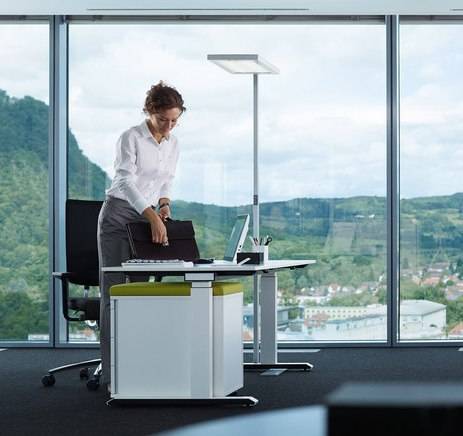
 Biodynamic lighting is an artificial light source that replicates the dynamic variations of daylight and sunlight through a light management system. Up until recent times, it was commonly believed that light was only needed for seeing. However, in 2001, an American scientist, G. C. Brainard discovered a circadian photoreceptor in the retina, which receives a specific quality and quantity of light, and sets the biological clock.* He discovered that light not only provides us with the ability to see, but that light enters the eye via the ‘fourth pathway’, which has a vital non-visual or biological effect on the human body. His studies showed that a certain quantity and quality of light stimulates the biological clock, also known as the circadian rhythm, which regulates hormone levels, particularly melatonin and cortisone, in the body and so plays a vital role in our physical and mental wellbeing.













December 1, 2015
How our preconceptions can lead us to fail the office design bench test
by Mark Eltringham • Comment, Furniture, Workplace design
(more…)