


Search Results for: government

Westminster event backed by Coldplay frontman Chris Martin tackles disability employment barriers

Westminster event backed by Coldplay frontman Chris Martin tackles disability employment barriers

An event at the Palace of Westminster this week will bring together politicians, business leaders and figures from the entertainment industry to discuss ways of improving employment opportunities for disabled and neurodivergent peopleAn event at the Palace of Westminster this week will bring together politicians, business leaders and figures from the entertainment industry to discuss ways of improving employment opportunities for disabled and neurodivergent people. The reception, organised by inclusive entertainment company 0UTLYER, takes place on 15 July and coincides with the launch of the All-Party Parliamentary Group (APPG) for Disability Employment. Titled Breaking Barriers, Backing Talent, the event aims to encourage collaboration between policymakers, employers and industry leaders on improving access to careers, particularly within the creative industries. (more…)


People are increasingly concerned that their job roles are becoming irrelevant

People are increasingly concerned that their job roles are becoming irrelevant

A new report from Arden University suggests that while many UK workers recognise the growing pace of change in the workplace, only around half are actively developing new skills to keep up with new and emerging job rolesA new report from Arden University suggests that while many UK workers recognise the growing pace of change in the workplace, only around half are actively developing new skills to keep up with new and emerging job roles. The survey of 2,000 UK employees found that 58 percent believe their industry is changing faster than before, yet only 51 percent said they are currently engaged in upskilling. The findings have been released as part of Arden University’s Future of Work and Learning Report. (more…)

Tales from the built environment: some reflections on the conference circuit 

Tales from the built environment: some reflections on the conference circuit 

The built environment sector, like many other sectors, spends a great deal of time talking to itself. So what is it saying right now?The stories we tell ourselves can be powerful. They shape how we see reality, whether they’re true or not. The trouble is that the ones which endure are rarely the most helpful. Here’s a familiar story: every industry is privately convinced that its image problem is uniquely severe. This leads to a lot of navel-gazing and going round in circles. Often, however, they’re grappling with versions of the same challenge: trying to explain their value to people outside the room. I saw this play out at two recent conferences related to the built environment: the UK Real Estate Infrastructure & Investment Forum (UKREiiF) in May and IWFM Live last week. (more…)

Data centres are the most significant building type in the world right now. And we need to talk about that

Data centres are the most significant building type in the world right now. And we need to talk about that

Data centres have always been a slight anomaly in the Built Environment sector, part property and part critical infrastructure (talking in wattage rather than square footage for example), lacking aesthetic appeal and they are not significant employers, they are often considered a necessary evil to support our hyper-communicative lifestylesThe Data Centre Congress which took place from June 1st to 4th in Cannes is to data centres what mipim is to the more traditional markets in property, a place where the good and the great – from investors and operators, to the engineers and power providers, gather to network and contemplate the challenges and the future of the sector. In Q1 last year there was a slight chill through the sector after Microsoft halted data centre plans across the US and Europe to the tune of 2GW, citing caution around the overexpansion of AI and uncertainty around tariffs. What seemed like bombshell news at the time, felt like a mere blip and a distant memory at the 2026 edition and this juggernaut of activity is showing zero signs of slowing, a market that is currently worth over $300 billion is set to rise to $699.13 billion by 2034. (more…)

Businesses are currently more focussed on keeping down costs than growth

Businesses are currently more focussed on keeping down costs than growth

UK employers are prioritising cost management over growth as rising business costs and global uncertainty continue to weigh on confidenceUK employers are prioritising cost management over growth as rising business costs and global uncertainty continue to weigh on confidence. This is according to the latest Labour Market Outlook from the CIPD. The survey of more than 2,000 UK employers found that cost management is now the top priority for organisations of all sizes and across all sectors, ahead of improving productivity and growing market share. (more…)

UK is trapped in reactive cycle of sickness and inactivity, warn wellbeing experts

UK is trapped in reactive cycle of sickness and inactivity, warn wellbeing experts

Business leaders, policymakers and workplace experts have warned that the UK’s fragmented approach to work, wellbeing and welfare is undermining economic resilienceBusiness leaders, policymakers and workplace experts have warned that the UK’s fragmented approach to work, wellbeing and welfare is undermining economic resilience, with comparisons to Denmark highlighting the pressure placed on the NHS and benefits system in Britain. The warning came during a Westminster roundtable  for the Policy Liaison Group on Workplace Wellbeing chaired by Dame Carol Black on 13 May. The discussion followed shortly after the King’s Speech opened the new parliamentary session with a renewed emphasis on “economic security”. Participants argued that Britain’s rising levels of long-term sickness and economic inactivity will require a more coordinated approach involving employers, government departments, healthcare systems and insurers. (more…)

Historic Whitehall office recognised for inclusive design

Historic Whitehall office recognised for inclusive design

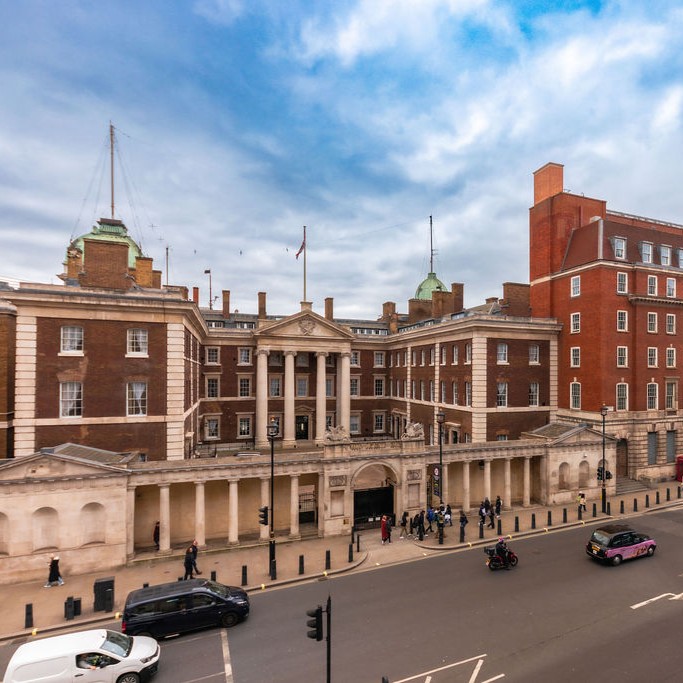
22–26 Whitehall had been awarded Inclusive Environments Recognition by the Construction Industry Council, in acknowledgement of its approach to inclusive design in a historic settingA refurbished government office in Whitehall has received an industry award for accessibility, according to the Government Property Agency (GPA). The GPA said its hub at 22–26 Whitehall had been awarded Inclusive Environments Recognition by the Construction Industry Council, in acknowledgement of its approach to inclusive design in a historic setting. The building brings together the Grade I listed Ripley Building with the adjoining Kirkland Building and is now used as the London headquarters for the Department for Science, Innovation and Technology. The site forms part of the government’s wider strategy to rationalise its estate and create shared workplaces for civil servants. (more…)

Re-humanising the workplace: why prevention, support and standards matter more than ever

Re-humanising the workplace: why prevention, support and standards matter more than ever

There is growing recognition that the workplace needs to become more human again, not less.There is growing recognition that the workplace needs to become more human again, not less. For all the talk of performance, productivity and retention, too many organisations still treat stress, ill health and emotional wellbeing as secondary matters. They are not. They sit at the heart of business success. The figures from the Keep Britain Working report, an independent review commissioned by the UK government and led by Sir Charlie Mayfield, the former chair of John Lewis, are a wake-up call. The value at stake is enormous. Employers face an estimated £85 billion a year in lost output and costs linked to ill health. For government, the additional burden in welfare payments and NHS demand is around £47 billion annually. On top of this lies the wider cost to the economy through lower participation, and the human and social costs of lost opportunity, stalled careers and reduced life chances. (more…)

Half of SMEs using AI with limited impact on headcount (so far)

Half of SMEs using AI with limited impact on headcount (so far)

More than half of UK firms are now using AI according to new research from the British Chambers of Commerce, marking a sharp increase in adoption but with little immediate effect on workforce sizeMore than half of UK firms are now using artificial intelligence, according to new research from the British Chambers of Commerce, marking a sharp increase in adoption but with little immediate effect on workforce size. The survey, carried out in partnership with Atos, suggests that 54 percent of businesses are actively using AI. This represents a notable rise from previous BCC findings, which showed adoption at 35 percent in 2025, 25 percent in 2024 and 23 percent in 2023. (more…)

Rebuilding belonging: how offices can overcome loneliness  

Rebuilding belonging: how offices can overcome loneliness  

In the coming weeks it will be six years since the UK entered lockdown and working life changed overnight. While much has stabilised, the impact of the pandemic still shapes how people experience work, particularly when it comes to connection and belonging. Loneliness is widely recognised as a growing societal issue and government data shows that around a quarter of adults in Great Britain report feeling lonely at least some of the time, rising significantly among younger age groups. Hybrid working has not created this challenge but it has highlighted that for many people the workplace was a consistent source of social interaction. (more…)

Six weeks paternity allowance for self-employed and other dads could boost economy by £3 billion

Six weeks paternity allowance for self-employed and other dads could boost economy by £3 billion

Introducing a new six-week paternity allowance to support self employed and ‘worker’ fathers would generate a series of benefitsIntroducing a new six-week paternity allowance to support self employed and ‘worker’ fathers would generate a series of benefits worth nearly £3 billion per year to the UK, research has found. The proposal, published in a new Institute for Policy Research (IPR) policy brief, argues that providing paid leave for self-employed and worker fathers – including contractors or those in gig-economy roles – at the Statutory Paternity Pay rate (£187.18 per week) would deliver significant economic and wellbeing benefits for families and for UK society as a whole. (more…)

AI will either save work or destroy it. Apparently.

AI will either save work or destroy it. Apparently.

It's too early to know what precise impact AI will have on jobs, writes Jo Sutherland. Fortunately for us, the future is still ours to shapeAs someone who works at the intersection of communications and responsible AI, I spend a lot of time thinking about how emerging technologies are explained, sold, feared, embraced and misunderstood. Nowhere is that more palpable than in conversations about AI and the future of work, where certainty is sometimes projected before it’s earned. Over the past few months alone, taking part in debates at both the Westminster Employment Forum and the University of Cambridge, I’ve been struck by just how wide the spectrum of opinion still is. Depending on who has the floor, AI is framed either as a magical productivity fix or an existential threat to jobs. The reality probably lies somewhere in the middle. (more…)