Search Results for: interaction

Lords Committee calls for clearer policy to address the future of home working

Lords Committee calls for clearer policy to address the future of home working

home working is now firmly embedded in the UK’s labour market but requires more coherent policy, better evidence and improved supportA House of Lords committee has called for a more coherent national approach to remote and hybrid work, warning that unclear responsibilities, inconsistent data, gaps in employer guidance and uneven access to flexible work risk undermining the UK’s ability to adapt to long-term changes in working patterns. According to the report, Is Working From Home Working?, published today (13 November) the rapid rise in home-based working since the pandemic has outpaced the Government’s ability to coordinate policy or collect reliable data. Responsibility for remote work is “split across government departments”, the Committee notes, with implications for employment, transport, digital infrastructure and housing policy. (more…)

Amsterdam’s Workspace Design Show Unveils Sensory-Driven Feature Spaces

Amsterdam’s Workspace Design Show Unveils Sensory-Driven Feature Spaces

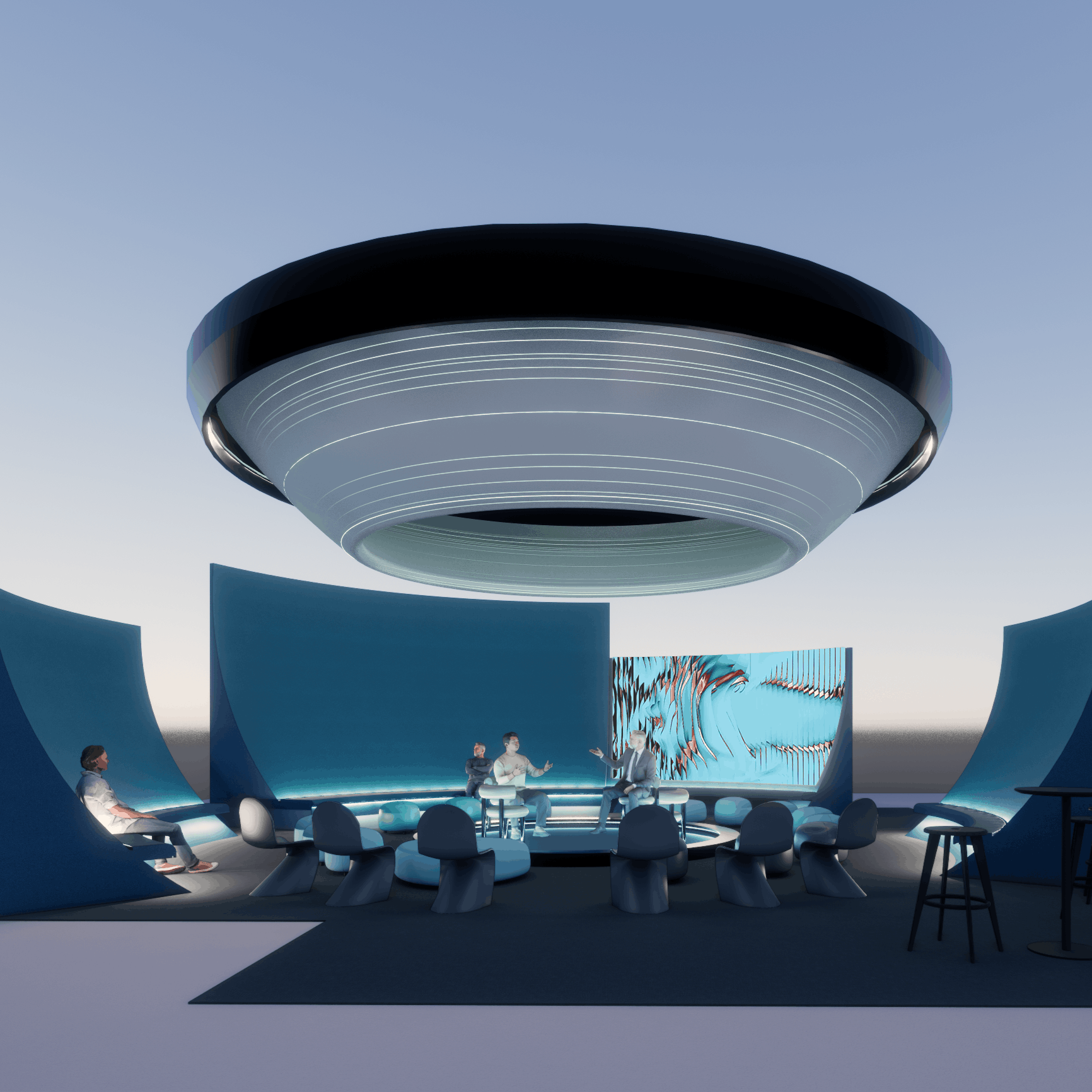
The Workspace Design Show showcases the latest transformative workplace interiors products, from furniture, seating, lighting, acoustics, surfaces, biophilia, tech and moreThis November, Workspace Design Show (Wednesday 5th to Thursday 6th November 2025, RAI Amsterdam) doesn’t just ask what the workplace should be; it lets you feel the answer. Five of the Netherlands’ most creative design studios have turned conversation into atmosphere, theory into tactility, and workplace talk into spaces you can smell, hear, shift and claim as your own. (more…)

There’s a simpler, more natural and diverse approach we can take to workplace design

There’s a simpler, more natural and diverse approach we can take to workplace design

A different approach to workplace design, one that values clarity, quiet and coherence, is being driven more by carbon reductions and overall user experienceOur buildings do more than house activity. They shape our states of mind. Yet many contemporary spaces, whether offices, schools or public buildings, are full of visual noise, synthetic finishes and unnecessary complexity. These elements are often justified in the name of expression or efficiency. But they can leave people disoriented, distracted or exhausted. A different approach to workplace design, one that values clarity, quiet and coherence, is being driven more by carbon reductions and overall user experience than by neurodiversity alone. Through seeking simpler, more durable ways to build: an architecture grounded in natural materials, minimal finishes and thoughtful restraint. (more…)

Workplace design that supports health, learning and growth

Workplace design that supports health, learning and growth

In 2025, workplace design looks to prioritise employee health, learning, and growth.In 2025, workplace design looks to prioritise employee health, learning, and growth. This article will investigate how contemporary environments enhance wellness, handle technology, and adapt to the fluctuation of work. You will learn the techniques businesses use to amplify productivity and participation. The approaches and fundamentals that construct dynamic work environments are the focus of this article. (more…)

Is a smart building worth it? My research says the answer is an unequivocal yes

Is a smart building worth it? My research says the answer is an unequivocal yes

Too often, clients have paid contractors for the design and delivery of a smart building whilst ignoring the operational sideFor my book, The Smart Building Advantage, in which I tracked the evolution of the recent built environment, I trawled through more than a decade’s worth of data. I wasn’t short of material. I studied the Salesforce Tower in San Francisco, 22 Bishopsgate in London and NEOM in Saudi Arabia, amongst many extraordinary examples of how buildings and technology can work together. From these, I concluded that smart buildings are like chameleons in the way they’ve adapted to meet the shifting demands of the corporate zeitgeist. (more…)

Bloom: Modular comfort for modern workspaces, introduced by Ocee and Four Design

Bloom: Modular comfort for modern workspaces, introduced by Ocee and Four Design

The Bloom modular sofa system from Ocee & Four Design promises a new approach to flexible shared seating, perfect for modern workspaces - no matter how people like to workThe Bloom modular sofa system from Ocee & Four Design promises a new approach to flexible shared seating, perfect for modern workspaces – no matter how people like to work. With single-sided and double-sided seating options, Bloom invites conversation, collaboration and comfort from every angle. Made with 19 different modules, Bloom can adapt alongside the needs of any organisation – evolving with environments to keep pace with ever-changing commercial trends and demands. Featuring active seating zones integrated into the rear of single units, Bloom encourages spontaneous moments of pause. It is ideal for informal interactions in modern workspaces, hospitality and public settings. (more…)

Workers voice concerns over AI in the workplace, think it makes them less intelligent

Workers voice concerns over AI in the workplace, think it makes them less intelligent

There is growing unease among employees about the impact of AI on their working lives, with many reporting fears of skill loss, job security and reduced human interaction.A new survey claims to highlight growing unease among employees about the impact of artificial intelligence on their working lives, with many reporting fears of skill loss, job insecurity and reduced human interaction, as well as brain rot. The research, carried out by Howdy in August 2025 among 1,007 full-time workers aged 19 to 77, found that while the majority are already using AI tools in some form, significant numbers are questioning the consequences. Around one in four believe they risk losing critical abilities through over-reliance on artificial intelligence, while a fifth said the technology already makes them less capable. A smaller group, around 10 percent, said they now rely entirely on AI to perform their jobs. (more…)

Measuring and rewarding what people do at work? It’s a rat trap, baby, and you’ve been caught

Measuring and rewarding what people do at work? It’s a rat trap, baby, and you’ve been caught

Life imitates art. Scientists have discovered that lab mice may be conducting their own experiments on us. A paper published in the journal Current Biology speculates that mice seem to be testing their testers. They do this by deviating from simple behaviours such as responding to rewards to work out what might happen. “These mice have a richer internal life than we probably give them credit for,” explained Kishore Kuchibhotla, senior study author and an assistant professor of neuroscience at Johns Hopkins University. “They are not just stimulus response machines. They may have things like strategies.” (more…)

Redefining the modern workplace: flexibility, zoning, and employee wellbeing

Redefining the modern workplace: flexibility, zoning, and employee wellbeing

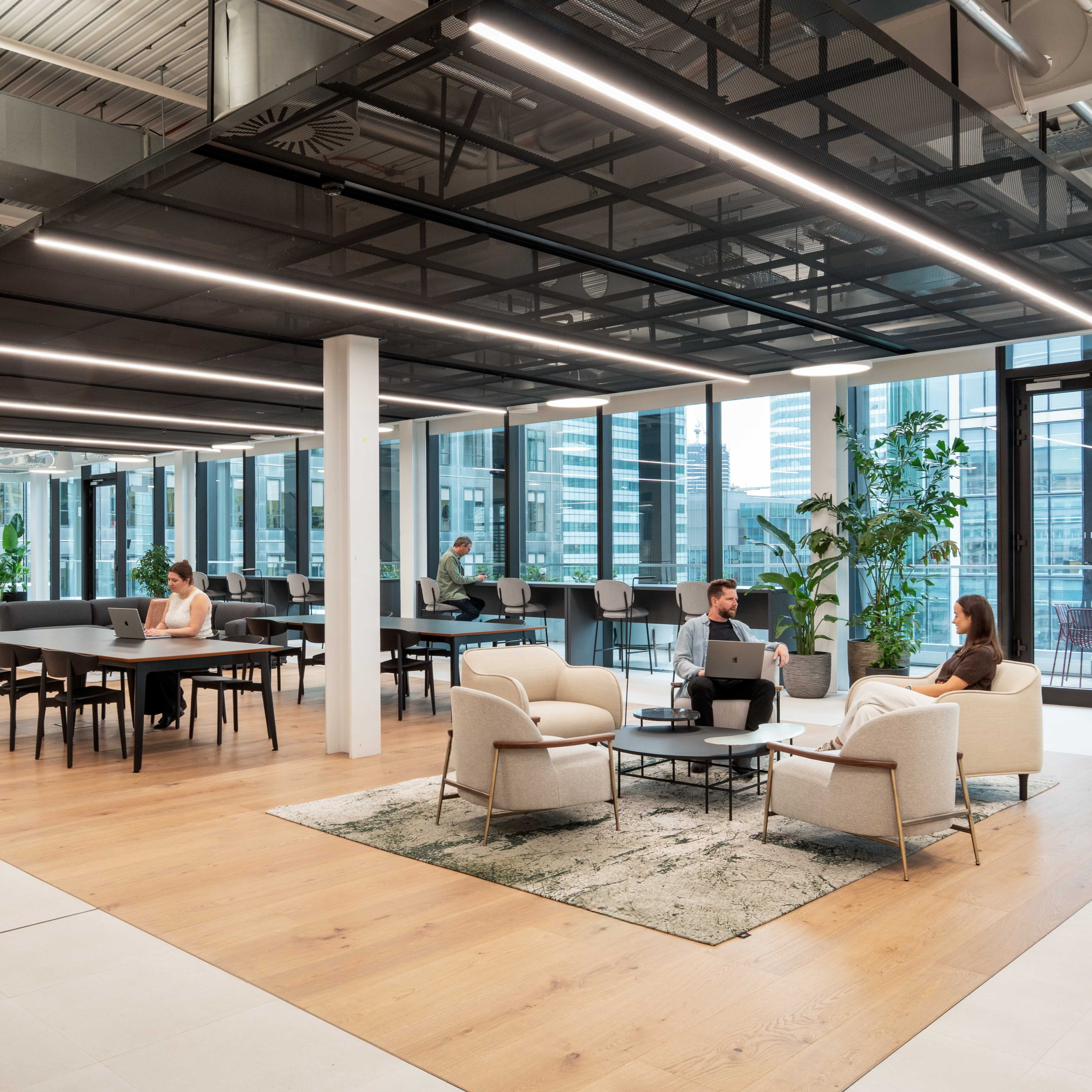
The modern workplace is evolving faster than ever. Traditional layouts of rows of desks and enclosed cubicles are giving way to offices designed around flexibility, collaboration, and employee wellbeingThe modern workplace is evolving faster than ever. Traditional layouts of rows of desks and enclosed cubicles are giving way to offices designed around flexibility, collaboration, and employee wellbeing. For organisations seeking to stay ahead, the key lies in thoughtful workspace zoning—creating adaptable environments that respond to how people actually work today. One of the most significant trends shaping office design is flexibility. Work patterns have changed: teams collaborate in bursts, focus deeply in concentrated periods, and switch between in-person and digital modes throughout the day. Workspaces that can transform to meet these changing needs without major disruption are becoming essential. Mobile partitions and modular systems allow offices to create temporary or permanent zones that can adapt in real time, supporting a mix of focused work, collaboration, and social interaction. (more…)

Younger people want more office time as remote work leaves many feeling isolated

Younger people want more office time as remote work leaves many feeling isolated

A new poll suggests that younger people are increasingly seeking a return to office working, as large numbers report that remote work has left them feeling lonely and disconnected. The survey from Bupa, based on responses from employees aged between 16 and 24, found that around 40 percent say they feel lonely when working from home. Many of those in this group began their careers during the pandemic, with limited experience of office-based work and the informal social interactions that accompany it. (more…)

Microsoft study reveals which jobs have been most affected by Generative AI

Microsoft study reveals which jobs have been most affected by Generative AI

Which jobs are most affected by Generative AI?A new large scale study from Microsoft has offered what its authors claim is one of the clearest pictures yet of how Generative AI is being used in real workplaces and which jobs are most exposed to its growing influence. Researchers from Microsoft analysed 200,000 anonymised user conversations with Bing Copilot, Microsoft’s publicly available AI assistant, to determine how AI is assisting or performing work tasks. The study focused on the types of activities people use GenAI for, how successfully AI completes them, and how these activities align with those performed across hundreds of occupations. (more…)

Better offices for all as occupiers shift focus away from cost cutting

Better offices for all as occupiers shift focus away from cost cutting

New research suggests a worldwide shift in workplace strategy, with portfolio optimisation (better offices basically) now the top priority for corporate real estate leaders, overtaking cost reduction for the first time.New research suggests a worldwide shift in workplace strategy, with portfolio optimisation and better offices now the top priorities for corporate real estate leaders, overtaking cost reduction for the first time. JLL’s 2025 Occupancy Planning Benchmark Report found that 73 percent of respondents identified portfolio optimisation as their main focus, compared with 70 percent who cited cost reduction and improved reporting. (more…)