September 9, 2014
Report claims workplace fails to support employees with musculoskeletal disorders
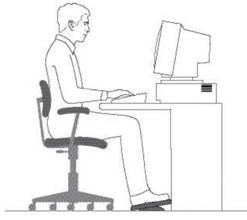
When determining what constitutes a well-designed office, it’s easy to overlook the overriding need to ensure a workplace is designed first and foremost to be inclusive. Given the fact that musculoskeletal disorders remain the largest single cause of days of work lost due to sickness absence, it’s worrying to discover that many organisations fail to meet the needs of those dealing with such conditions. The new report ‘Self-management of chronic musculoskeletal disorders and employment’ from the Fit for Work UK Coalition and The Work Foundation found that despite sufferers’ efforts to remain at work, many are forced to ‘self-manage’ their condition without adequate support; with for instance an employee being forced to partake in a hot desk policy when they required their own, fixed workspace. As the report states, this lack of help is ‘all the more perverse’ when you take into consideration the role that work can play in helping to contribute to mental and physical wellbeing. (more…)


At the end of July, the UK Government introduced new legislation that allowed any employee with more than six months in a job to apply to their employer for some form of flexible working arrangements. Now, research from Sage claims that a third of small businesses are ignoring the legislation, a fact which might be interpreted as suggesting that the UK’s SMEs are not so keen on the idea. What other data suggests, however, is that they’re probably more likely to offer flexible working than larger firms. This can only mean that it’s the legislation that’s the problem, not the practice. Leaving aside the ten percent of SMEs who the Sage report claimed were unaware of the new rules, this still leaves a large number of smaller businesses open to litigation and industrial tribunals. But, as the Federation of Small Businesses warned ahead of the new law’s introduction, the right to request was always likely to lead to headaches for business owners anyway.
Given the track record of people when it comes to making predictions about the future, it’s easy to grow cynical, especially when it involves a profession as subject to the vagaries of technological and cultural change as facilities management. But while we should be wary of more fanciful and long term thinking, any natural scepticism shouldn’t blind us to those predictions that we know will largely come true, especially those based on what we know is happening already. For example, recent research carried out by Cass Business School and Henley Business School and presented in the book
The recent Cabinet reshuffle in the UK Government won’t alter one fact; politicians simply don’t get it when it comes to technology, the workplace, the way people work and the needs of small businesses. Once you dismiss the paranoid idea that they DO get it but don’t care because they’re too busy looking out for The Man, you have to conclude that one of the big problems they have (this won’t go where you think) is that they don’t understand anything about technology and work, especially when it comes to emerging technology, the working lives of individuals, the needs and functions of small businesses and the fact the self-employed exist at all. These things exist outside the bubble. This is obviously a problem because they are implementing policies and making big, uninformed and anachronistic decisions about the things that shape every aspect of our lives, help to define us as people and determine how companies and individuals function. Here are just three examples.


September 16, 2014
Indoor air quality and the quest for a breath of fresh air in the workplace
by Justin Miller • Comment, Facilities management, Knowledge, Legal news, Workplace design
Edward Hopper, Office in a Small City, Metropolitan Museum of Art, NY
The modern workplace has to work harder than ever before. It must reflect corporate values, express something of the organisation’s brand, allow people to work to the best of their ability as well as look after their wellbeing, keep touch with the pace of changing technology and meet the demands of an ever changing legislative environment and keep costs down. All of these issues conflate around the challenge of providing a sustainable, comfortable and productive working environment in buildings that are filled with an increasing number of people and computers. It is estimated by the Building Research Establishment that even in a typical office each person and their technology will generate some 1500 W of energy per hour, the equivalent of the sort of fan heater that the EU is now keen to ban outright.
(more…)