To provide the best experiences, we use technologies like cookies to store and/or access device information. Consenting to these technologies will allow us to process data such as browsing behaviour or unique IDs on this site. Not consenting or withdrawing consent, may adversely affect certain features and functions.
The technical storage or access is strictly necessary for the legitimate purpose of enabling the use of a specific service explicitly requested by the subscriber or user, or for the sole purpose of carrying out the transmission of a communication over an electronic communications network.
The technical storage or access is necessary for the legitimate purpose of storing preferences that are not requested by the subscriber or user.
The technical storage or access that is used exclusively for statistical purposes.
The technical storage or access that is used exclusively for anonymous statistical purposes. Without a subpoena, voluntary compliance on the part of your Internet Service Provider, or additional records from a third party, information stored or retrieved for this purpose alone cannot usually be used to identify you.
The technical storage or access is required to create user profiles to send advertising, or to track the user on a website or across several websites for similar marketing purposes.








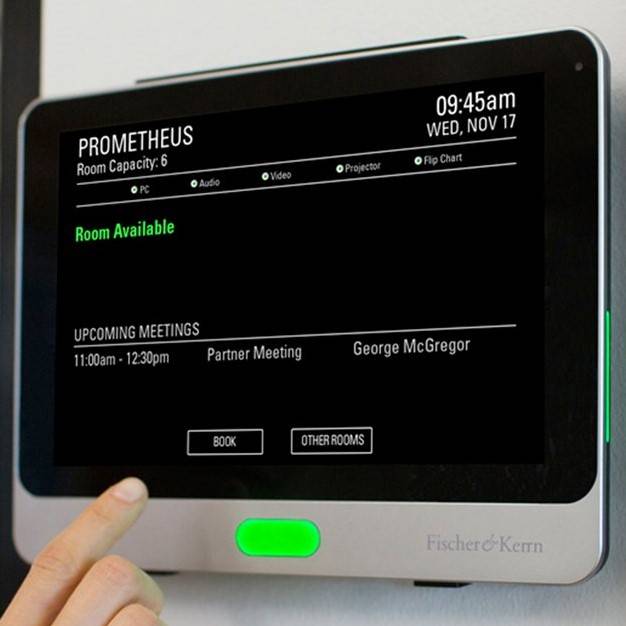 Meetings and booking of conference rooms and resources are an essential part of any business and unless you have a system to effectively manage and optimise these processes, organising a meeting can be overwhelming and time-consuming. According to a study made by thinkgrowth.org the average employee spends about five hours in meetings per week and four hours preparing for these meetings. The numbers are not decreasing. In fact, meeting frequency is increasing each year and it is clear that business meetings aren’t going away anytime soon.
 More than a third of employees’ waste significant chunks the working day because of difficulties retrieving valuable information, with two-fifths of businesses admitting to having no processes in place to capture, record and retrieve business communications. The research conducted by 3Gem on behalf of TeleWare, claims that 36 percent of employees have wasted a lot of the working day attempting to resolve an issue when they have forgotten valuable information. A similar number (34 percent) explained that forgetting information has led them to deal ineffectively with customers, suppliers or clients. While around a quarter have missed important deadlines (26 percent) or let their colleagues down (25 percent) due to not having the necessary information front of mind. Britain is not doing very well when it comes to workplace productivity. According to the latest G7 productivity analysis from ONS, in terms of output per hour worked, the UK scored 15.1 percent below the average for the rest of the G7 advanced economies.
 Robots will not as feared steal people’s jobs and will eventually improve productivity, but they will undercut workers’ contribution sufficiently to depress their wages. According to the third report in Barclays Impact Series, titled





 It should come as little surprise that graduates who have undertaken an internship are more likely to have honed the skills businesses needs, one of the main findings of the Institute of Student Employers (ISE) annual Development Survey, which launches today (28 March 2018) at the ISE Student Development Conference. The report found that 63 percent of employers believed graduates who had undertaken work experience had the required soft skills, yet less than half (48 percent) thought this of graduates in general. According to the report the five most common graduate skills gaps are; managing up (5 percent of employers believed graduates had this skill); dealing with conflict (12 percent); negotiating/influencing (17 percent); commercial awareness (23 percent and resilience (31 percent). This is why closing skills gaps is a priority for businesses with 74 percent of employers taking specific actions to tackle the issue in 2017. Changes to recruitment and on-the-job training were the most common actions and 16 percent of organisations improved their internship development programmes specifically to close skills gaps.
 Over half (52 percent) of workers in a new poll have admitted looking for a new job because of frustrations over what they see as outdated ways of thinking around work practices and automation at their current company. The

 UK office workers are under a tremendous amount of stress, and much of it is directly related to the way their work is being managed. That is the conclusion of a report by Workfront, which finds that office workers are becoming frustrated and burned out by poor work tools, processes, and communication. Four out of five office workers confessed that they feel burnt out and 73 percent expect their stress levels at work to increase in the near future. Nearly three quarters (74 percent) admit to feeling unrecognised and un-useful at work. With lack of communication and not knowing what others are working on (37 percent) cited as the number-one pain point across the board for stressed UK workers, it’s clear that businesses need to break down current silos, allowing people to engage more freely with senior staff members and see how their efforts impact the wider team. The study found that poor communication and visibility into work is UK workers’ number-one pain point in terms of work stress. It also reveals that 42 percent of office workers put in more than 6 hours of overtime per week and that 7 out of 10 office workers expect their stress levels at work to increase into the future.