


March 23, 2018
Employees demand more, not less automation in the workplace
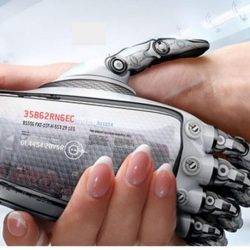 Over half (52 percent) of workers in a new poll have admitted looking for a new job because of frustrations over what they see as outdated ways of thinking around work practices and automation at their current company. The Digital Work Report 2018 commissioned by Wrike, surveyed just over 3,000 workers from across the UK, France and Germany, and highlighted a number of perceived benefits around automation, but its findings suggest that calls for greater adoption by employees are not being taken seriously. Nearly half of those surveyed (45 percent) in the UK believe automation would give their company a competitive advantage. However, while 39 percent are considering automation tools for some of their job functions, just 4 percent of UK companies have an automation strategy (i.e. planning to implement tools/techniques within next 12-24 months) for the whole company – considerably lower than European counterparts in Germany and France (both at 8 percent).
March 16, 2018
Recruitment via artificial intelligence must be monitored to avoid adopting human bias
 Artificial intelligence systems need to be accountable for human bias at AI becomes more prevalent in recruitment and selection, attendees at the Employers Network for Equality & Inclusion’s annual conference have been warned. Hosted by NatWest, the conference, Diversity & Inclusion: The Changing Landscape heard from experts in ethics, psychology and computing. They explained that AIs learnt from existing data, and highlighted how information such as performance review scores and employee grading was being fed in to machines after being subjected to human unconscious bias. Dr David Snelling, the programme director for artificial intelligence at technology giant Fujitsu, illustrated how artificial intelligence is taught through human feedback. Describing how huge data sets were fed into the program, David explained that humans corrected the AI when it used that data to come to an incorrect conclusion, using this feedback to teach the AI to work correctly. However, as this feedback is subject to human error and bias, this can become embedded in the machine.
March 8, 2018
New working styles are risking the health and wellbeing of people, claims report
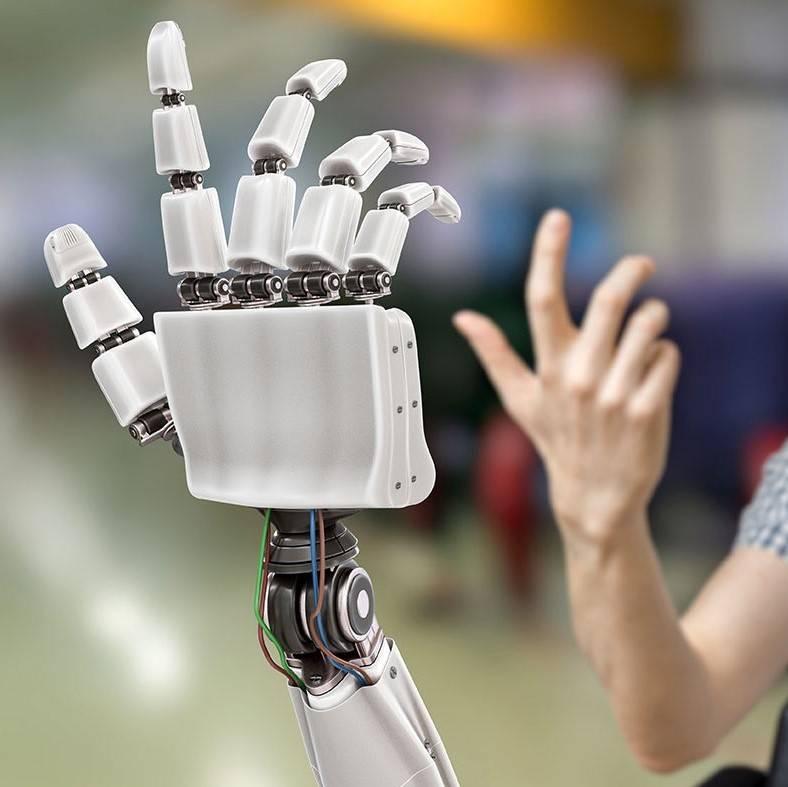 A new report from the British Safety Council and consultancy Robertson Cooper, explores what it claims is the probable impact of new working practices and technology on people’s physical and mental wellbeing, and what employers, unions and legislators should do to address them. The report, Future risk: Impact of Work on Health, Safety and Wellbeing, argues that the safety, health and wellbeing of older workers will become more important and new risks will arise related to the adoption of artificial intelligence and automation.
March 5, 2018
Automation will lead to greater inequality rather than job losses
 The total level of wages associated with jobs that have the technical potential to be automated in the UK is £290 billion per year, which represents 33 percent of all wages and earnings from labour in the economy, according to a new report published by IPPR for the IPPR Commission on Economic Justice. The report further claims that low-wage jobs have more potential to be automated than high-wage jobs and so it’s not just automation’s impact on the number of jobs that need to be considered but the impact on inequality. If automation leads to lower average wages or working hours, or loss of jobs in aggregate, a significant amount of national income could be transferred from wages to profits. And while increased automation of activities will replace some workers and labour earnings, employment and wages will rise in other areas of the labour market due to higher output and productivity, offsetting some of the original £290 billion lost but increasing pay inequality.
February 22, 2018
Report calls for better understanding of the future risks of tech to workplace wellbeing
 In a workplace dominated by insecurity, gig work and intelligent machines we need to improve our understanding of their potential impact on health, safety and wellbeing claims a new report. Future risk: Impact of work on employee health, safety and wellbeing, commissioned by the British Safety Council from RobertsonCooper researchers argues that the public debate on the future of work has centred so far on the likely shape of the workplace and its implications for both employers and employees. There has been far less focus on what this might mean for workers’ health, safety and wellbeing, with discussions centring on the present, rather than preparing us for the challenges of the future. Yet, the impact of automation on the workplace will be more fundamental than is commonly understood, with 11 million jobs predicted to be lost in the next 20 years in the UK. As we are already seeing with some ‘gig’ working, it may undermine such basic human needs as social identity, economic security and a sense of belonging. The report reviews the existing literature on this subject and makes a number of recommendations.
February 21, 2018
Cities must harness potential of new technology to keep themselves moving
 The UK Government needs to develop a new transport strategy based on local partnerships to keep up with technological advances in areas such as self-driving cars, claims a new report. Rethinking Urban Mobility has been published by engineering company Arup, in collaboration with the London Transport Museum, law firm Gowling WLG and transport company Thales. The report coincides with the publication of a similar study from the World Economic Forum which claims that autonomous and shared vehicles, digitalisation and decentralisation of energy systems require new approaches to mobility.
February 20, 2018
Built environment needs to address the talent gap to make the digital transition says WEF
 The construction industry needs new talent and skills to help in the adoption of new technologies to meet the challenges of digital transformation. It must also become more diverse, including increasing the percentage of women in the industry. These are the recommendations of a new report from the World Economic Forum, developed in collaboration with The Boston Consulting Group (BCG), Shaping the Future of Construction: An Action Plan to solve the Industry’s Talent Gap. The report argues that the Infrastructure and Urban Development (IU) industry has failed to innovate as quickly as other sectors, resulting in stagnating productivity and negative effects on the economy, society and the environment. An ongoing industry-wide shortage of qualified workers is among the key reasons for this issue. It has undermined project management and execution, adversely affecting cost, timelines and quality. It also has impeded the adoption of new digital technologies, such as building information modelling (BIM), automated equipment and cloud-based collaboration tools, which could improve productivity. The report provides twelve key actions which needs to be implemented to close the structural talent gap of the construction industry.
February 12, 2018
Business leaders increasingly optimistic about benefits of artificial intelligence in the workplace
 Executives at major organisations increasingly believe that pairing humans alongside machine intelligence will create a more effective, engaged, and meritocratic workplace, according to a new study released by software provider Pegasystems Inc (registration required). The authors surveyed 845 senior executives working globally across industry sectors including financial services, insurance, manufacturing, retail, telecommunications and media, and government, on the increased role of automation and artificial intelligence in the workplace of the future. The potential impact in the workplace seems to outweigh any lingering fears, the report claims. Around 69 percent of of respondents say “workforce” will refer to both humans and machine intelligence in the future. Nearly three-quarters of executives said using machines to augment human abilities would lead to increased efficiency. Over 60 percent said it could be used to improve customer service.
January 25, 2018
World Economic Forum announces expanded global network to shape policy for Fourth Industrial Revolution
 The World Economic Forum has announced an international expansion of its Center for the Fourth Industrial Revolution. The announcement coincides with this week’s Forum at Davos, which you can follow live here. New affiliate Centers will open in India, Japan and the United Arab Emirates, creating ‘an international network dedicated to maximising the benefits and minimising the risks of emerging technology’. In cooperation with host governments and private companies, affiliate Centers will aim to build on the work under way in San Francisco to close the perceived gap between emerging technology and policy. The Center for the Fourth Industrial Revolution model is to bring together business leaders, governments, start-ups, civil society, academia and international organisations to co-design and pilot innovative approaches to governance for emerging technologies such as artificial intelligence and blockchain.
January 23, 2018
Global economy faces an immediate reskilling problem in the face of automation, claims Davos report
 The global economy faces a reskilling crisis with 1.4 million jobs in the US alone vulnerable to disruption from technology and other factors by 2026, according to a new report, Towards a Reskilling Revolution: A Future of Jobs for All, published by the World Economic Forum. The report is an analysis of nearly 1,000 job types across the US economy, encompassing 96 percent of employment in the country. Its aim is to assess the scale of the reskilling task required to protect workforces from an expected wave of automation brought on by the ‘Fourth Industrial Revolution’. Drawing on this data for the US economy, the report finds that 57 percent of jobs expected to be disrupted belong to women. If called on today to move to another job with skills that match their own, 16 percent of workers would have no opportunities to transition and another 25 percent would have only between one and three matches.
January 12, 2018
The seven must-reads that were on our radar this week
 What to do when you’re feeling distracted at work
The essential truths of management books distilled to 25 words
The past and present future of corporate real estate
A new approach to the design of work
How to tackle impostor syndrome in 2018
Managing an integrated government estate: lessons from the UK
Autonomous car hype is way ahead of reality
January 8, 2018
Chinese government to create a $2.1 billion industrial park dedicated to artificial intelligence research
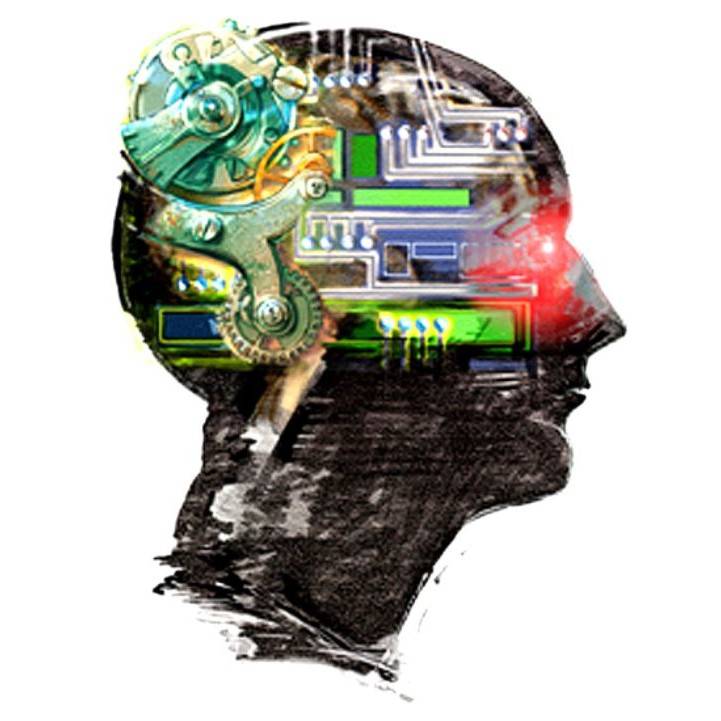 The Chinese government is preparing to build a technology park in Beijing dedicated to research into artificial intelligence, according to the Chinese news agency Xinhua and Reuters. The scale of the development can be gauged by the level of investment – some $2.12 billion (13.8 billion yuan) to build the park, located in west Beijing. The park is also forecast to generate revenues of $7.7 billion (50 billion yuan) a year from the 400 enterprises that are expected to be housed there. Zhongguancun Development Group, the developer of the project, will look to partner with foreign universities and build a “national-level” AI lab in the area, according to the reports.