




Search Results for: bias

Most managers underestimate the role their emotions play in decision making
Most managers underestimate the role their emotions play in decision making

Managers are less rational and more influenced in their decision making by emotions than they think.Managers are less rational and more influenced in their decision making by emotions than they think, according to a new poll. The study, The empathy problem: Balancing emotion in decision-making, part of the Building Better Managers series [registration], surveyed 279 people leaders across eight countries and 51 industries, with qualitative interviews assessing how emotions and biases impact workplace choices. While four in five managers reported making decisions without emotional influence, almost all shared personal stories during interviews that indicated the opposite. This gap reflects the unconscious nature of decision making, according to the report. It suggests that, while humans see themselves as rational thinkers, many of our choices are instinctively fast, intuitive and emotionally driven. (more…)


Adoption of workplace AI is inconsistent and riddled with contradictions

Adoption of workplace AI is inconsistent and riddled with contradictions

New research claims to reveal the significant divides in how organisations are adopting artificial intelligence, with some reporting positive outcomes and others citing fear, risk and job losses.New research claims to reveal the significant divides in how organisations are adopting artificial intelligence, with some reporting positive outcomes and others citing fear, risk and job losses. The study, carried out by The Adaptavist Group as part of its latest Digital Etiquette: Unlocking the AI Gates report, surveyed 900 professionals responsible for introducing and onboarding workplace AI in the UK, US, Canada and Germany. It found a sharp split between the 42 percent of respondents who believe their company’s AI claims are over-inflated and the 36 percent who do not. (more…)

Flexible working policies have only a limited effect on how people actually work

Flexible working policies have only a limited effect on how people actually work

A major UK policy reform to expand workers’ rights to request flexible working has not substantially changed how people work in practice, according to new researchA major UK policy reform to expand workers’ rights to request flexible working has not substantially changed how people work in practice, according to new research from King’s Business School, UCL and City, University of London. The study analysed data from more than 15,000 employees in the UK Household Longitudinal Study spanning 2010 to 2020, focusing in particular on the 2014 policy that extended the legal right to request flexible working to all employees with at least 26 weeks’ service, rather than just parents or carers. It found that while women are more likely to reduce their hours following the reform, there was no corresponding increase in remote working or flexitime among either men or women. (more…)

Measuring and rewarding what people do at work? It’s a rat trap, baby, and you’ve been caught

Measuring and rewarding what people do at work? It’s a rat trap, baby, and you’ve been caught

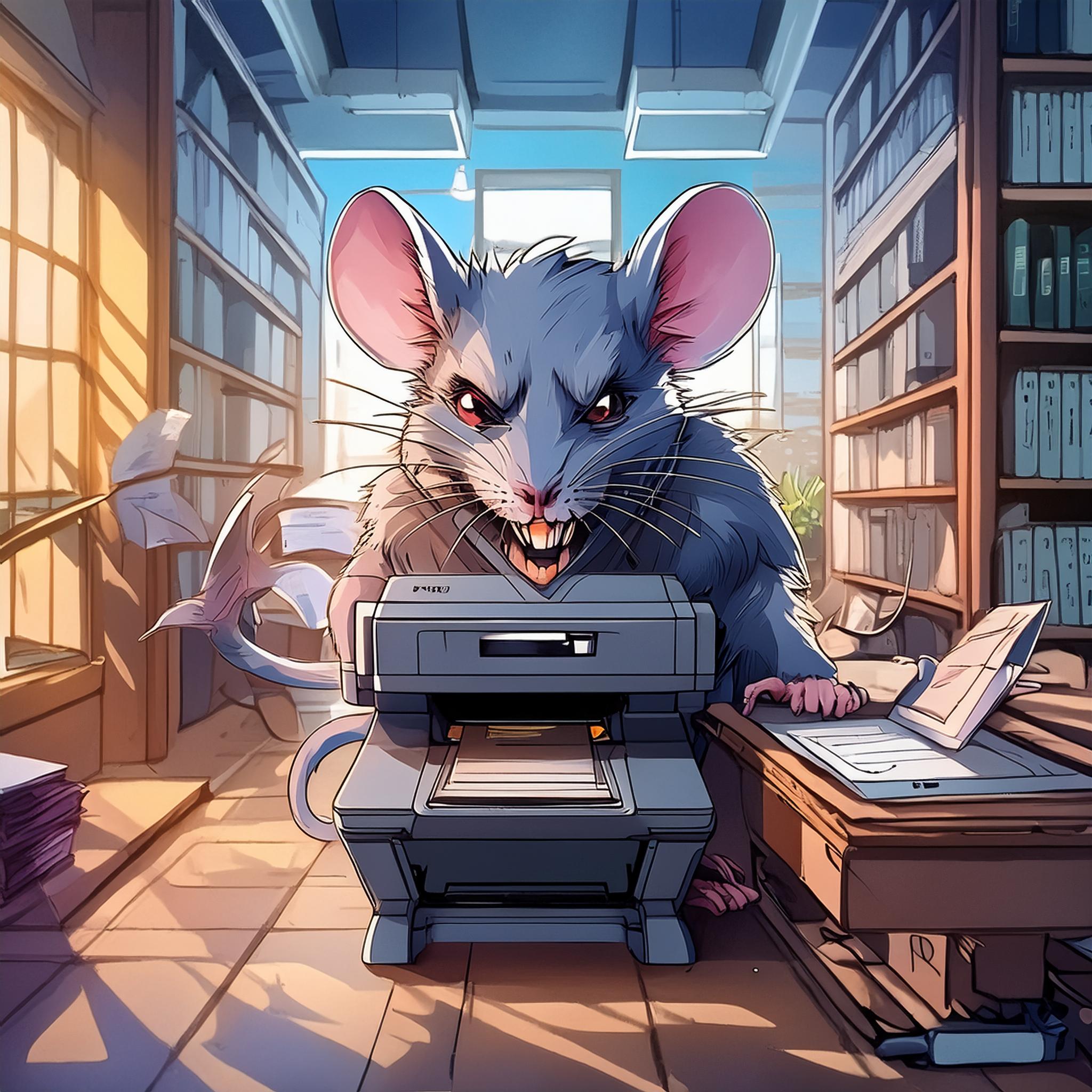
Life imitates art. Scientists have discovered that lab mice may be conducting their own experiments on us. A paper published in the journal Current Biology speculates that mice seem to be testing their testers. They do this by deviating from simple behaviours such as responding to rewards to work out what might happen. “These mice have a richer internal life than we probably give them credit for,” explained Kishore Kuchibhotla, senior study author and an assistant professor of neuroscience at Johns Hopkins University. “They are not just stimulus response machines. They may have things like strategies.” (more…)

Updated: We need to acknowledge the role privilege plays in the ways we talk about work

Updated: We need to acknowledge the role privilege plays in the ways we talk about work

Acknowledging our own biases and privileges will help us to have better conversations about work and workplacesOver the weekend of the 9th of August, I listened to two episodes of Andrew Keen’s podcast which feature conversations with a couple of well-known people from our own domain of work and workplaces. One was Julia Hobsbawm and the other Dror Poleg. It seemed that Julia had introduced Keen to Dror so a link between the two existed. Another link formed in my mind as I listened: the unspoken role of privilege underpinning both conversations. albeit in different ways. (more…)

The change we need: hearing women and embracing curiosity in the workplace

The change we need: hearing women and embracing curiosity in the workplace

The conversation around women in the workplace is one of both logic and emotion, writes Jennifer Bryan.The conversation around women in the workplace is one of both logic and emotion. Objectivity is often the aim, but personal experiences—whether overt or subtle—shape the way we engage with this issue. The truth is, for much of history, the world was built by men, for men. While progress has been made, deeply ingrained structures and biases remain, making gender equality in professional spaces more challenging than it appears on the surface. Even those who actively strive for fairness and inclusion are not immune to falling into unintentional biases. We all have blind spots. Whether due to upbringing, societal conditioning, or subconscious norms, even the most well-intentioned individuals—men and women alike—sometimes perpetuate behaviours that contribute to exclusion rather than inclusion. Recognizing this is the first step toward meaningful change. (more…)

We may think we are pretty aware of the effects of AI. But posterity may draw different conclusions

We may think we are pretty aware of the effects of AI. But posterity may draw different conclusions

Artificial Intelligence (AI) is reshaping the world around us at breakneck speed, unlocking opportunities we could not have even imagined a few years ago. But with its potential comes an immense set of challenges. How we handle this transformation will define the future of our workplaces, economies, and societies. Recent events, including Trump’s revocation of Biden’s executive order addressing AI risks, Labour’s ambitious plans to integrate AI across the UK, and Facebook’s unsettling U-turn on content moderation, highlight the urgent need for businesses to take an ethical, informed, and responsible approach to AI adoption. (more…)

People think their privacy is at risk with the use of GenAI in the workplace

People think their privacy is at risk with the use of GenAI in the workplace

The poll from careersinaudit.com found that data privacy is the biggest ethical concern people have when it comes to utilising GenAI tools in the workplaceData privacy is the biggest concern around implementing GenAI in the workplace, a new survey claims. The poll from careersinaudit.com suggests that data privacy is the biggest ethical concern people have when it comes to utilising GenAI tools in the workplace, with 53 percent of respondents citing it as the biggest risk. The survey asked audit and governance professionals about how AI is being implemented in their respective organisations, their attitudes towards the tech and what their biggest concerns are with using the tools. (more…)

Emotion tracking tech in the workplace puts people’s wellbeing at risk

Emotion tracking tech in the workplace puts people’s wellbeing at risk

A new report from the Institute for the Future of Work (IFOW) explores the increasing use of affective computing in the workplace.A new report from the Institute for the Future of Work (IFOW) explores the increasing use of affective computing in the workplace. Affective computing is a branch of artificial intelligence which focuses on recognising and responding to human emotions through technologies like biometric sensors, emotion-tracking software, and wearable devices. Once primarily used in consumer products, these systems are now finding applications in the workplace, often marketed as tools to enhance safety, productivity, and employee wellbeing. The use of AI-powered technologies that monitor and interpret employees’ emotions and behaviours is known as Algorithmic Affect Management (AAM) and is rapidly transforming the landscape of employment, raising significant questions about privacy, ethics, and the future of work, according to the report. (more…)

These are very early days in our relationship with Generative AI

These are very early days in our relationship with Generative AI

The future of Generative AI in the workplace isn’t about replacing humans – it’s about enhancing what we do best.The launch of ChatGPT in late 2022 marked a milestone moment for artificial intelligence, bringing what was once a niche technology firmly into the mainstream. Suddenly, AI and especially Generative AI, wasn’t just the prerogative of data scientists and tech developers. It was a feature in everyday conversations, a presence in business strategies, and a catalyst for innovation across industries. In the months since, platforms like Gemini and Perplexity have emerged, pushing the boundaries of what AI can achieve while expanding its role in the workplace. (more…)

That conversation about hybrid working? Same as it ever was

That conversation about hybrid working? Same as it ever was

The term hybrid working may only have been in widespread use for a few years, but the ideas behind it stretch back decadesRecently I wrote a short article based on a 1993 Architects’ Journal interview with IBM’s then design manager of property, Peter Wingrave. It reminded me how discussions about new ways of working – now including that neologism hybrid working – have been a constant throughout my career. In that interview, Wingrave is quoted as saying: “I think there are interesting times ahead for offices. We are already seeing the slow breakdown of the traditional office which people come to in the morning and leave at night…We would like our offices to catch the social spirit of an old gentleman’s club; you just pop in when you need to. You get more out of people that way… we’re lucky if our marketing areas are ever 40 per cent occupied … It’s crazy to build, run, heat, light and decorate a building as if people were there when 60 per cent of the time you know they are not”. (more…)

Striking the delicate balance of AI regulation and innovation

Striking the delicate balance of AI regulation and innovation

As AI continues to advance, navigating the balance between regulation and innovation will have a huge impact on how successful the technology can beAs AI continues to advance, navigating the balance between regulation and innovation will have a huge impact on how successful the technology can be. The EU AI Act came into force this summer, which is a move in the right direction towards classifying AI risk. At the same time, the Labour government has set out its intention to focus on the role of technology and innovation as key drivers for the UK economy. For example, planning to create a Regulatory Innovation Office that will support regulators to update existing regulation more quickly, as technology advances. (more…)