







December 10, 2014
‘Empty desks’ costing UK business 18bn a year, as job vacancies go unfilled
 The economic impact of unfilled job vacancies on the UK economy may be leading to a staggering annual cost of over £18bn. Research by job site Indeed, claims that falling unemployment and robust job creation is resulting in many businesses finding it a challenge to locate and secure the right employees. This inability to find and recruit the right hire for a role is impacting on both the business itself and the wider economy in two major ways. For the employer, failing to effectively resource a business slows both production and profits, while in the wider economy unearned wages reduce consumer spending power and contribution to economic growth. ‘Empty desks’ in the real estate sector are having the greatest impact on the UK economy, due to high levels of contributed economic value (the goods and services that could be produced if the position were filled).




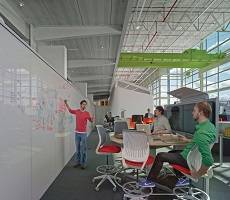


 Avanta Serviced Office Group has signed a deal to establish a new business centre in the heart of London’s Tech City at The Eagle, a 27 storey art-deco-style development on City Road, EC1, from Mount Anvil – Central London’s specialist residential-led developer. The centre is set to open on the 1st March 2015. The new centre will provide over 26,000 square feet of flexible office space over two floors, with approximately 400 desks. Set within a mixed-use development comprising retail, affordable accommodation, offices and high-end residential, it is located within TFL’s Zone 1, approximately five minutes’ walk from Old Street Rail and Underground Station, just two stops from Kings Cross.bThis is Avanta’s first site within Tech City, also known as Silicon Roundabout, which is the third largest technology start-up cluster in the world and home to over 15,000 growing businesses.

 At the end of July, the UK Government introduced new legislation that allowed any employee with more than six months in a job to apply to their employer for some form of flexible working arrangements. Now, research from Sage claims that a third of small businesses are ignoring the legislation, a fact which might be interpreted as suggesting that the UK’s SMEs are not so keen on the idea. What other data suggests, however, is that they’re probably more likely to offer flexible working than larger firms. This can only mean that it’s the legislation that’s the problem, not the practice. Leaving aside the ten percent of SMEs who the Sage report claimed were unaware of the new rules, this still leaves a large number of smaller businesses open to litigation and industrial tribunals. But, as the Federation of Small Businesses warned ahead of the new law’s introduction, the right to request was always likely to lead to headaches for business owners anyway.









October 29, 2014
The business case for green building widens to cover wellness and productivity
by Alison Kitchingman • Comment, Environment, Facilities management, Workplace design
(more…)