Search Results for: culture

Problems at Twitter, grease proof chairs, and the trouble with AI

Problems at Twitter, grease proof chairs, and the trouble with AI

The level of layoffs at several Big Tech firms has been the main source of news and comment over the past week or two. Around 11,000 people at Facebook and another 7,500 at Twitter are to be made redundant. Elon Musk then ensured the conversation moved on by forbidding remote work completely. (more…)

Summing up where the office now stands in the scheme of things

Summing up where the office now stands in the scheme of things

A painting in the style of Edward Hopper of a lone man waiting to board a commuter train to get to the office The argument about what it takes to encourage people to come into the office more often seems to have boiled down to an equation. It’s now common to hear somebody argue that the office has to be worth the commute it takes to get to it. So, if you want people to spend more time in the building, you need to do the maths. O must be greater than or equal to C (more…)



Disability pay gap rises despite greater awareness and efforts of campaigners

Disability pay gap rises despite greater awareness and efforts of campaigners

A painting of a man in a wheelchair looking out of the window, to illustrate the problem of the disability pay gap Non-disabled employees now earn around 17.2 percent more on average than disabled workers in 2022, an increase from the 16.5 percent disability pay gap last year, according to analysis published by the Trades Union Congress (TUC). The research suggests that the disability pay gap for 2022 was £2.05 an hour, or £3,731 per year for those working a 35-hour week. The pay gap starts at age 20 at 65 pence an hour and increases to a peak of £3.55 an hour, or £6,461 a year, for disabled workers aged 40 to 44. (more…)

Workplace wellbeing remains a neglected issue for many firms

Workplace wellbeing remains a neglected issue for many firms

Two people sharing a coffee and a joke at work to illustrate workplace wellbeingTwo in five businesses have either cut or maintained workplace wellbeing budgets despite growing pressures on their staff, according to a new report. Faced with stressors such as the cost-of-living crisis, political uncertainty, and the ‘return to work’ post-Covid, just 16 percent of directors and risk practitioners said their wellbeing budgets had seen a significant increase. Around 40 percent of businesses had increased their budgets slightly to tackle issues such as mental, physical, financial health, organisational vision, values, culture and working standards, according to the poll by Deloitte, the International Institute of Risk and Safety Management (IIRSM) and the Institute of Directors (IoD). (more…)

Quiet quitting is not a thing, but employers do need to offer more fulfilling work

Quiet quitting is not a thing, but employers do need to offer more fulfilling work

A drawing of a male worker looking like he is overworked and unfulfilled to illustrate the idea of quiet quittingA new survey from Ricoh Europe claims that the majority of workers seek more stimulation and creativity in their job, suggesting that employers need to do more to provide fulfilling work. The research, conducted by Opinium for Ricoh Europe, polled 6,000 workers and 1,500 decision makers across the UK, Ireland, France, Germany, Italy, the Netherlands and Spain. It claims to contradict the idea of quiet quitting with 82 percent of workers describing themselves as ‘engaged’ at work, while 65 percent say they are enthusiastic about what they do. Yet while workers feel content to a degree, there remain frictions and roadblocks to them becoming more productive and creative. (more…)

The underlying problems with the way we think about work

The underlying problems with the way we think about work

people and workAn idea that has never really gone away, but which seems to be enjoying a new lease of life is the tabula rasa. The conception of people as a blank slate is something a that has crept back into mainstream political and social thought for a variety of reasons. Arguably, it is also behind many of the most misleading notions about work and workplace design, perhaps most importantly that a change to some single element or characteristic of a working environment will lead to a specific outcome in the behaviour of people. (more…)
BCO recommends more space per person for the new era of flexible working

BCO recommends more space per person for the new era of flexible working

A worker in an office as part of flexible working cultureA report by the British Council for Offices (BCO) recommends a new method for calculating the amount of space needed per person in the post-pandemic world of flexible working. The research claims to identify a ‘sweet spot’ of 10-12 sq. m. per person. This will account for the rise in people working from home and hot-desking when in the office, while simultaneously ensuring the workspace meets modern employers’ requirements to promote productivity and wellbeing, as well as targets to minimise carbon emissions. (more…)

Offices remain largely unchanged in wake of pandemic

Offices remain largely unchanged in wake of pandemic

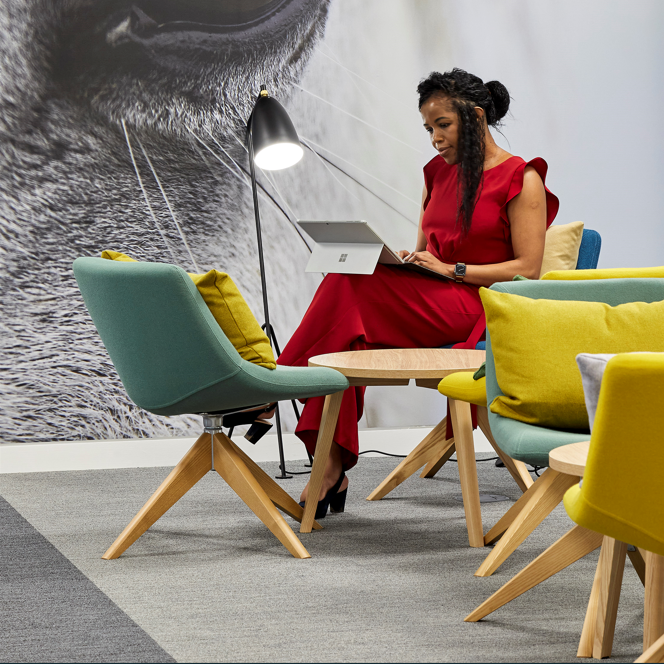
MIcrosoft offices IrelandMost businesses are failing to invest in collaborative offices that could encourage people to spend more time in them and take advantage of new work cultures, a report claims. More than four in five UK workers (83 percent) surveyed by YouGov on behalf of Microsoft Surface find themselves still in the same office environment as before the pandemic. The majority of those surveyed believe that office work is better suited to both socialising with colleagues (57 percent) and strengthening relationships with colleagues (65 percent) compared to remote work. (more…)

Winter is coming: don’t be in the dark about blackouts

Winter is coming: don’t be in the dark about blackouts

a lit candle to illustrate the idea of blackoutsThe National Grid has warned that the UK could face blackouts this winter. The worst-case scenario is that homes and businesses could lose power for pre-defined periods of up to three hours if gas power plants are not able to keep running due to the energy crisis that keeps on giving – or rather, taking. While the British government has dropped its energy rationing campaign, which once formed a crucial part of its plan to prepare for potential energy shortages and blackouts, countries across Europe are drawing up winter contingency plans, as are forward-thinking businesses. (more…)

Monitoring remote workers is a good idea according to half of bosses

Monitoring remote workers is a good idea according to half of bosses

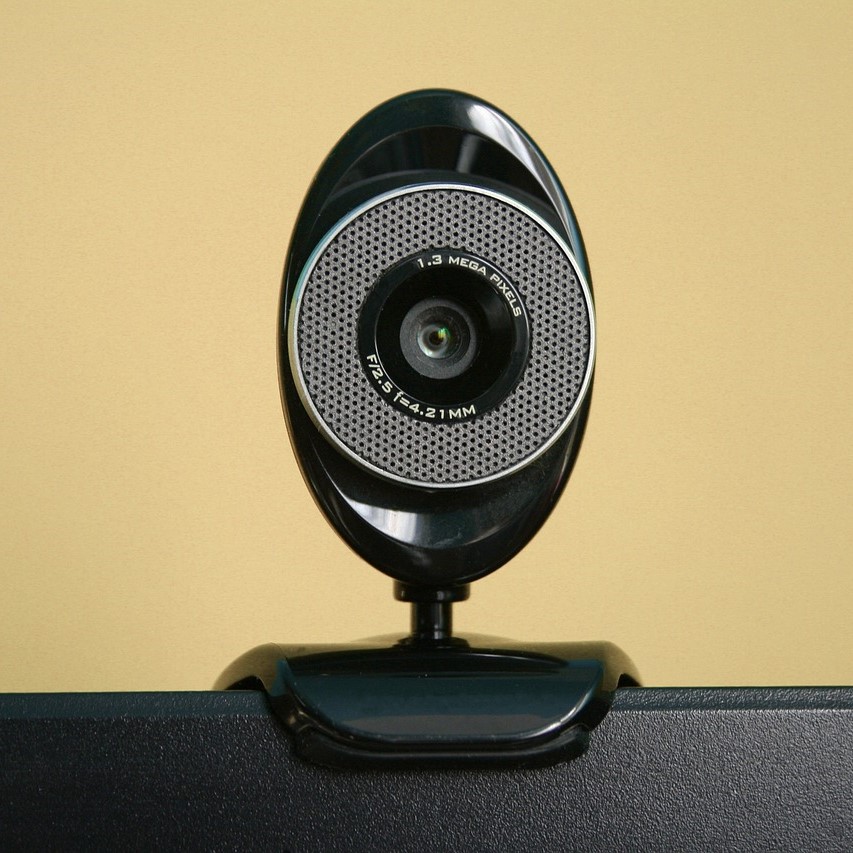
a webcam monitoring remote workersA new poll from the CIPD and HiBob claims that more than half of bosses (55 percent) agree with collecting information on regular home workers, including the amount of time spent on laptops each day and email sending behaviours to identify risk of burnout. However, only three in ten (28 percent) leaders say their organisations are using software for monitoring remote workers and their productivity, according to the study. Where workplace monitoring is in place, the CIPD and HiBob urge employers to consider its purpose, and to be clear to staff about what is being monitored and why. (more…)

Working habits are changing in response to cost of living increases

Working habits are changing in response to cost of living increases

commuters in London to illustrate changing working habitsThe so-called cost of living crisis is having a fundamental impact on people’s working habits, according to Beamery’s latest Talent Index – Sixth Edition. Almost a third (29 percent) of workers polled for the report are now avoiding the office because of the increasing cost of travel whilst another third cited (31 percent) they were considering leaving their jobs completely due to lack of salary increases. (more…)

The success of hybrid working hinges on creating a great workplace experience

The success of hybrid working hinges on creating a great workplace experience

A carved heart to suggest great workplace experience for hybrid workingRecent statistics underline the extent to which hybrid working is now a permanent fixture of US business life. A recent report suggests that 74 percent of US companies are using or plan to implement a permanent hybrid working model, whilst 44 percent of US employees prefer a hybrid work model, compared to 51 percent of employers. 55 percent of employees want to work remotely at least three days a week and 59 percent of employees are more likely to choose an employer that offers remote work opportunities over one that doesn’t. (more…)