







March 21, 2018
Wellbeing programmes that focus on staff engagement neglect a need to address mental health
 The mental health of employees, especially those working within high pressured working environments are the number one concerns for UK CEOs. Nearly three quarters (73 percent) of respondents to the annual wellbeing report ‘Employee Wellbeing Research 2018’ from Reward & Employee Benefits Association (REBA) in association with Punter Southall Health & Protection, admitted that high pressure working environments are now the biggest threat to wellbeing. Just a third (34 percent) of respondents provide mental health training for line managers, and despite a similar percentage (35 percent) planning to introduce this training in the next 12 months, one in six (14.9 percent) say they have no plans to introduce this sort of training. Although mental health in the workplace is the top priority for almost three in five (60 percent) CEOs in the UK and the area of employee wellbeing with which their Board is most concerned, currently, the key drivers of wellbeing strategies are to improve engagement and culture. Well over a quarter (30 percent) of respondents said wellbeing strategies are primarily driven by a desire to increase employee engagement and 23 percent to improve organisational culture.

 Cities in emerging markets, though challenged by economic and political turmoil, are catching up with top ranking cities following decades of investing in infrastructure, recreational facilities and housing in order to attract talent and multinational businesses, finds Mercer’s 20th annual



 The challenge to achieve gender equality at work isn’t made any easier by the attitudes of some employers. Although men increasingly want to be more present at home, currently fathers are

 Artificial intelligence systems need to be accountable for human bias at AI becomes more prevalent in recruitment and selection, attendees at the Employers Network for Equality & Inclusion’s annual conference have been warned. Hosted by NatWest, the conference, Diversity & Inclusion: The Changing Landscape heard from experts in ethics, psychology and computing. They explained that AIs learnt from existing data, and highlighted how information such as performance review scores and employee grading was being fed in to machines after being subjected to human unconscious bias. Dr David Snelling, the programme director for artificial intelligence at technology giant Fujitsu, illustrated how artificial intelligence is taught through human feedback. Describing how huge data sets were fed into the program, David explained that humans corrected the AI when it used that data to come to an incorrect conclusion, using this feedback to teach the AI to work correctly. However, as this feedback is subject to human error and bias, this can become embedded in the machine.

 A third of UK workers (31 percent) say their employer has little or no interest in their mental health, despite the fact that a fifth (20 percent) are stressed out on a daily basis, and for almost a third (33 percent) the issue is so bad that they’re considering looking for a new role. This is according to a new study of nearly 1,300 workers by ADP which found that workplace stress peaks amongst younger employees, with 22 percent of workers under 35 saying they experience stress every day, and 42 percent saying that it is so bad, they’re considering jumping ship. This contrasts with only 19 percent and 26 percent respectively of those over 35 who feel this way, suggesting employees become better at managing stress as they get older.














March 20, 2018
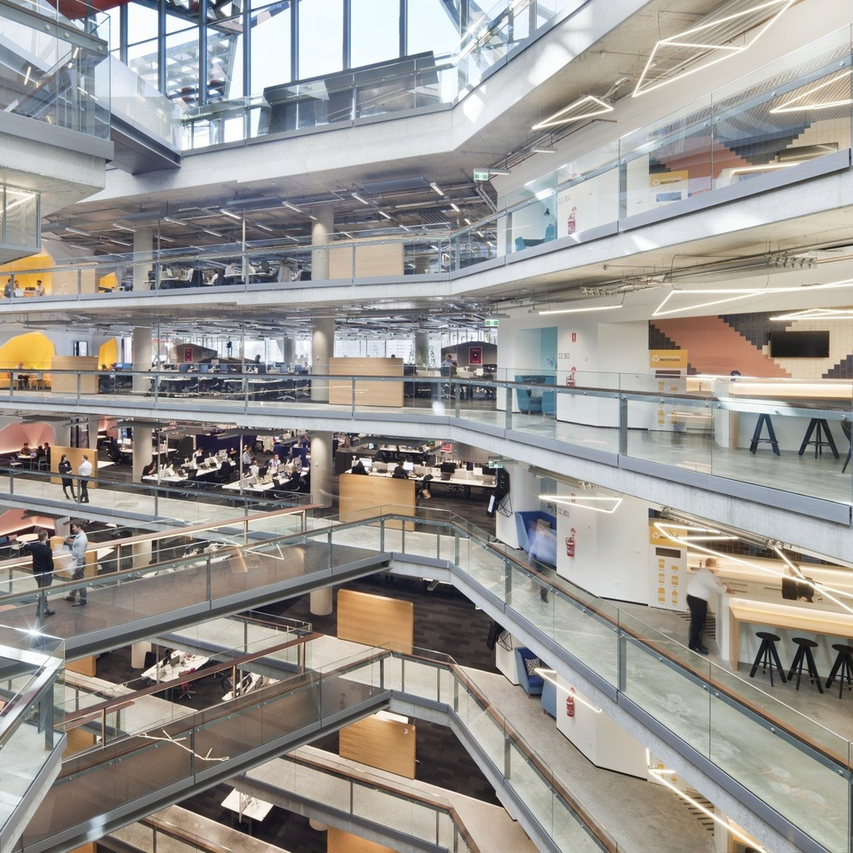
Enter the MIPIM bandwagon, towed by pink elephants
by Anna King • Comment, Property, Technology
(more…)