Search Results for: older

Resilience: the expanding global mandate for facility management

Resilience: the expanding global mandate for facility management

Throughout this decade, global challenges have shined a spotlight on the facility management (FM) industry and its professionals like never before.Throughout this decade, global challenges have shined a spotlight on the facility management (FM) industry and its professionals like never before. From pandemics to climate events and geopolitical instability, these challenges have tested organizations in unprecedented ways. While many debated the meaning of  terms like “the new normal,” facility managers demonstrated competence, strategic planning and decisive leadership to keep their organizations and people moving forward. From the C-suite to workers and visitors, organizations have become acutely aware of  FM’s influence as critical enablers  to ensure organizational, environmental and personal health. (more…)

Gen Z workers are socialising more after returning to the office, study suggests

Gen Z workers are socialising more after returning to the office, study suggests

Almost one in three Generation Z employees say they are socialising more with colleagues since returning to the office more often, according to a new poll from career transition firm Careerminds UK. The survey of 600 UK employees found that 31.7 percent of Gen Z respondents said they socialise more with colleagues now they are spending more time in the workplace. Among millennials, the figure was 17.7 percent. The research was published during International Youth Employment Week and examined how employees’ workplace habits have changed since the return to office and hybrid working. (more…)

Data centres are the most significant building type in the world right now. And we need to talk about that

Data centres are the most significant building type in the world right now. And we need to talk about that

Data centres have always been a slight anomaly in the Built Environment sector, part property and part critical infrastructure (talking in wattage rather than square footage for example), lacking aesthetic appeal and they are not significant employers, they are often considered a necessary evil to support our hyper-communicative lifestylesThe Data Centre Congress which took place from June 1st to 4th in Cannes is to data centres what mipim is to the more traditional markets in property, a place where the good and the great – from investors and operators, to the engineers and power providers, gather to network and contemplate the challenges and the future of the sector. In Q1 last year there was a slight chill through the sector after Microsoft halted data centre plans across the US and Europe to the tune of 2GW, citing caution around the overexpansion of AI and uncertainty around tariffs. What seemed like bombshell news at the time, felt like a mere blip and a distant memory at the 2026 edition and this juggernaut of activity is showing zero signs of slowing, a market that is currently worth over $300 billion is set to rise to $699.13 billion by 2034. (more…)

Navel gazing may not be the answer to the challenges facing workplace professions

Navel gazing may not be the answer to the challenges facing workplace professions

First published in 2016 and republished because the same conversation is happening yet again at the IWFM conference right now: An adherence to strongly held beliefs can make people think and behave in peculiar ways and get them tangled up in peripheral issues that take on a great deal of significance. Early religious artists, for example, spent centuries wrestling with the seemingly intractable problem of whether to depict Adam and Eve with belly buttons or not. (more…)

Optimizing your environment: principles from workplace to home

Optimizing your environment: principles from workplace to home

It's pretty amazing how the secrets to a productive, low-stress workplace are often the same ones that make a home feel restful and clear, even for public sector management.It’s pretty amazing how the secrets to a productive, low-stress workplace are often the same ones that make a home feel restful and clear, even for public sector management. Think about it: an office set up for focus and efficiency isn’t all that different from a home designed for relaxation. Once you get these basic ideas, you can really fine-tune both your work and personal spaces. This means you’ll get more done, feel less stressed, and generally enjoy life more. It all starts with realizing that your surroundings aren’t just background noise; they actually play a big part in how well you do each day. (more…)

Aquablu launches the new REFILL+ Series 2 in the UK with AURA system

Aquablu launches the new REFILL+ Series 2 in the UK with AURA system

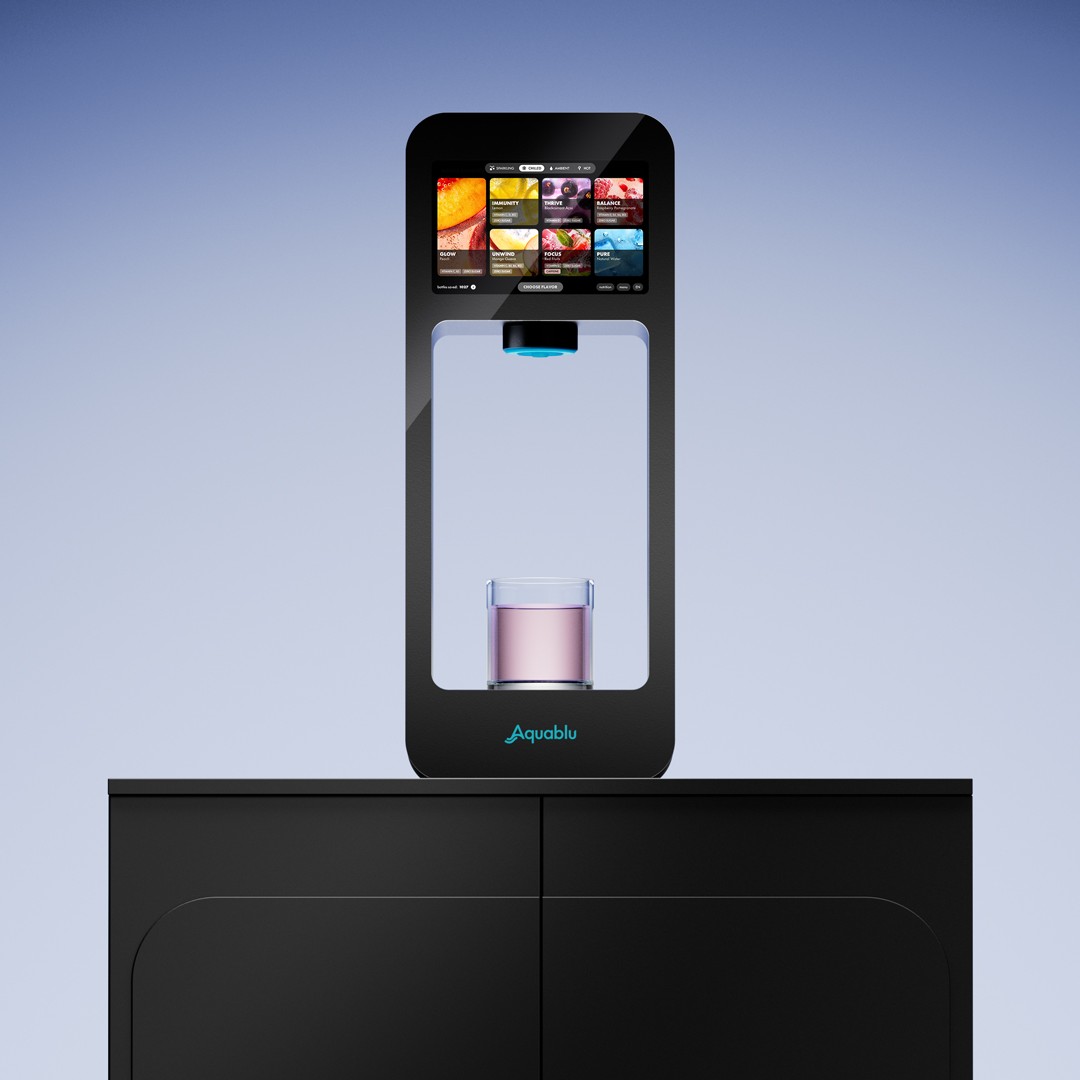
Aquablu, the Dutch cleantech company transforming how employees access and enjoy drinking water, has unveiled the REFILL+ Series 2.Aquablu, the Dutch cleantech company transforming how employees access and enjoy drinking water, has unveiled the REFILL+ Series 2. Powered by the new AURA operating system, the Series 2 sets a new benchmark for sustainable, intelligent hydration in the workplace. Founded in 2018 in the Netherlands by Marnix Stokvis and Marc van Zuylen, Aquablu was created with a clear mission: to make healthy, sustainable hydration accessible to a billion people worldwide. Since then, the company has grown rapidly, partnering with major clients including Heineken, Adyen and Microsoft, and now operates in more than sixteen countries, serving over 100,000 workers. (more…)

AI displays bias when judging people, and that matters for some of its most common uses

AI displays bias when judging people, and that matters for some of its most common uses

AI systems don’t just process information; they systematically ‘judge’ people in ways that resemble human trust, but with important differencesAI systems don’t just process information; they systematically ‘judge’ people in ways that resemble human trust, but with important differences, according to a new study by researchers at the Hebrew University of Jerusalem (HU). The results have implications for some of the most common ways AI is already being used as a decision-maker and opinion-former, especially in recruitment and law. According to the new study in Proceedings of the Royal Society A by Prof. Yaniv Dover and Valeria Lerman of the Hebrew University Business School, the reason is both reassuring and deeply unsettling. (more…)

Most people managers would prefer not to manage people

Most people managers would prefer not to manage people

More than two-thirds of managers would rather not be managers at all, according to a YouGov survey commissioned by SafetyCultureMore than two-thirds of managers would rather not be managers at all, according to a YouGov survey commissioned by SafetyCulture. According to the poll, 69 percent of team leaders in frontline sectors across the UK and Ireland would prefer not to manage people if there was no impact to their salary or benefits. Younger generations are the least willing to be managers. Nearly three-quarters of Generation Z and Millennial managers (73 percent) say they’d rather be individual workers compared to 65 percent of people aged 50 or older. (more…)

Refurbishment dominates UK cities office development pipeline

Refurbishment dominates UK cities office development pipeline

Refurbishment projects account for the largest share of the office development pipeline across the UK’s major regional citiesRefurbishment projects account for the largest share of the office development pipeline across the UK’s major regional cities, as new build activity remains subdued and occupiers continue to favour high quality, sustainable space. According to new figures from Avison Young, refurbishment schemes now represent the majority of space under construction in the Big Nine regional office markets. The volume of refurbishment space in the pipeline has risen by 12 percent year on year, reflecting a sustained shift towards upgrading existing stock rather than delivering entirely new buildings. (more…)

The ROI of predictive property management with IoT sensors

The ROI of predictive property management with IoT sensors

It’s all well and good eulogising about the technological benefits of incorporating the burgeoning Internet of Things (IoT) within property management but do the numbers stack up?It’s all well and good eulogising about the technological benefits of incorporating the burgeoning Internet of Things (IoT) within property management but do the numbers stack up? What is the likely return on investment (ROI) of shifting from the existing reactive model to something distinctly more proactive and predictive? A recent six-month project at a retirement complex in the Scottish Borders might just shed some light on the viability, or otherwise, of the IoT revolution that’s well underway. (more…)

ULI Europe publishes new guide on asset-level collaboration to accelerate decarbonisation of occupied buildings

ULI Europe publishes new guide on asset-level collaboration to accelerate decarbonisation of occupied buildings

ULI Europe has published a new Asset Sustainability Committees Best Practice Guide through its C Change programme to support collaboration between owners, occupiers and property managers in decarbonising multi-let commercial buildingsULI Europe has published a new Asset Sustainability Committees Best Practice Guide through its C Change programme to support collaboration between owners, occupiers and property managers in the decarbonisation of multi-let commercial buildings. Across Europe, the commercial real estate sector has made significant progress in setting net zero and sustainability commitments. However, translating these ambitions into measurable action within occupied buildings remains a persistent challenge. (more…)

AI adoption exposes generational divide in management, research finds

AI adoption exposes generational divide in management, research finds

KEDGE Business School has published new research suggesting that artificial intelligence (AI) is already reshaping management practice, but that a strong generational divide is emergingKEDGE Business School has published new research suggesting that artificial intelligence is already reshaping management practice, but that a strong generational divide is emerging in how leaders use the technology. The findings come from an OpinionWay survey carried out in October 2025 among managers, and point to younger leaders adopting AI at a significantly faster pace than their older counterparts. While AI tools such as ChatGPT are now widely used across the profession, the study suggests that managers under 40 are far more likely to integrate AI into day-to-day leadership decisions, while older managers remain more cautious and selective. (more…)