To provide the best experiences, we use technologies like cookies to store and/or access device information. Consenting to these technologies will allow us to process data such as browsing behaviour or unique IDs on this site. Not consenting or withdrawing consent, may adversely affect certain features and functions.
The technical storage or access is strictly necessary for the legitimate purpose of enabling the use of a specific service explicitly requested by the subscriber or user, or for the sole purpose of carrying out the transmission of a communication over an electronic communications network.
The technical storage or access is necessary for the legitimate purpose of storing preferences that are not requested by the subscriber or user.
The technical storage or access that is used exclusively for statistical purposes.
The technical storage or access that is used exclusively for anonymous statistical purposes. Without a subpoena, voluntary compliance on the part of your Internet Service Provider, or additional records from a third party, information stored or retrieved for this purpose alone cannot usually be used to identify you.
The technical storage or access is required to create user profiles to send advertising, or to track the user on a website or across several websites for similar marketing purposes.








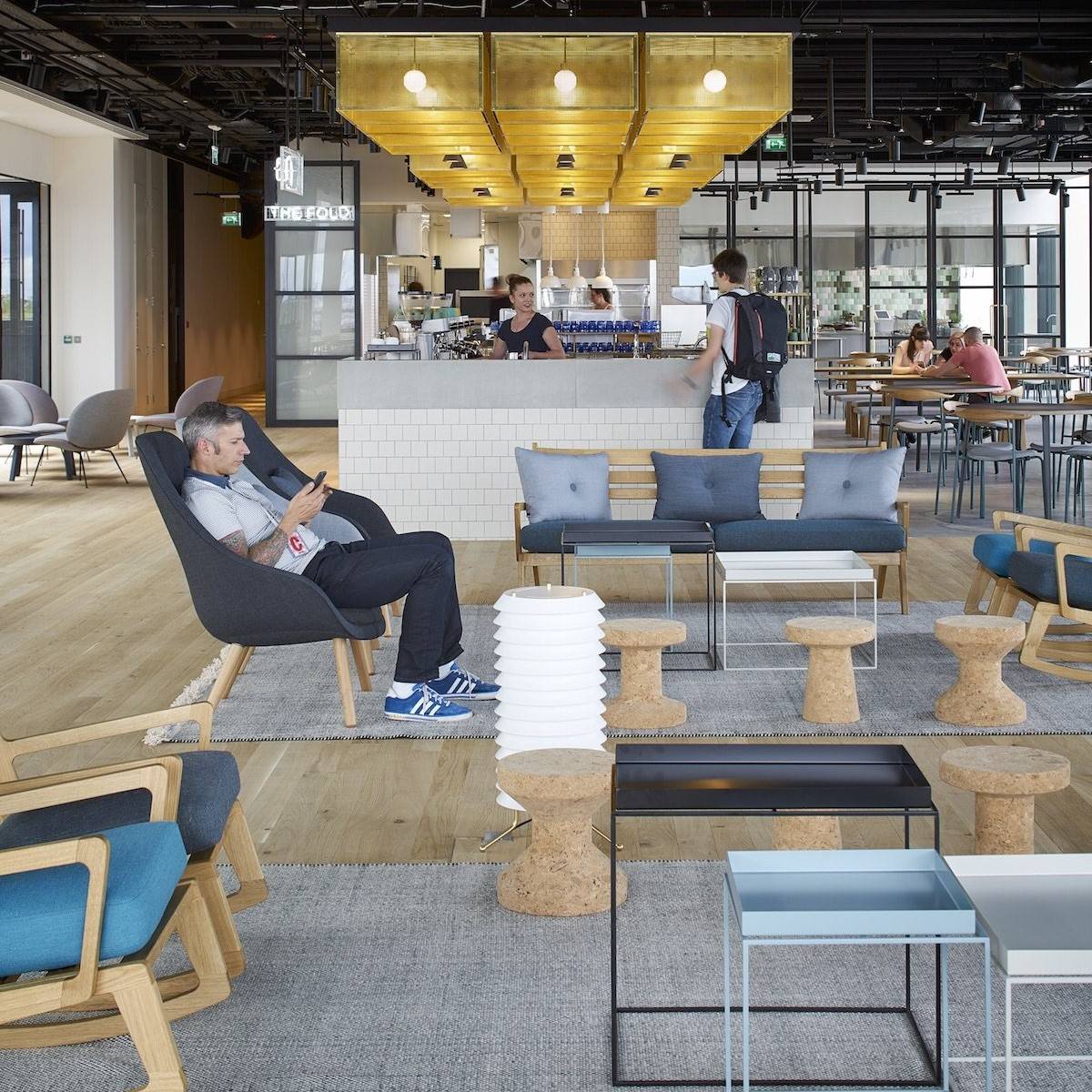 Many of us have ways of framing our ideas about the workplace with reference to the things we love. Because I am a Harry Potter fan that means developing notions of Hogwarts and what it says about how the school building influences teaching and learning practices. J K Rowling’s universe offers rich pickings for this sort of thing and in the case of this feature provides us with an example of how we might consider the current state of thinking about the flexible workspace. One of Rowling’s brilliant ideas is the Room of Requirements. (more…)



 Some may think this is a daft question. They’ll argue that of course people matter when we design workplaces. Granted, there are those for whom the human experience of the built environment is really important. They demonstrate this it in their attitudes and actions. However, based on some of the attitudes and actions I have observed over the years, I would suggest that the belief that people really matter when some designers design workplaces for them is quite frankly all too often skin deep. How do we know this? And if we accept that it is true, it then begs the secondary question of why this should be the case. Is it entirely our fault? What might we do to address the issues? In part, we know that people haven’t really mattered enough in design because of mistakes of the past. Meanwhile, society is facing many pressing challenges, ranging from health to housing, work to economy and climate change to resource depletion.
 The corporate real estate profession will be influenced, disrupted and transformed in the years ahead by a powerful combination of forces that are re-shaping business strategy and operations, consumer preferences, and how and where people want to live and work, according to a new report from CoreNet Global.
 Two of the most persistent and related structural problems facing the UK economy are the productivity and digital skills gaps. Earlier this month, the Office for National Statistics reported that there had been a further 1.2 percent fall in productivity. Part of the reason for this is that there is an underlying digital skills gap. According to a report from Barclays, nearly a third (31 percent) of working-age adults in the UK lack even basic digital problem-solving skills which places the country comfortably below the 37 percent average across OECD countries. Despite this, a mere 38 percent of UK employers offer their workers digital skills training, perhaps because on the other side of the coin, the UK ranks highly in what the report calls ‘digital empowerment’, which it defines as ‘the ability and desire to use one’s digital skills to work productively and creatively, and to have the opportunity to continually upgrade them to keep pace with changing technology’.
 Tim Peake’s recent return home from space at the end of a six month stay in the International Space Station highlighted just how essential it is for people to stay in contact with their friends, family and the rest of the world, literally from wherever they may be. Of course, back on Earth we now take it for granted that we are in a state of constant connectedness to the rest of the world. So the idea of someone being out of contact, even for brief periods of time, strikes us as odd. Perhaps that partly explains our fascination with the experiences of astronauts and other people who cannot take connectivity for granted. But it’s not just astronauts who have to consider how to enjoy the connectedness that we normally assume to be ours by right. People who work at sea face the same challenge and you could argue that it is more important for such truly remote workers to be in contact with other people and the Internet. So who fares better when it comes to achieving connectivity?












October 19, 2016
Where are zero hours contracts and the gig economy taking us? 0
by Mike James • Comment, Flexible working
(more…)