Search Results for: uk talent market

UK employee engagement and productivity lags behind most of world
UK employee engagement and productivity lags behind most of world

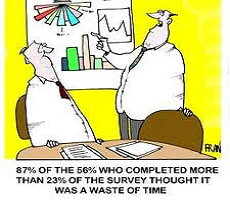
You might regard the concept of employee engagement as just a new way to describe industrial relations, but there is a growing body of research that UK employers need to do more to keep their employees on side. According to the latest missive, low employee engagement and lagging productivity is the greatest employment challenge facing UK business in 2013. Global research by Right Management  found that this was the key concern for one in three (31 per cent ) employers compared to a global average of just one in five (21 per cent ) HR professionals, suggesting that after years of economic uncertainty and doing ‘more with less’, the UK workforce has reached a productivity impasse. (more…)


Flexible working bolstering employment growth in UK

Jobs

Employment will continue to grow in the first quarter of 2013, despite stalled economic growth. According to the latest Chartered Institute of Personnel and Development (CIPD)/SuccessFactors Labour Market Outlook the proportion of employers that intend to increase total staffing levels remains positive for the first quarter of 2013. Gerwyn Davies, Labour Market Adviser at the CIPD, said: “While muted pay growth is playing a part, we also see continued evidence that employers are reluctant to lay-off skilled workers.” He added: “Some employers are clearly using flexible working and reduced hours to adapt to trading conditions.” (more…)

Gig economy set to boom to meet growing need for digital skills

Gig economy set to boom to meet growing need for digital skills

Gig economy set to boom to meet increasing need for digital skillsOver a quarter of businesses plan to hire temporary or contract staff in the next 12 months to help plug skills shortages created by digitalisation as more than half of CEOs are concerned about a lack of digital skills within their organisation. This is according to the Robert Half 2019 Salary Guide which argues that technology is reshaping businesses; with two in five UK organisations (38 percent) considering digitalisation as the main evolving force in the workplace today. This shift has created demand for a new set of skills, such as DevOps, data visualisation, data management and analytics. While softer skills such as resilience, adaptability and critical thinking remain key characteristics in potential employees, a third (31 percent) of employers state that a candidate’s technical skillset is their most important consideration when making a new hire. Around 1.6 million1 (28 percent) UK businesses plan to hire temporary or contract staff in the next twelve months, to combat the lack available talent required, which is creating a critical skills gaps in the workplace.



(more…)

Neuroinclusive workspace design – addressing the current industry shortfalls

Neuroinclusive workspace design – addressing the current industry shortfalls

There is one area which is emerging as the next critical evolution in workplace strategy: neuroinclusive workplace designIn recent years, there have been significant developments in making workplaces more inclusive and accessible for a diverse range of individuals. However, there is one area which is emerging as the next critical evolution in workplace strategy: neuroinclusive workplace design. Neurodivergent employees often bring unique strengths in areas like innovative problem-solving, meticulous attention to detail, and exceptional pattern recognition, but many workplaces are still failing to adequately accommodate these individuals. (more…)

JLL sets out the five key corporate real estate trends for next year

JLL sets out the five key corporate real estate trends for next year

A new analysis from JLL claims to highlight how global occupiers are rethinking corporate real estate as a strategic tool for talent, culture and performanceA new analysis from JLL claims to highlight how global occupiers are rethinking corporate real estate as a strategic tool for talent, culture and performance rather than treating it purely as a cost. The report identifies five priorities expected to influence workplace strategy in the year ahead, reflecting continued pressure on portfolios alongside rising expectations for employee experience and sustainability. JLL says organisations are increasingly shifting to more flexible “elastic portfolios” as they look to balance cost control with growth. Office utilisation remains well below target levels, prompting a move away from long, fixed leases in favour of portfolios that can expand or contract according to market conditions, workforce needs or new business opportunities. The firm argues that portfolio management is now closer to a continuous process than a periodic exercise.

(more…)

Time to admit we were wrong about Canary Wharf and other business districts

Time to admit we were wrong about Canary Wharf and other business districts

There was a time during and after the pandemic when it looked like time was up for the world’s major business districts. For a start Canary Wharf looked like it would need to completely reinvent itself as firms started to relocate to smaller more central premises. Instead of housing tenants such as HSBC it would focus on becoming a mixed-use space with more homes and leisure facilities. Hell, we even published a feature setting that all out ourselves. But it’s funny how things turn out. The latest news is JP Morgan’s announcement of a vast new headquarters building in the area. The bank, already one of the largest employers in the UK financial sector, has confirmed plans for a three million sq ft tower on the waterfront that will accommodate 12,000 staff and represent an investment estimated at £3 billion. (more…)

Very few people say they enjoy their work, HP study suggests

Very few people say they enjoy their work, HP study suggests

Just 15 percent of UK knowledge workers say they have a healthy relationship with work, according to the latest findings from HP’s third annual Work Relationship IndexJust 15 percent of UK knowledge workers say they have a healthy relationship with work, according to the latest findings from HP’s third annual Work Relationship Index [registration]. The poll of more than 18,000 desk-based employees across 14 countries, including 1,300 in the UK, shows an 11-point fall from 2024 and a figure five points lower than this year’s global average. The report suggests that business leaders in the UK influence most of the factors shaping employee wellbeing, yet many workers feel their needs are not being met. Only 14 percent of respondents believe leaders show empathy, and the same proportion say leaders communicate transparently. At the same time, 41 percent feel their company prioritises profit over people, while 61 percent say expectations and demands have increased – the highest level across developed markets. (more…)

Why winning the AI race starts with workforce readiness

Why winning the AI race starts with workforce readiness

While AI is heralded as a transformative force across industries, a quieter challenge threatens to slow its momentum: the growing shortage of skilled AI professionals. Behind the buzz of breakthroughs lies a stark reality — companies are racing to adopt AI, but many are leaving their people behind. Recent data shows the skills required for AI-exposed jobs are evolving 66 percent faster than for other roles — a dramatic leap from just 25 percent a year ago. The demand for AI talent is surging in the UK, where the job market is cooling off. Yet, as job postings requiring AI skills continue to climb, this only underscores a critical imbalance felt across the job market. (more…)

Lack of flexible working options drives a million people to swap jobs last year

Lack of flexible working options drives a million people to swap jobs last year

More than a million UK workers have quit their jobs in the past year due to a lack of flexible working, according to a new poll from the CIPD.More than a million UK workers have quit their jobs in the past year due to a lack of flexible working, according to a new poll from the CIPD. The organisation’s latest report highlights a growing tension between employer demands and employee expectations, particularly among younger workers. The survey of 2,000 employers and 5,000 employees suggests that around 3 percent of the workforce left their roles since January 2024 because they were unable to access the flexibility they needed. The findings come more than a year after UK workers gained the legal right to request flexible working from day one. (more…)

Commercial property growth in regional cities driven by financial services firms

Commercial property growth in regional cities driven by financial services firms

Commercial property markets in regional UK cities are seeing significant growth as major financial institutions reconfigure their office strategiesCommercial property markets in regional UK cities are seeing significant growth as major financial institutions rethink their office strategies to focus on high-value client interactions in London while relocating support functions elsewhere. New research from JLL suggests that financial services firms have accounted for more than 440,000 square feet of inward investment in office space across Glasgow, Leeds, Bristol, Manchester, Edinburgh and Birmingham over the last decade. This is more than the space acquired by manufacturing (238,822 sq. ft) and service industries (224,813 sq. ft), though still behind technology, media and telecoms (TMT) and flexible workspace sectors. (more…)

The amenity trap: why more isn’t always better

The amenity trap: why more isn’t always better

In a competitive market with a growing focus on employee experience, landlords are under pressure to differentiate their buildings, and amenity is often the tool of choice. But more isn’t always better.Over the past decade, amenity has evolved from a ‘nice to have’ to a key part of any office building strategy. In a competitive market with a growing focus on employee experience, landlords are under pressure to differentiate their buildings, and amenity is often the tool of choice. But more isn’t always better. The most successful amenity strategies aren’t defined by volume, novelty, or trend. They’re defined by relevance: to the building, the occupier, and the wider market context. When poorly thought through, amenity can become a sunk cost. When well-executed, it can drive rental growth, increase tenant satisfaction, and support leasing velocity. (more…)

Ping pong, perks, pizza and beanbags won’t get you a better workplace culture

Ping pong, perks, pizza and beanbags won’t get you a better workplace culture

Organisations have become increasingly inward-looking, preoccupied more with symbolic purpose statements and curated internal experiences of workplace culture than delivering real value to the business or its customersBusiness has taken a wrong turn. Since the 2008 financial crisis, best practice has led companies to believe that the route to driving greater productivity and performance is to establish a workplace culture that prioritises purpose, meaning, and how people feel. As a result, organisations have become increasingly inward-looking, preoccupied more with symbolic purpose statements and curated internal experiences than delivering real value to the business or its customers. However, in today’s challenging economic climate, and with UK productivity at an all-time low, this navel-gazing approach is not only proving ineffective, but is also actively holding companies back. What began as a well-meaning shift towards cultivating happier employees has become a harmful distraction from genuine employee engagement and performance. (more…)