






May 18, 2018
Office take-up in London at highest point in last 12 months, boosted by pre-let activity
 Central London commercial offices under offers are at the highest point in the last 12 months and take-up is ahead of 2017 levels compared with this point last year, new data from CBRE has shown. Central London office take-up for April 2018 stood at 547,900 sq ft, largely driven by pre-letting activity. Office take-up for the year to the end April 2018 was 4 percent higher than the corresponding period in 2017, standing at 3.4m sq ft. Take-up was boosted by 139,600 sq ft of pre-letting activity. Over the last 12 months, the business services sector has represented the largest proportion of take-up at 32 percent, driven by a large number of deals to flexible office providers. Take-up in April was dominated by the creative industries sector, accounting for 44 percent of take-up. The banking and finance sector (26 percent) and the business services sector (21 percent) also represented notable proportions of take-up in April.


 UK office workers spend an alarmingly limited amount of time outdoors each day, claims new research from Ambius, which found that almost 40 percent spend a maximum of just 15 minutes outside, excluding their commute to work, and an additional 22 percent spend a maximum of 30 minutes outside. This is even less than prisoners, who require ‘at least one hour of suitable exercise in the open air daily’, according to UN guidelines. On average, the British workers surveyed spend more time per day at their desk or workstation (6.8 hours) than they do in bed (6.4 hours), relaxing at home (3.5 hours) or outdoors (37 mins). A lack of fresh air (57 percent), insufficient natural light (49 percent), and an absence of indoor plants (36 percent) were the biggest source of frustration for employees. Introducing indoor plants (49 percent), nicer artwork (50 percent), and a more interesting colour scheme (54 percent), topped the list of employees’ requests to improve their workplace.
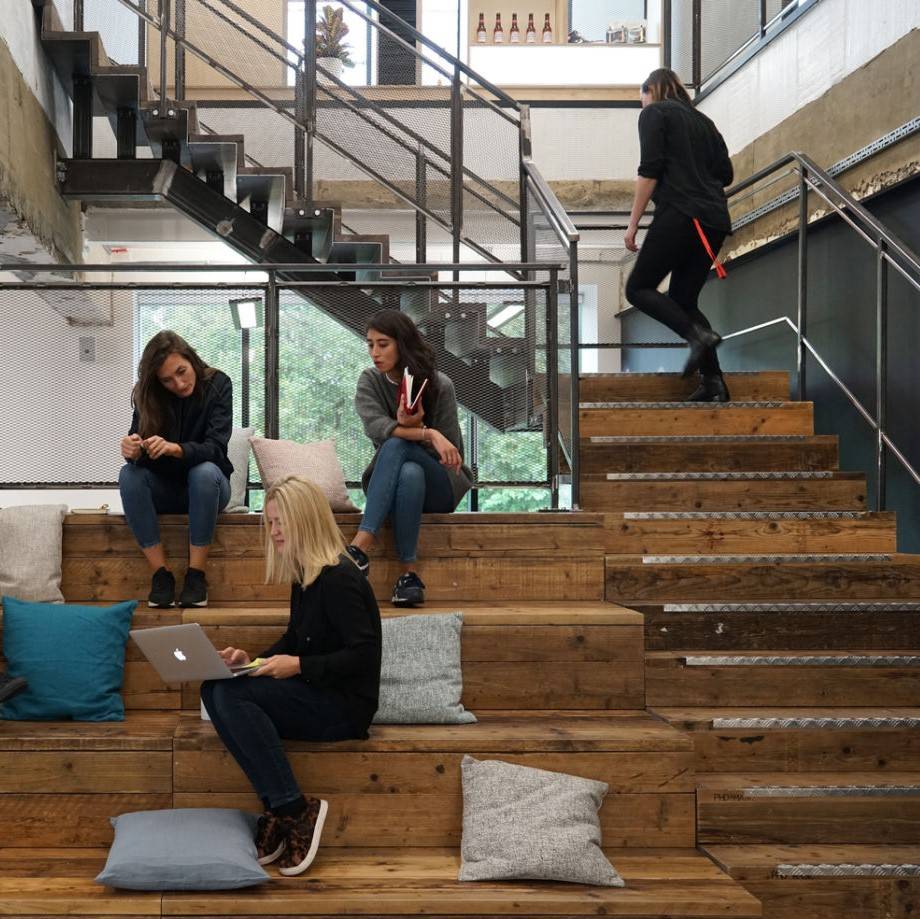

 Users of co-working and flexible space rapidly growing in numbers, according to a report, Marketplace for flexible work, from research conducted by (flexible workspace provider) The Instant Group and architects HLW. The report claims to ‘analyse’ the coworking and flexible workspace sector to gather a ‘360-degree perspective’ of the industry to determine where ‘perspectives align and diverge among stakeholders’. The research also claims that location and the ability to assign or reassign employees to workspace on short notice were also important influencers when choosing flexible workspace over conventional office space. Looking forward, the research claims that more than half of the companies interviewed envisage spending less time working from a traditional company office space.
 Organisations are failing to get the basics right when it comes to providing the digital and virtual systems that support employees in their roles, despite an evolving technological landscape and rise in flexible working, a new report has claimed. Data released by Leesman analyses how organisations can better support employees by offering the technology tools and infrastructure that enable people to work in a flexible way. In Deloitte’s 2018 Tech Trends report issued at the beginning of 2018, there was a heightened focus on how disruptive technologies will help businesses achieve larger strategic and operational goals and drive greater value. It predicted that within the next two years, more companies will embrace the emerging ‘no-collar workforce’ trend by redesigning jobs and reimagining how work gets done in a hybrid human-and-machine environment. However, Leesman’s findings show that, as of yet, organisations are failing to get the digital basics right. According to its latest dataset (Q1 2018) 23 percent do not agree that they have the technology tools and infrastructure that enable them to work in different locations across the office or from different locations outside of the office.

 It can be proven that a well implemented Occupational Health service can offer a good return on investment, finds a new report. A white paper, produced by the Society of Occupational Medicine (SOM), the International SOS Foundation and KU Leuven University,









May 17, 2018
What exactly is driving the global workplace conversation?
by Andrew Mawson • Comment, Facilities management, Workplace design
(more…)