








September 12, 2017
Majority of US office workers demand technology that allows them to work anywhere
 The majority of North American office workers expect their employers to provide technology that allows them to work from wherever they choose and three quarter of employees (74 percent) would rather leave their job to work for an organisation that would allow them to work remotely more often, even if their salary stayed the same. This is because working remotely has moved from being a work perk to a necessity of 21st century living, claims a new study by Softchoice. Collaboration Unleashed: Empowering Individuals to Work Together from Anywhere, found that 85 percent of North American office workers expect their employers to provide technology that allows them to work from their desk, in a meeting room, at home, or the coffee shop down the street.


 Cyber risk is becoming increasingly common while the types of breaches are becoming more diverse, claims a new white paper by the audit and accounting expert BDO. For instance, ransomware is now the fifth most common type of malware; with the cost of freeing up computer systems from ransomware tripling since 2016. Yet organisations are continuing to spend up to four times more on insuring other company assets (e.g. property, equipment etc.) than on cyber insurance, despite an increasingly widespread belief that their cyber assets are in fact up to 14 percent more valuable. The report also finds that as cyber incidents increase, they become more difficult – and therefore more expensive – to defend. In the new cyber insurance white paper, BDO’s global cybersecurity leadership group stresses the importance of businesses gaining an understanding of their unique risk profiles in order to ensure the right cyber insurance for their needs. Cyber insurance: managing the risk does include some of the positive trends around cyber security – for example, both the level of Board involvement and investments in cybersecurity have increased significantly in the last 2-3 years.
 A new scheme to help the NHS cut the costs of empty space in their buildings has been launched this week by NHS Property Services (NHSPS). Properties that qualify for the scheme must be deemed surplus to NHS requirements and may be re-let, disposed of or considered as a development opportunity. The new Vacant Space Handback Scheme comes in response to feedback from commissioners who want to reduce the cost of maintaining space that is no longer needed for clinical services. The cost of maintaining vacant space is kept as low as possible, though some costs are unavoidable where rent, business rates and some service charges remain payable. The total amount and cost of maintaining vacant space in the NHS is difficult to calculate, but costs are estimated to be in excess of £10 million a year on the NHS Property Services estate.
 Employees who feel trusted by their employer to manage how and when they work for themselves can improve their levels of productivity, a new survey suggests. The research by Peldon Rose claims that UK workers rate feelings of trust and autonomy from employers and colleagues as increasingly important in keeping them productive and happy in the workplace. But the survey also shows that many employers are failing to provide employees with the resources and support they need to manage their workload and keep them motivated. Although the majority of staff (59 percent) say they work most productively in the office, a third (33 percent) wish they were more trusted to manage how and when they work and 42 percent say that their office does not support a culture that allows them to work flexibly. Despite the clear value that staff place on trust and autonomy, employers are overlooking an opportunity to create a confident and self-motivated workforce.
 The creative industries sector accounted for over a third 35 percent) of take-up in the regional office market in the first half of the year, with this sector in particular driving the co-working revolution and the provision of flexible office space. Latest figures in CBRE’s H1 2017 Property Perspective, which monitors the performance of ten regional cities, overall, the UK’s regional office markets saw continued demand in the first half of 2017, with office take-up reaching 2.8 million sq ft, only slightly lower than the five-year average. For the first half of 2017, several cities witnessed improved levels of take-up when compared with the first half of 2016, these include Aberdeen, Edinburgh, Leeds and Manchester. Select locations such as Reading, Maidenhead and Watford also saw a continuation of record rents being set during the first half of the year, which has largely been driven by the delivery of new developments.















August 17, 2017
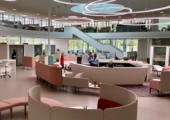
How workplace design shapes and reflects organisational hierarchies
by Angela Love • Comment, Facilities management, Workplace design
(more…)