







November 3, 2017
Growing need for a flexible workplace creates fresh challenges for employers
Many businesses are misaligned with their people, with nearly half of employees not understanding their company’s strategic objectives, according to new research published by The Ludic Group, which claims that the changing nature of workforces and the growing need for a flexible workplace are creating fresh challenges for communication, collaboration and engagement. The research suggests that the impact of technology is causing digital chaos, with businesses struggling to get the communications balance right. With the number of channels and tools increasing almost half of people (44 percent) want to hear more from employers. Perhaps surprisingly, one in five (20 percent) individuals said that their firm has not used any tools or techniques to communicate with them. This lack of communication results in people being disconnected from the business strategy, with only half of individuals (50 percent) reported fully aligned with their company’s objectives and 44 percent not knowing or understanding what these are. Alongside this, people increasingly want to design their own working experience and expect more flexibility from their employers.

 The future workplace will replace familiar, rigid hierarchies and departments with small, collaborative networks of teams and the lines between individual organisations and ecosystems will blur as companies increasingly cast their net wider to innovate. This is one of the predictions made in a Fujitsu-commissioned whitepaper ‘
 The London office market remains a buoyant market despite Brexit uncertainty, as many organisations see it as the most prestigious location for businesses of any size. In
 Businesses are concerned about the pace of commitment to improving the UK’s infrastructure, and a record number of firms are dissatisfied with the state of infrastructure in their region. With the UK currently ranking 27th in the world for the quality of its infrastructure, nearly all (96 percent) of businesses in the 2017 CBI/AECOM Infrastructure Survey see infrastructure as important (of which 55 percent view it as critical) to the Government’s agenda. From the Clean Growth Strategy and the £500 billion infrastructure pipeline to its decision to build a new runway at Heathrow and press ahead with the A303 tunnel, the Government has made clear its commitment to British infrastructure. However, only one in five firms is satisfied with the pace of delivery (20 percent) and almost three quarters (74 percent) doubt infrastructure will improve over this Parliament. This lack of confidence is attributed primarily to policy inconsistency (+94 percent of firms) & political risk (+86 percent). The digital sector is the exception, however, where 59 percent of firms are confident of improvements.
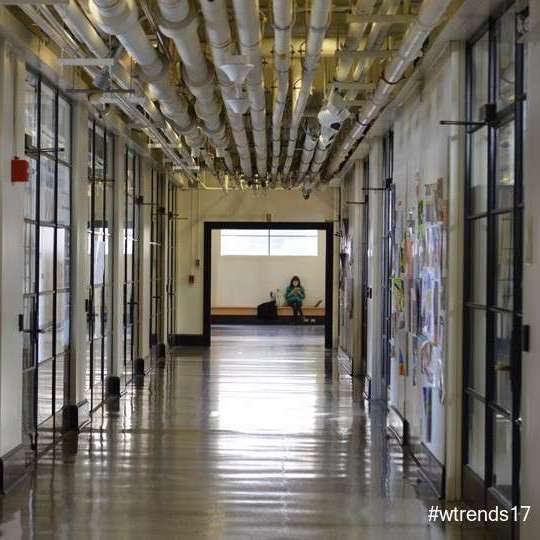
 Those working within the built environment are already in the change business, was the view of Neil Usher of
 An overwhelming majority of employees are deliberately seeking out information they are not permitted to access, exposing a major cybersecurity problem among today’s workforce, claims new research published by One Identity. The survey, conducted by Dimensional Research, polled more than 900 IT security professionals on trends and challenges related to managing employee access to corporate data. Among key findings, a remarkable 92 percent of respondents report that employees at their organisations try to access information that is not necessary for their day-to-day work – with nearly one in four (23 percent) admitting this behaviour happens frequently. Most alarmingly, the report indicates that IT security professionals themselves are among the worst offenders of corporate data snooping. One in three respondents admit to having accessed sensitive information that is not necessary for their day-to-day work.
 Take up of new commercial offices in London’s West End in September 2017 hit the highest quarterly total on record – with tech and media firms, along with serviced office schemes being the most active, according to figures from real estate advisor Savills. The take-up was 857,259 sq ft (79,639 sq m) – bringing total take-up by the third quarter to 1.62 million sq ft (150,498 sq m). Leasing activity in the third quarter of 2017 brings total take-up year to date, to 3.99 million sq ft (370,671 sq m), which already surpasses 2016’s total annual take-up (3.97 million sq ft) and places the West End in a strong position to exceed the record 4.3 million sq ft (399,470 sq m) amassed in 2015. Key deals that helped elevate the market included: Aegis pre-letting the entire 310,000 sq ft (28,799 sq m) at British Land’s 1 Triton Square; The Boston Consulting Group pre-letting 123,500 sq ft (11,473 sq m) at 80 Charlotte Street and Spotify acquiring 104,133 sq ft (9,674 sq m) at The Adelphi.










October 20, 2017
Seven workplace stories we think you should read this week (apart from ours)
by Mark Eltringham • Comment, Facilities management, Technology, Workplace design
Automation and Artificial Intelligence bullshit
Science in the gig economy
The seven deadly sins of AI predictions
The flight of people back to the suburbs
The changing psychology of the workplace
The rock and roll workplace