October 12, 2017
Working conditions and office design shown to impact on employee performance

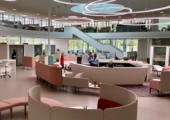
New evidence of a strong correlation between productivity, creativity and even profitability with employee working conditions, such as: light, air, noise, health, culture, design, movement and the quality of furniture have been established in a new report. The syndicated research project, Wellness Together, carried out by Sapio Research, of 1000 UK based office workers and 50 Facilities Management experts, suggests a strong link between people feeling catered and cared for by their workplace/employers and how this impacts business performance. Wellness at work is a dominant theme in any discussion about the workplace. But this is not just a discussion about happiness, it is about creating cultures and environments that are conducive to commercial success. The study identifies that in order to achieve true ‘Wellness’ attention to every single component that can impact mental and physical health needs to be considered, from building structures and company cultures through to the physical furniture and fittings that employees require to work efficiently and effectively.



 The majority (94 percent) of workers are open to flexible ways of working such as part-time, freelance, contract, temporary or independent contract work a new report from ManpowerGroup has revealed. Coining the trend as NextGen work, the research suggests this approach to a job is a choice (81 percent) not a last resort (19 percent). Findings from #GigResponsibly: The Rise of NextGen Work – a global survey of 9,500 people in 12 countries – identifies a shift towards this new way of getting work done, and that it works for people and employers. People were asked how they want to work, what motivates them and their views on NextGen Work. More control over their schedule (42 percent), boosting their bank account (41 percent) and developing new skills (38 percent) are top reasons why this flexible kind of work is on the rise. The report also found that this flexible approach is not just attractive to Millennials, as meaningful work and employer appreciation are valued more by Boomers than any other generation. More than 80 percent of US workers say NextGen Work is a choice, not a last resort, and builds resilience for less predictable futures.

 The number of large scale Internet of Things (IoT) projects have doubled in the last year, as projects move from small pilots to global rollouts, according to Vodafone’s fifth annual IoT Barometer Report. The range of benefits that users are getting from IoT is also widening as adoption increases – greater business insights, reduced costs and improved employee productivity top the list globally. Large scale users report some of the biggest business gains with 67 percent of them highlighting significant returns from the use of IoT. Energy and utility companies are at the forefront of the largest IoT projects worldwide, with applications such as smart meters and pipeline monitoring. Security in IoT is still the biggest barrier for organisations regarding deployment. However, in companies with 10,000 or more connected devices in operation only 7 percent say security is their top worry. Organisations are taking more steps to tackle security concerns including an increase in security training for existing staff, working with specialist security providers and recruiting more IT security specialists.

 Research published to mark the beginning of


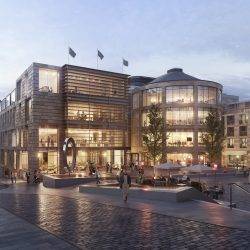 Strong demand and a lack of supply is helping to boast the regional office rental market, according to Savills’ latest Regional Offices Market Watch. The firm anticipates that take-up will reach 9.8 million sq ft (910,450 sq m) by the end of 2017, a 4 percent increase on 2016 and 9 percent up on the 10 year average. This is due to a number of large Government Property Unit (GPU) deals completing in the second half of the year. As a result of strong demand, total availability across the UK fell by 1 percent to 30 million sq ft (2.787 million sq m) in the first half of the year, which equates to just 1.8 years worth of available Grade A supply. What’s more, Savills notes that office based employment across the regional cities is forecast to grow by up to 4.6 percent over the next five years, leading to a net additional 55,000 jobs, representing a need for a further 5 million sq ft (464,616 sq m) of office space.