







August 3, 2017
BIFM formally adopts new ISO definition of facilities management
 If you’ve ever wearied of the endless debate about a precise definition of facilities management, and thought the squabbling often seemed like the conflict over the right end to open an egg that led to war in Gulliver’s Travels, then salvation might be here with the news that the British Institute of Facilities Management has formally adopted the definition of facilities management set out in new ISO standards published earlier this year. That definition forms part of ISO 41011:2017 Facility management – Vocabulary, which was published in April this year. The definition finalised in the standards is: Facility management (facilities management, FM) — organizational function which integrates people, place and process within the built environment with the purpose of improving the quality of life of people and the productivity of the core business. In addition to the vocabulary standard, ISO 41012:2017 Facility management– Guidance on strategic sourcing and the development of agreements was also released earlier this year, while the most recently published – ISO/TR 41013:2017 Facility management – Scope, key concepts and benefits – was published in July.

 The digitisation of the workplace may be seen as a boon to productivity, but that also depends on how well it’s being adopted by the workforce. A new survey claims that one in five (23 percent) UK office workers struggle with technology; and helping to solve the problems of these less tech-savvy employees takes up an average of 17 minutes of their colleague’s working day. The survey from memory and storage firm
 Some individuals within local government are holding back tech to preserve the status quo – a new survey suggests. According to the research, these people feel threatened by new technology and believe it will be disruptive to their ways of working. While the survey by 8×8 of staff working in local government suggested a significant appetite for new technology, more than a fifth (22 percent) say certain individuals are holding back tech adoption to preserve the status quo. This view is more prevalent amongst those in IT procurement, where more than a third (35 percent) believe colleagues are standing in the way of technology because it will disrupt what they already have in place. Only 51 percent of respondents believe senior management understand the importance of new technology and just 21 percent think they invest enough money to stay up to date with the latest developments. This contrasts with the private sector, where over half (56 percent) believe there is sufficient investment in new technology.

 Poor health is one of the biggest factors causing people to leave work earlier than they would like to; yet poor health isn’t an inevitable part of ageing. We know that health conditions can become more likely as we get older. While some health conditions are not any more likely the older you get, others certainly are. Musculoskeletal conditions (affecting joints, bones and muscles) and heart and circulatory conditions increases significantly as we age. The fact that 14 percent of all 50-64 year olds have a musculoskeletal condition, and that musculoskeletal conditions alone account for 30 million days of sickness absence each year, is significant. People are by impacted by health conditions in different ways, and you can have a dramatically different outcome depending on how early you spot and take action to address a health issue at work. Sometimes slow-onset physical conditions such as musculoskeletal conditions, might start off mildly, but gradually lead to a painful exit from work. Because they change slowly they are more difficult to identify and there isn’t always a clear trigger point to do something about them.
 Organisations are taking serious security risks by allowing employees to access workplace IT systems remotely while on their summer holiday, a telecoms company has warned. According to research by the corporate IT and cyber-security arm of Deutsche Telekom, nearly a third of employees (31 percent) use free Wi-Fi hotspots, and nearly a quarter (24 percent) use them for work-related emails and documents. These are a big danger area as they are insecure and easy for hackers to clone (getting access to all email and web traffic, including any work documents and passwords). It also warns that 28 percent of employees email work documents to and from their personal email, despite this creating numerous security problems. Ten percent use free USB charging points at airports and stations; and these ports can be used to transfer viruses and malware to unsuspecting users. The blame cannot solely be placed on the employees though, as just 28 percent of employees have never in their working career had any cyber security training to protect themselves and their employer.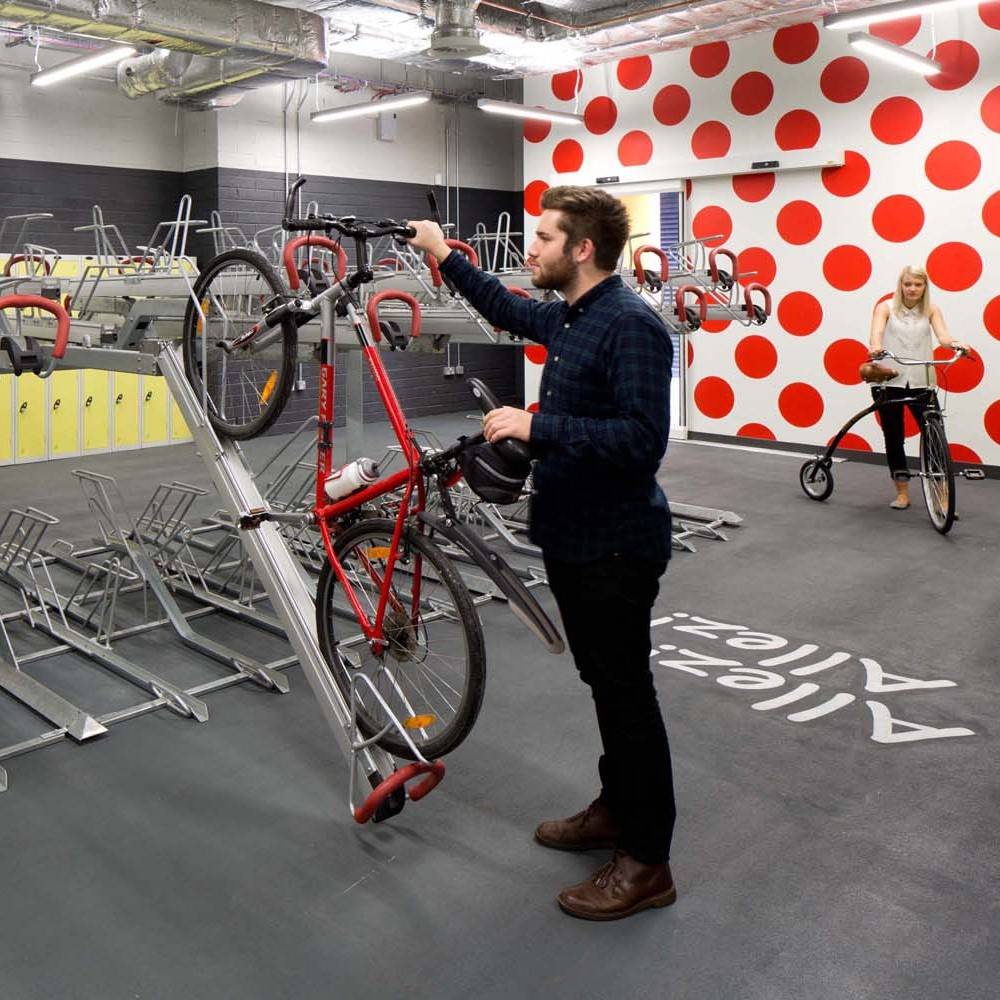

 Commercial property occupiers remain cautious about the future, and hard data indicates that demand has, so far, been largely unaffected by Brexit, claims a new report from the British Council for Offices (BCO) . ‘Brexit and its Potential Impact on Office Demand’, examines how Brexit might impact on demand for office space on a national and regional basis through to 2022. According to the report, almost one year on from the Brexit vote the situation is one of uncertainty, feeding through to slower growth, with ‘an almost palpable sense that choppy waters lie ahead, particularly with regard to trade and movement of labour’. However, businesses continue to make long-term investments in the national economy and even in the City, some large investment banks have committed to large new office buildings. There is much variation in the relative performance of the UK’s major office centres, though, with some expanding and others apparently in decline.
 The quality of the cycling facilities being offered by many workplaces are currently falling short and risk undermining a Government drive to increase the number of people cycling to work; as according to new research published by the British Council for Offices, 16 percent of office workers claim that inadequate facilities are discouraging them from considering commuting by bike. In April, the Department for Transport stated an aim to double the number of cycling stages, defined as a change in the form of transport as part of a longer “trip” (e.g. cycling to the train station before catching a train to work), from 0.8 billion stages in 2013 to 1.6 billion in 2025. However, new research, commissioned by the British Council for Offices and carried out by Remit Consulting, finds that whilst 83 percent of workplaces in the UK offer some form of bike storage, less than half (47 percent) of this is covered and secure. Improved parking facilities could help increase numbers of those cycling to work, with 16 percent of office workers surveyed saying that better bike storage would encourage them to do so.
 Companies in the tech and media (TMT) sector have accounted for the greatest proportion of City take up so far this year new figures from Savills suggest. This is the largest amount of take up ever by this sector in the first five months of a year, representing a 20 percent share of the market, ahead of the professional services sector at 17 percent and insurance and financial services sector at 14 percent. TMF firms took 517,069 (48,036 sq m) of space out of a total of 2.25 million sq ft (208,699 sq m) to the end of May 2017. Key deals to complete in the City recently include visual effects company Industrial Light & Magic (owned by the Walt Disney Corporation) taking 47,010 sq ft (4,367 sq m) at Lacon House in the City fringe (Theobalds Road, WC1), joining other tech companies Argus and Exterion Media in the building.










August 2, 2017
Whatever you might be told, this is not the Office of the Future
by Mark Eltringham • Comment, Facilities management, Technology, Workplace design
(more…)