


Search Results for: Gen Z

Climate health risks threaten global productivity, warns WEF

Climate health risks threaten global productivity, warns WEF

Climate-related health impacts could strip at least $1.5 trillion from global productivity by 2050, according to a new report from the World Economic ForumClimate-related health impacts could strip at least $1.5 trillion from global productivity by 2050, according to a new report from the World Economic Forum (WEF). The study warns that food and agriculture, the built environment, and health and healthcare are among the sectors most at risk unless businesses take urgent steps to adapt. The report, Building Economic Resilience to the Health Impacts of Climate Change, produced in collaboration with Boston Consulting Group, highlights the growing economic burden of heat stress, infectious disease and other climate-driven health threats. It argues that protecting workforce health is now a strategic priority, not only for humanitarian reasons but also to safeguard business continuity and economic stability. (more…)


People are still powering productivity in the era of AI

People are still powering productivity in the era of AI

The rise in employers committing to employee-first productivity practices is encouraging. Ultimately, people are still at the heart of every organisation. AI will continue to develop, but with teams that bring personality and spark to their roles, businesses can boost efficiency without losing the human element.Employee productivity has been cast into the spotlight in recent months, thanks to the acceleration of AI. Our new research shows that 50 percent of businesses are prioritising employee productivity over the next two years, budgeting for resources that promote individual staff performance and effectiveness. AI’s growing role in the workplace is, of course, a key driver of this trend. But it’s not the only factor. Increased remote work and other operational challenges mean businesses are looking to maximise efficiency and get the best possible return on their investment. (more…)

Just one more CoreNet? Give it to me.

Just one more CoreNet? Give it to me.

Esme Banks Marr reports from CoreNet in AmsterdamLast week, CoreNet Global’s EMEA Summit returned to Amsterdam, and with it, the familiar rhythm of connection, conversation, and the occasional déjà vu. I’ve attended a handful of these, and every year I tell myself I pretty much know what I’m in for… and yet, I keep coming back. Why? Well, let me unpack. First, let’s talk about the setting. Amsterdam is one of those cities that feels like it’s permanently on the front foot. It’s forward-thinking, relentlessly innovative, and always busy shaping the future. From cycling-first urban design to a thriving HQ and campus workplace scene, it’s a natural stage for a conversation about “Innovate to Thrive”, this year’s conference theme. I’ve always had the sense that the city itself lives that mantra. (more…)

AI, automation anxiety and the future of work: lessons from Daniel Susskind

AI, automation anxiety and the future of work: lessons from Daniel Susskind

Jo Sutherland reports from an enlightening lecture on how automation anxiety and fears about the future of work may not be quite as you thinkWhen I joined the audience at Gresham College for Professor Daniel Susskind’s inaugural lecture on automation anxiety, I expected the familiar line: AI is coming for our jobs. That’s not what I heard. Instead, Susskind, Professor of Business at Gresham, made a surprisingly nuanced argument, explaining that the real story was less about the number of jobs losses, and more about how the very nature of work is shifting. This piece reports on that event (available to watch below) and reflects on what his ideas mean for workplace leaders – and, from my vantage point as a communications professional working with organisations through workplace and digital transformation, how we talk to and engage our colleagues through the change. (more…)

Ten projects named as 2025 Urban land Institute Europe Awards for Excellence finalists    

Ten projects named as 2025 Urban land Institute Europe Awards for Excellence finalists    

Ten projects from eight countries across the EMEA region have been announced as the finalists in the sixth annual Urban Land Institute Europe Awards for ExcellenceTen projects from eight countries across the EMEA region have been announced as the finalists in the sixth annual Urban Land Institute Europe Awards for Excellence, which recognise exemplar projects and programmes in the private, public, and non-profit sectors. This year’s finalists comprise cutting edge refurbishment, restoration and new build projects, and include residential, healthcare, mixed use, education, community, laboratory and office projects from Italy, Germany, the UK, Belgium, Sweden, Denmark, France and Spain.    (more…)

AI and National Insurance rise linked to jobs market slowdown

AI and National Insurance rise linked to jobs market slowdown

New research from Reed suggests that the combined impact of artificial intelligence and rising National Insurance costs is contributing to a slowdown in the UK jobs market.New research from Reed suggests that the combined impact of artificial intelligence and rising National Insurance costs is contributing to a slowdown in the UK jobs market. The survey claims that 15 percent of employers said the adoption of AI had led them to reduce hiring, while 22 percent cited higher National Insurance contributions as a reason for cutting back. In total, around a fifth of organisations reported putting a freeze on recruitment. The findings coincide with official data from the ONS, which confirms continued weakness in the labour market. According to Reed’s own figures, job postings on its platform were down 18 percent year on year in August, while applications fell by 25 percent despite a modest rise in advertised salaries of 1.4 percent. (more…)

Large companies see slowdown in adoption of AI tools

Large companies see slowdown in adoption of AI tools

Drawing on the US Census Bureau’s fortnightly survey of more than one million firms, the research shows a downward trend in reported adoption of AI tools among businesses with 250 or more employeesNew analysis from Apollo Academy suggests that large organisations may be losing momentum in their use of artificial intelligence tools. Drawing on the US Census Bureau’s fortnightly survey of more than one million firms, the research shows a downward trend in reported adoption among businesses with 250 or more employees. The survey asks firms whether they have used AI tools in the previous two weeks, including machine learning, natural language processing, virtual agents and voice recognition. While overall use of AI across the economy has grown steadily in recent years, the latest figures indicate that the largest companies are no longer leading the charge. Instead, their adoption rates appear to have stalled or declined slightly. (more…)

People want performance over quirky features in their offices

People want performance over quirky features in their offices

A new report claims that employees are less interested in quirky office features and more concerned about how well their workplaces support performance.A new report claims that employees are less interested in quirky office features and more concerned about how well their workplaces support performance. Mitie’s latest Productivity Reset Report [registration requires you to receive marketing – you can’t opt out] highlights that while games areas and other recreational facilities may generate headlines, only 14 percent of employees believe such features contribute meaningfully to workplace satisfaction or productivity. In contrast, almost nine in ten (88 percent) said that a safe, well-maintained office is a critical factor in their day-to-day working experience. (more…)

A third of employees are quietly sabotaging workplace AI

A third of employees are quietly sabotaging workplace AI

A survey by Writer and Workplace Intelligence found that 31 percent of staff admitted to behaviour that could be classed as sabotage. of workplace AINearly one in three employees are undermining their organisation’s use of generative AI, according to a new report. A survey by Writer and Workplace Intelligence suggests that 31 percent of staff admitted to behaviour that could be classed as sabotage. of workplace AI. This includes entering sensitive company information into unapproved tools, using software not sanctioned by employers, or failing to report security breaches. Around one in ten said they had gone further, deliberately lowering the quality of their work, tampering with performance metrics, or refusing to use AI altogether. (more…)

Measuring and rewarding what people do at work? It’s a rat trap, baby, and you’ve been caught

Measuring and rewarding what people do at work? It’s a rat trap, baby, and you’ve been caught

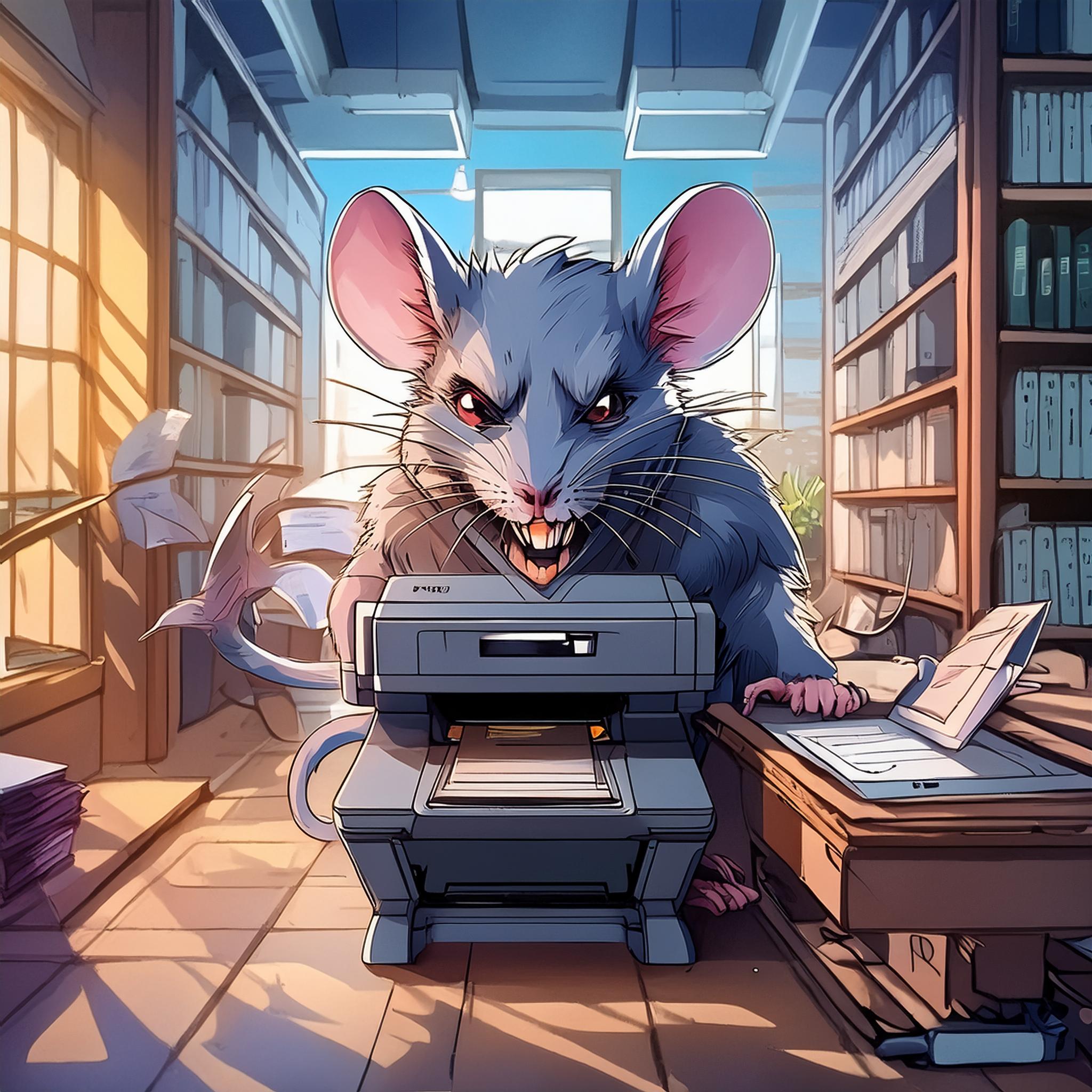
Life imitates art. Scientists have discovered that lab mice may be conducting their own experiments on us. A paper published in the journal Current Biology speculates that mice seem to be testing their testers. They do this by deviating from simple behaviours such as responding to rewards to work out what might happen. “These mice have a richer internal life than we probably give them credit for,” explained Kishore Kuchibhotla, senior study author and an assistant professor of neuroscience at Johns Hopkins University. “They are not just stimulus response machines. They may have things like strategies.” (more…)

Redefining the modern workplace: flexibility, zoning, and employee wellbeing

Redefining the modern workplace: flexibility, zoning, and employee wellbeing

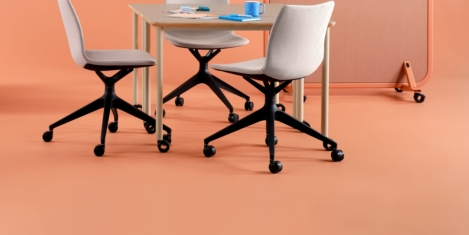
The modern workplace is evolving faster than ever. Traditional layouts of rows of desks and enclosed cubicles are giving way to offices designed around flexibility, collaboration, and employee wellbeingThe modern workplace is evolving faster than ever. Traditional layouts of rows of desks and enclosed cubicles are giving way to offices designed around flexibility, collaboration, and employee wellbeing. For organisations seeking to stay ahead, the key lies in thoughtful workspace zoning—creating adaptable environments that respond to how people actually work today. One of the most significant trends shaping office design is flexibility. Work patterns have changed: teams collaborate in bursts, focus deeply in concentrated periods, and switch between in-person and digital modes throughout the day. Workspaces that can transform to meet these changing needs without major disruption are becoming essential. Mobile partitions and modular systems allow offices to create temporary or permanent zones that can adapt in real time, supporting a mix of focused work, collaboration, and social interaction. (more…)

The power of play: how pool and table tennis can transform the workplace

The power of play: how pool and table tennis can transform the workplace

While workplace wellness programmes and flexible policies have their place, one of the most simple and effective interventions is often overlooked: playWorkplaces are under growing pressure to support both productivity and well-being. Hybrid schedules, long desk hours and rising stress levels mean organisations are rethinking what the office should provide. While wellness programmes and flexible policies have their place, one of the most simple and effective interventions is often overlooked: play. Games like pool and table tennis may once have been dismissed as gimmicks, but today they are increasingly recognised as part of a serious workplace strategy. Far from being distractions, they support movement, collaboration, mental health and focus – all of which are critical in a modern knowledge economy. (more…)