Search Results for: commuting

Actionable workplace wellness initiatives for small businesses

Actionable workplace wellness initiatives for small businesses

Wellness initiatives, however, can serve as a practical and powerful solution. When done thoughtfully, they help reduce stress, improve morale, and create a work environment where people feel supportedAmerican workplaces are going through big changes now. Employee engagement has hit a ten-year low. Small businesses often feel these pressures more intensely than large corporations. Limited resources make turnover and declining morale especially difficult for small firms. When even one employee feels overwhelmed or disengaged, the impact can ripple through an entire team.

Wellness initiatives, however, can serve as a practical and powerful solution. When done thoughtfully, they help reduce stress, improve morale, and create a work environment where people feel supported rather than stretched thin.

In this article, we’ll share a few actionable workplace wellness initiatives that can help you foster healthier habits, stronger engagement, and long-term resilience.


1 Encourage Flexible Work Options

The traditional nine-to-five office hours are quickly becoming a thing of the past. Many employees now value flexibility just as much as salary. Flexibility helps your team balance their work and their actual lives. This reduces stress and prevents that burnout we all fear.

Around 76% of businesses in the UK already offer flexible work options to their employees.

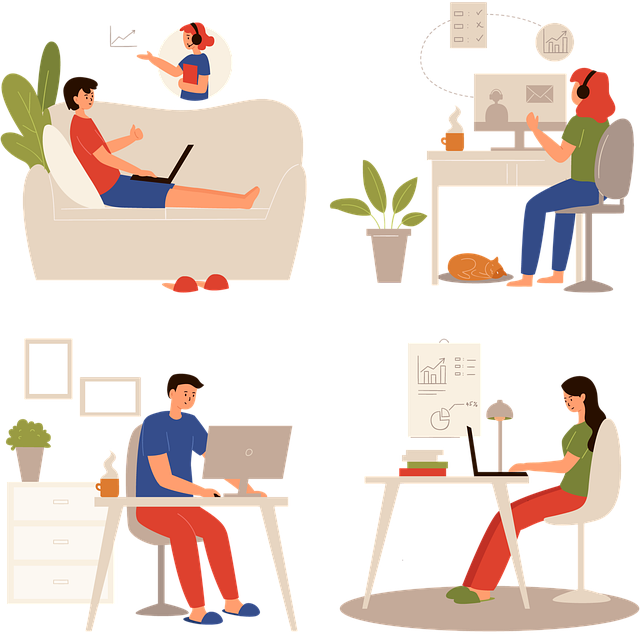
You do not have to go fully remote if that does not fit your small business’s model. There are so many ways you can give your team more control over their time. One common way is to offer telecommuting or remote work. This lets people work from home some or all of the time. It saves them a long commute and saves you on office costs.

If your team needs to be in the office, try flexible hours or flextime. This lets them choose their own start and finish times. You can also look into compressed workweeks. This is where employees work their 40 hours in fewer days.

A popular choice is working 10 hours for 4 days. This gives them a 3-day weekend every single week. This model is great for high-workload industries, such as retail, healthcare, or manufacturing.


2 Foster Happiness with Growth Opportunities

People want to feel like they are moving forward. When employees feel stuck, they start looking for the exit. Offering growth opportunities is a huge part of wellness. It keeps the mind sharp and reduces stress about the future.

For a small business, you might not have a big training budget. That is okay. You can check out the Small Business Association (SBA) Learning Platform. It offers online courses on everything from managing a team to marketing for free. Then there is SCORE. This is a network of retired executives who offer free mentoring.

For those looking to advance their careers, you could offer partial tuition reimbursement for continuing education.

Healthcare roles offer a relevant example. Nurse practitioners are expected to remain in high demand through 2031. Many bedside nurses aspire to move into these advanced practice roles.

Supporting an employee who wants to pursue an MSN-FNP degree can make that goal far more attainable. MSN-FNP stands for Master of Science in Nursing–Family Nurse Practitioner. Rockhurst University explains that this program helps registered nurses transition into primary care for patients of all ages.

Many universities now offer the MSN-FNP degree online. By opting for online degrees, employees can continue working while expanding their skills. Supporting education like this builds loyalty, confidence, and a healthier, more engaged workforce.


3 Create a Comfortable and Healthy Physical Workspace

The physical office environment directly affects how people feel. Small changes in lighting and furniture can boost productivity. These improvements prevent chronic pain and eye strain.

As a small business, you do not need a total redesign to make a difference. You just have to be creative with your space.

Sitting for too long can lead to chronic back pain. Ergonomic chairs support the spine and reduce physical fatigue. High-end chairs are expensive, but there are cheaper options. Lumbar support cushions can make a standard chair better.

Standing desks allow employees to switch positions all day. Standing desk converters are a great low-cost alternative.

Lighting is often overlooked in workplace design. Poor light causes digital eye strain for many workers. This is known as computer vision syndrome or CVS. Data shows that nearly 70% of workers suffer from CVS. Symptoms include headaches, blurred vision, and dry eyes.

Combine overhead and adjustable task lights to customize their environment to prevent discomfort.

Plants lower stress and improve the air we breathe. They can even absorb radiation from our electronic devices. Bring in plants like pothos and snake plants. These are quite affordable and nearly indestructible in an office setting.

Small Steps, Big Impact

Workplace wellness doesn’t require a big budget or a long list of policies. For small businesses, it’s about intention, consistency, and genuine care.

You do not have to do it all at once, however. The key is to start small. Pick one or two initiatives that feel doable right now and build from there. Over time, these small actions create a culture where people feel supported, not just as employees, but as humans. And when your people thrive, your business does too.

Why smarter scheduling is becoming workers’ favourite benefit

Why smarter scheduling is becoming workers’ favourite benefit

In late 2023, The Conference Board asked more than 1,500 US employees which non?salary benefits matter most. 65 percent put workplace flexibility at the top of the list, above bonuses, paid time off, retirement plans and even healthcare.  In 2025, Gallup found that among over 10,000 US workers, 59 percent rated “greater work–life balance and better personal wellbeing” as a very important reason for taking a new job, more than any other factor for the third year running. (more…)

Most daily behaviours are driven by habits, rather than conscious decisions

Most daily behaviours are driven by habits, rather than conscious decisions

A new study suggests that a significant majority of daily behaviours are driven by habit rather than conscious decision-making, raising important questions for organisations about how routines form and how workplace environments shape behaviourA new study suggests that a significant majority of daily behaviours are driven by habit rather than conscious decision-making, raising important questions for organisations about how routines form and how workplace environments shape behaviour. The research, published in the journal Psychology & Health, was conducted by Amanda L. Rebar of the University of South Carolina alongside colleagues from the University of Surrey and Central Queensland University. The team sought to measure the extent to which people’s daily behaviours are initiated and carried out automatically, rather than deliberately, and how often those behaviours align with personal intentions. (more…)

Little evidence that hybrid working has encouraged high skilled people to relocate to cheaper regions

Little evidence that hybrid working has encouraged high skilled people to relocate to cheaper regions

the shift towards remote and hybrid working has not significantly changed where people live, nor has it helped to distribute talent more evenly across the countryA new report and series of policy briefings by a team of UK researchers suggest that the shift towards remote and hybrid working has not significantly changed where people live, nor has it helped to distribute talent more evenly across the country. Led by Professor Jackie Wahba OBE from the University of Southampton and Dr David McCollum from the University of St Andrews, the research was conducted by the ESRC Centre for Population Change and Connecting Generations, in collaboration with academics from the University of Birmingham, De Montfort University, and the University of the Arts London. The findings show that most remote workers continue to follow hybrid working patterns, splitting their time between home and the office while staying within commuting distance of major employment centres. This trend limits the potential to reduce regional inequalities or drive economic growth outside of London and the South East.

(more…)

People’s expectations of work have changed forever (and they think office work should pay better than remote work)

People’s expectations of work have changed forever (and they think office work should pay better than remote work)

The Covid-19 pandemic and the rapid shift to remote work have had a “radical impact” on the global workforce, particularly among younger employeesThe Covid-19 pandemic and the rapid shift to remote work have had a “radical impact” on the global workforce, particularly among younger employees who began their careers during this unprecedented period, according to new research published by BSI in collaboration with the think tank ResPublica. The study, part of BSI’s Evolving Together series, claims to provide a comprehensive picture of a workforce cohort shaped by the pandemic and explores how these formative experiences continue to influence their expectations and behaviours. Drawing on a global survey of 4,700 individuals who entered the workforce during or since the pandemic, as well as focus groups and international literature reviews, the research sets out to paint a nuanced portrait of the so-called “hybrid generation”. (more…)

Traditional incentives don’t encourage people back to the office. Here’s what might

Traditional incentives don’t encourage people back to the office. Here’s what might

A new report from Colliers claims to highlight the major challenge businesses experience in attracting people back to the office when attendance remains stubbornly lowA new report from Colliers claims to highlight the major challenges businesses experience in attracting people back to the office when attendance remains stubbornly low. With average peak occupancy below 40 percent across Europe, the Middle East, Africa (EMEA) and North America, and workplaces lacking ‘vibrancy’ 83 percent of the time, many organisations are struggling to foster collaboration and engagement. (more…)

University staff love to connect on campus, but also value time working from home

University staff love to connect on campus, but also value time working from home

A new survey reveals distinct trends in campus work culture and the growing preference for in-person interactions among academic staff, coupled with a desire to continue working from home when needed.A new report from Hassell, the 2024 Education Futures Survey, explores how hybrid working is reshaping the needs and expectations of Australian university staff. Based on responses from 300 university employees and a benchmark group of 500 office workers, the survey reveals distinct trends in campus work culture and the growing preference for in-person interactions among academic staff, coupled with a desire to continue working from home when needed. (more…)

Hybrid working leads people to use their commute as exercise

Hybrid working leads people to use their commute as exercise

The widespread adoption of hybrid working has led to a boom in active commuting - where workers combine their commute with physical exerciseThe widespread adoption of hybrid working has led to a boom in active commuting – where workers combine their commute with physical exercise – resulting in improved wellness, productivity, and job satisfaction, according to a new poll from IWG. The increased use of local flexible workspaces by hybrid workers has been central to this shift, says the firm, which provides local flexible workspaces. Almost two thirds (62 percent) of commutes to local workspaces are now mostly or entirely active, a 38 percent increase compared to commutes to city centre offices. (more…)

Working from home prevalent across Northern Europe, but has no effect on productivity

Working from home prevalent across Northern Europe, but has no effect on productivity


Working from home has become a permanent feature of the European workforce, with notable variations across different regions and citiesA new research briefing from Oxford Economics claims to highlight the sustained prevalence of working from home in Europe, particularly in northern cities, and examines its impact on office real estate markets. According to the briefing, which analyses data through 2023, working from home has become a permanent feature of the European workforce, with notable variations across different regions and cities. (more…)

People and firms are shifting away from remote work, survey suggests

People and firms are shifting away from remote work, survey suggests

One of the most prominent findings from the report is the pronounced decline in both the practice and preference for remote workThere has been a recent significant shift in working habits and preferences among employees in the post-pandemic landscape, according to the fourth Commuter Census from Mobilityways. One of the most prominent findings from the report is the pronounced decline in both the practice of and preference for remote work. The survey of 10,325 participants suggests that 40 percent of people no longer engage in any form of remote work, despite a mere 15 percent of employees expressing a preference for this arrangement.  Only 26 percent of respondents would consider working from home as an alternative to their current commuting routine, marking a significant 42 percent drop from the previous year. (more…)

HSBC Headquarters in Canary Wharf to undergo major transformation

HSBC Headquarters in Canary Wharf to undergo major transformation

This morning, the Canary Wharf Group (CWG) announced plans to reimagine the iconic buildingIn a significant redevelopment move, 8 Canada Square, currently the headquarters of HSBC, is set to be transformed into a modern multi-use skyscraper once the bank vacates its Canary Wharf location in 2027. The global banking giant will relocate to the Square Mile as part of a company refresh, prompting an overhaul of its existing headquarters. This morning, the Canary Wharf Group (CWG) announced plans to reimagine the iconic building into a state-of-the-art space encompassing workspaces, leisure, entertainment, and educational facilities. The building is wholly owned by the Qatari sovereign wealth fund (QIA), with CWG serving as the development partner. (more…)

Book review – Working Assumptions by Julia Hobsbawm

Book review – Working Assumptions by Julia Hobsbawm

This is almost certainly the most important book about work and workplaces to appear in the first half of this year. Working Assumptions by Julia Hobsbawm will be one of the two most important published this year, as we shall soon discover. It is also one packed with wisdom, knowledge and a central premise that is undoubtedly true. Namely that the events of the past four years have given us the opportunity to rethink how we work and so how we spend our days and our lives more generally. (more…)