Search Results for: employer

Freelancers to make up a majority of US workforce within a decade

Freelancers to make up a majority of US workforce within a decade

Freelance website Upwork and the Freelancers Union have published the results of a report called Freelancing in America: 2017, which the sponsors claim is the most comprehensive measure of the US independent workforce, (but given their vested interests probably needs you to add a pinch of salt and always worth reading Trustpilot reviews). The fourth annual study estimates that 57.3 million Americans are freelancing (36 percent of the US workforce) and contribute approximately $1.4 trillion annually to the economy, an increase of almost 30 percent since last year.

(more…)

Office ping pong tables a waste of money as solution to low productivity

Office ping pong tables a waste of money as solution to low productivity

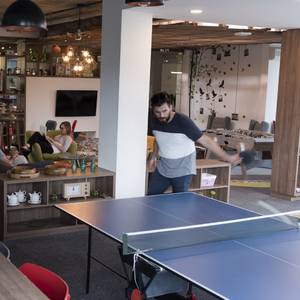
Over half (55 percent) of UK employees are productive for less than 30 hours per week yet UK employers plough money into quirky benefits that a majority of employees see as a distraction a new report claims. New research from Sage. ‘Why your workforce isn’t working’ found that while many companies invest in quirky benefits to keep staff happy, their employees aren’t impressed. Only 9 percent believe company outings are a valuable benefit, and even fewer were favourable on office games such as ping-pong – with only 6 percent saying they value it as part of the work experience. In fact, in some cases people felt these were doing more harm than good: with over half (55 percent) saying that they are distracting and decrease productivity. Commissioned by Sage People, the study spoke to 3,500 global workers to uncover what people really want from their employers. The UK findings show the disconnect between the benefits employers provide and what employees want.

(more…)

Gulf in levels of employee engagement between US and Europe

Gulf in levels of employee engagement between US and Europe

productivityA new report from Gallup called The State of the Global Workplace (paywall although there is an information light executive summary) claims that only one in ten European workers are engaged with their work compared to 31 percent in the US and Canada. In the UK, British workers were found to be 11 percent engaged with around a fifth (21 percent) actively disengaged. The report cites American management practices as one explanation for the apparent gulf. One of the more notable findings from the study is that just 32 percent of Latin American residents aged 23 to 65 say they are employed full time for an employer compared to 56 percent of US and Canadian residents in that age range.

(more…)

Report warns of growing cybersecurity threat to organisations by their own staff

Report warns of growing cybersecurity threat to organisations by their own staff

An overwhelming majority of employees are deliberately seeking out information they are not permitted to access, exposing a major cybersecurity problem among today’s workforce, claims new research published by One Identity. The survey, conducted by Dimensional Research, polled more than 900 IT security professionals on trends and challenges related to managing employee access to corporate data. Among key findings, a remarkable 92 percent of respondents report that employees at their organisations try to access information that is not necessary for their day-to-day work – with nearly one in four (23 percent) admitting this behaviour happens frequently. Most alarmingly, the report indicates that IT security professionals themselves are among the worst offenders of corporate data snooping. One in three respondents admit to having accessed sensitive information that is not necessary for their day-to-day work.


(more…)

Majority of workers are sleep deprived and stressed, negatively impacting their performance and wellbeing

Majority of workers are sleep deprived and stressed, negatively impacting their performance and wellbeing

Over three quarters (77 percent) of British workers admit that having a bad night’s sleep negatively impacts their working day, with 27 percent claiming that they feel exhausted on a daily basis, according to a new study from jobsite CV Library. The study explored the attitudes of 1,300 workers around the topic of sleep and the workplace and was conducted with input from Neuroscientist Professor Jim Horne. The research claims that three quarters of Brits (74.5 percent) cite workplace stress as a key cause of their disrupted rest, with a further 92.5 percent admitting that a stress-related disrupted sleep negatively affects their emotions. What’s more, while the majority of workers (58.9 percent) would like to get 7-8 hours of sleep a night, only 26.1 percent currently achieve this, with most people (56.8 percent) actually receiving 5-7 hours. The research claims that sleep deprivation is most likely to affect an employee’s ability to stay focused (72.7 percent) as well as their ability to deal with challenging situations (46.5 percent) and make important decisions (34.2 percent).
(more…)

Working conditions and office design shown to impact on employee performance

Working conditions and office design shown to impact on employee performance

Link made between impact of workplace conditions and office design on performance

New evidence of a strong correlation between productivity, creativity and even profitability with employee working conditions, such as: light, air, noise, health, culture, design, movement and the quality of furniture have been established in a new report. The syndicated research project, Wellness Together, carried out by Sapio Research, of 1000 UK based office workers and 50 Facilities Management experts, suggests a strong link between people feeling catered and cared for by their workplace/employers and how this impacts business performance. Wellness at work is a dominant theme in any discussion about the workplace. But this is not just a discussion about happiness, it is about creating cultures and environments that are conducive to commercial success. The study identifies that in order to achieve true ‘Wellness’ attention to every single component that can impact mental and physical health needs to be considered, from building structures and company cultures through to the physical furniture and fittings that employees require to work efficiently and effectively.

(more…)

Presenteeism leads a quarter of UK workers not to take a sick day unless hospitalised 

Presenteeism leads a quarter of UK workers not to take a sick day unless hospitalised 

A quarter (23 percent), or 7 million UK workers, wouldn’t take a sick day unless they were hospitalised or had no other choice, claims a new survey by Canada Life Group. Nine in ten (89 percent) UK workers say they’ve gone into work when feeling ill, a proportion which is virtually unchanged compared to 2016 (90 percent), suggesting employers’ efforts to improve wellbeing are failing to reduce presenteeism. The issue is pronounced, with the survey indicating that 47 percent of respondents would come into work with a stomach bug and more than half (55 percent) would go into work if they had the flu – despite the high chance of this illness spreading to their co-workers.

(more…)

Europe does not offer appropriate support for breast cancer survivors

Europe does not offer appropriate support for breast cancer survivors

Although the rate of breast cancer diagnoses is rising in Europe and a higher proportion of women are surviving this particular  form of cancer,  returning to everyday aspects of life prove challenging with many survivors unable to return to work in full, due to a lack of support and consideration by employers. A new report by The Economist Intelligence Unit and commissioned by Pfizer investigates the challenges involved in returning to employment for a growing number of breast cancer patients and survivors of a working age.

(more…)

New guides on mental wellbeing mark World Mental Health Day

New guides on mental wellbeing mark World Mental Health Day

Two new guides to help employers manage mental health in the workplace has been launched today by Acas and by The Royal College of Psychiatrists. Hundreds of thousands of workers experience mental health problems during the course of a year, yet a recent report by Business in the Community found only 11 per cent of people questioned felt able to disclose a mental wellbeing issue to their line manager while half of line managers said they would welcome training on the issue. With the theme for this year’s World Mental Health Day, set by the World Federation for Mental Health, being mental health in the workplace; the Royal College of Psychiatrists has produced a pack of mental health information for employers and employees covering the most common range of conditions such as depression, anxiety, and sleeping problems.

(more…)

We (still) need to talk about mental health in the workplace

We (still) need to talk about mental health in the workplace

In recent years we have made huge strides in moving discussions around mental health into the public arena. Celebrities such as Cara Delevingne, Ryan Reynolds, Gwyneth Paltrow and Brad Pitt have all come forward to share personal stories of their struggle with mental health problems.  The Duke and Duchess of Cambridge and Prince Harry have also championed mental health awareness through the Heads Together campaign, a charity that aims to help people feel more comfortable with their everyday mental wellbeing and offer practical tools to help support their friends and family. The campaign rose to prominence in the media as the 2017 Virgin Money London Marathon Charity of the Year.

(more…)

Businesses could be losing out because their offices are poorly designed and uninspiring

Businesses could be losing out because their offices are poorly designed and uninspiring

UK businesses could be losing millions of pounds because their offices are ‘poorly designed and uninspiring’, according to a new study. The research of 2,000 office workers claims around three quarters believe their office environment has made them less productive and less effective at work. While a third have been left with no alternative but to take time off from work because their surroundings have directly affected their physical or mental wellbeing. Stale air and lack of airflow is the biggest concern for workers, followed by noisy co-workers and overly hot conditions.

Commissioned by office design firm Oktra, the survey also claims that 34 per cent dread going to work purely because of their office environment. The research also claims 34 per cent of workers would be less likely to take sick days if they worked in a ‘favourable’ office environment. And a third would be willing to stay at a company for longer if they worked in an appealing setting.

Seventy-nine per cent think their employer should do more to improve their surroundings at work. And over half have complained to a senior member of staff about their surroundings because they have affected their physical or mental wellbeing. While 49 per cent have let their concerns be known because their productivity has been impacted.

However the office environment appears to have a greater impact on millennials’ productiveness at work than those from the baby boomer generation. Eight in ten 18-34 year olds revealed their surroundings have made them less productive compared to 65 per cent of those aged 55 plus. While 43 per cent of millennials would be more open to staying with a company for longer if the office environment was appealing, compared to around a quarter of baby boomers.

Seventy-five per cent of 18-34 year olds believe their working environment has negatively impacted their physical and mental wellbeing, while 63 per cent of workers aged 55 plus feel the same way. And almost a fifth of those 34 and under have left a job as a direct result of their office environment – in contrast 10 per cent of those 55 plus have moved on because of their workspace.

Biggest concerns about the office
1. Lack of air ventilation or flow – air feels stale, little circulation
2. Noise made by co-workers – chatter etc
3. Temperature – not being too hot
4. Lack of daylight
5. Temperature – not being too cold
6. Not having a clean office
7. Not having privacy
8. Lack of a nice view
9. Not having a comfortable workstation/desk
10. Lack of space/room – being too cramped
11. Comfort control – not being able to easily adjust the temperature in your office
12. Too much air ventilation or flow – makes you feel chilly/uncomfortable
13. Not having a comfortable desk chair
14. Lack of outside spaces – somewhere to go for your dinner break for instance
15. Dull surroundings in the office
16. Not enough connection with nature e.g. can’t see greenery outside, lack of plants in the office, no green spaces nearby
17. Breeze that makes you feel chilly/uncomfortable
18. Lack of facilities inside the office (no kitchen, meeting rooms, cycle storage, shower facilities, places to store food etc.)
19. Office being too dark
20. Flexibility of your workstation – desks/chairs/screens that can’t be easily adjusted for comfort

World Mental Health Day is a day to recognise our duty of care

World Mental Health Day is a day to recognise our duty of care

The five-year period since August 2012 has seen a 40 percent rise in mental health issues contributing to absenteeism in the workplace. Our data reveals this from examining more than 13 million days of absence across some 180,000 employees. With an estimated 31 million people working in the UK, this percentage rise is the equivalent of 4.34 million Days Lost Per Employee (DLPE) – or more precisely, an additional 1.25 million more days lost due to mental health in 2017 than 2012. And, in June to August this year, it was the most common reason for absenteeism in the UK.

This tells us two things that you don’t need to be a statistician to deduct. That there has been a steep increase in mental health absenteeism in recent years and that the summer months adds additional stress upon individuals. And this is at a time when we’d hope to be rewarded with some R&R time.

Holidays, and children being home from school, have a clear impact here, and these stresses can more often than not be carried over in to the workplace. But, with children back at school and the holiday season now over, we predict that absenteeism due to mental health issues will drop over the next three months and should account for 0.13 DLPE in November compared with 0.14 in August.

This is all very well but there’s no point in delivering this data if it’s not used in a positive way. We encourage employers to take a look at these trends and recognise who could be affected and where this may impact their business. And in doing so, implement policies accordingly to support those that are living with, or could be susceptible to, mental health issues.

Organisations should ensure their stress management policies are up-to-date, that staff are encouraged and comfortable raising stress related anxieties and concerns and line managers have sufficient training. By doing so, employers will see the benefit to their workforce in both health and productivity while making significant healthcare cost savings, too. There is a raft of information out there to help with this and HR and OH professionals are skilled at recognising signs and trends and helping those that require assistance. Every year World Mental Health Day recognises this awful illness and it deserves close attention. Because as corporate entities we don’t just have a commitment to the bottom line, we have a very serious obligation and duty of care to the wellbeing of our employees.

______________________________________

David Hope is CEO of FirstCare