Search Results for: future of work

The three Rs of the RIBA Awards winners – risk, reticence, recession

Risk, reticence and recession are the 3 Rs  that leap out from the education dominated RIBA awards winners. The premise being that only a really bold architect would design something daring at a time of economic constraint. However, given what vanity has been displayed in recent years one would have supposed that boldness would not have been in short supply. It is the reality that falls some way short. A largely egg- and shoe-box inspired collection with windows best described as minimalist, the common theme is seemingly one of modesty. Even the big public projects seem derivative and cautious. Images of the visitor centre for the Giants Causeway (above) in Ireland suggest an attractive scheme but bring to mind Stonehenge, another early attempt at brutalist monolithic human construction with a spiritual dimension. Unless I’m missing something.

(more…)

Evidence of AI-driven job losses remains limited, says Oxford Economics report

Evidence of AI-driven job losses remains limited, says Oxford Economics report

The authors suggest that some firms may be framing layoffs as AI-driven to present a more positive narrative to investors, rather than citing weaker demand or earlier over-hiring.Claims that artificial intelligence is already driving large-scale job losses appear to be overstated, according to a new global research briefing from Oxford Economics [registration], which suggests that the impact of AI on labour markets so far has been uneven and modest. The report argues that while there is anecdotal evidence of job losses in sectors most exposed to automation, firms are not yet replacing workers with AI at a scale that would materially raise unemployment rates. Oxford Economics concludes that near-term fears of widespread AI-driven unemployment are not supported by current data. (more…)

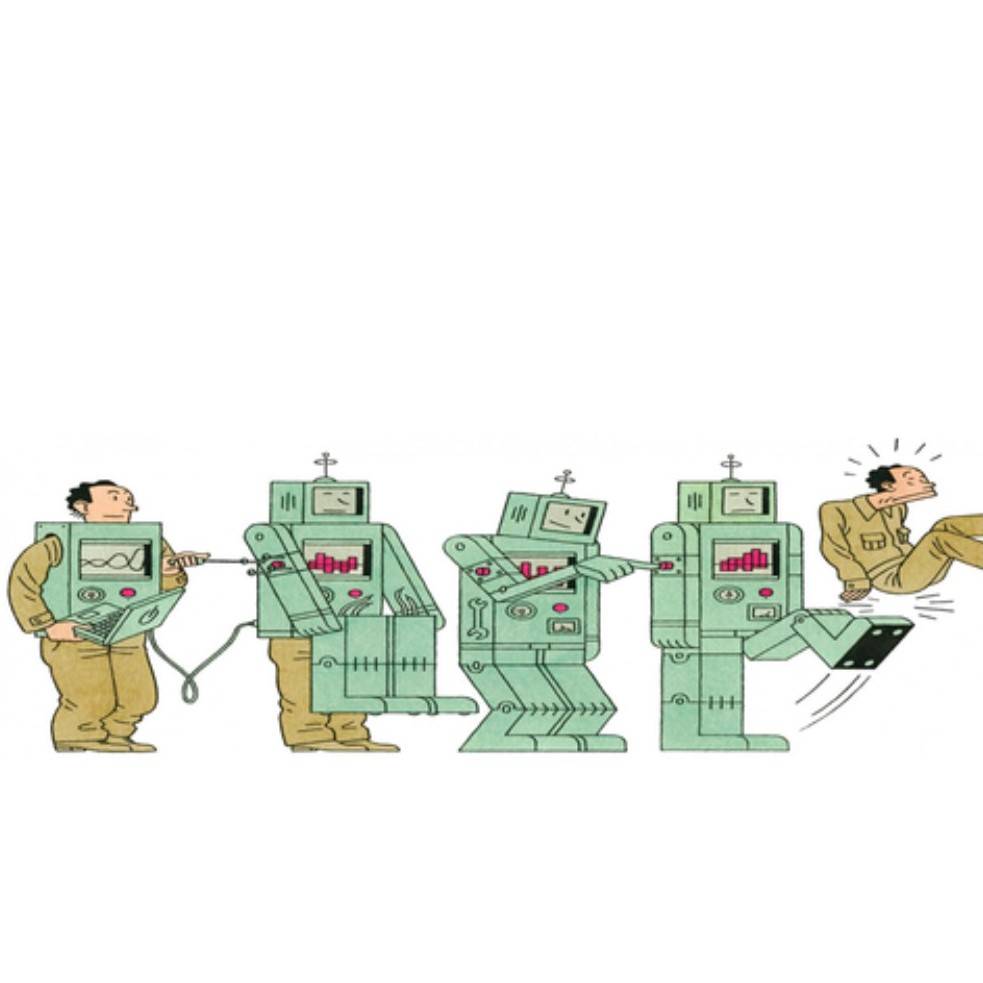
AI isn’t turning robots into humans, it’s turning humans into robots.

AI isn’t turning robots into humans, it’s turning humans into robots.

in amongst all the noise, I’m paying less attention to how AI is seemingly becoming more human, and more attention to how we are using AI to become robot-like.In all the conversations, debates and shouting matches about AI that continue to dominate the internet, there is much talk about the insidious danger of anthropomorphising AI. There is something chilling about the deliberate stumbles, inflections and hesitations that are put into AI communications, to try and convince people that they are talking to a sentient being. Explanations of AI deliberately use language such as ‘the model understands’ to make us believe that AI is developing a human level of learning, as that is more appealing than saying ‘the algorithm predictions are expanding’ (and neatly glosses over the increasing error rates and hallucinations). However, in amongst all the noise, I’m paying less attention to how AI is seemingly becoming more human, and more attention to how we are using AI to become robot-like. (more…)

Addressing the problem of burnout in high stress industries 

Addressing the problem of burnout in high stress industries 

This article will explore the root cause of burnout, which often goes unnoticed and unaddressed. You will gain insights into what the early signs look like and how a sustainable workplace design can help reduce unnecessary strain on employees.What would happen if a bridge constantly supports a stream of traffic over time? No matter how robust or well-built it is, there will come a time when the materials begin to strain, revealing cracks and deeper structural issues.  Now, high stress industries tend to operate in a similar manner. Employees, acting as the bridge, may crumble under the continual weight of increasing workloads. Inevitably, burnout awaits at the end of the rope, something which serves as a warning of an overextended system.

This article will explore the root cause of burnout, which often goes unnoticed and unaddressed. You will gain insights into what the early signs look like and how a sustainable workplace design can help reduce unnecessary strain on employees.


Burnout As a Signal of Systemic Imbalance 

For the longest time, burnout has been viewed as an individual failure to cope. However, the fact that this condition is so persistent across industrial sectors reveals something far more structural.

Personal resilience, or lack thereof, becomes secondary when exhaustion and disengagement are reported across roles and sectors. By this stage, burnout has turned into a system-level signal that organizational demands have drifted out of alignment with human capacity.

A 2025 report showed that 72 percent of employees reported moderate to high levels of work-related stress. This marked the highest figure recorded in the past six years. Another independent research conducted the same year discovered that 66 percent of employees were experiencing some form of burnout.

The truth is that certain industries are known to be high-stress, including education, healthcare, emergency services, finance, and technology. When burnout is reported across these, it’s a sure sign that the operating models are relying on endurance rather than sustainability.

Since time pressure and emotional labor are treated as inherent to such sectors and the roles therein, burnout goes largely unaddressed. Common indicators of systemic imbalance include:

  • Workloads remain high despite changing demand cycles.
  • Recovery time is treated as optional.
  • Professionals are given high responsibilities with limited control or discretion.
  • Crisis conditions become normalized, masking long-term risk.
  • Moral and emotional strain occur, especially where workers cannot meet professional standards consistently.

Interestingly, burnout first appears among the most capable employees, those most invested in the outcomes. This should ring alarm bells, but sadly, many continue to see it as an individual issue. It’s time to understand that burnout is an early warning that the system itself is operating beyond sustainable limits.


How Workforce Shortages Intensify Burnout Cycles 

It’s important to note that high-stress industries also suffer from workforce shortages alongside burnout. This means the two are not separate challenges. When staffing levels are inadequate, the result is sustained pressure on remaining employees, no matter the market demand.

Staffing gaps go beyond redistributing work. They reshape job conditions in such a way that burnout only gets worse. The scale of this problem is most evident in the healthcare sector. As per a 2025 report, 72 percent of hiring professionals reported ongoing staffing shortages in their facilities.

What’s more is that such conditions are expected to continue in the near future. When more than two-thirds of managers cannot find enough qualified applicants to fill their vacancies, we can understand that the problem is real.

Under such circumstances, burnout tends to intensify through the following mechanisms:

  • Workloads don’t get reduced, just redistributed. The remaining staff have to work harder to complete the additional tasks generated due to high demand.
  • The work environment continues to stay fast-paced and high-stakes.
  • Experienced staff members spend more time covering direct services and less on mentoring or decompression.
  • Since shortages persist, the workforce doesn’t get replenished properly.
  • As the existing employees strain under pressure, that in itself fuels burnout and attrition rates.


Rethinking Talent Pipelines in High-Stress Sectors 

If organizations operating across high-stress industries are somehow able to replenish and sustain their workforce, that should provide some relief from burnout. The problem is that traditional talent pipelines, particularly in sectors like healthcare, emergency services, and education, were built for linear careers and predictable demand.

Under prolonged pressure, these models struggle to respond quickly enough. As a result, existing staff members are left to absorb the ongoing gaps. Many organizations are now reconsidering how people enter demanding professions in the first place.

In other words, many have decided not to rely solely on early-career entrants. Mid-career transitions and return-to-practice routes are also becoming a part of broader workforce strategies. For instance, in healthcare, career changers with a university degree in other disciplines can also pick up nursing training.

Within this context, online second-degree accelerated BSN programs have emerged as one example of how talent pipelines are being restructured. These programs lead to a Bachelor of Science in Nursing, the standard qualification for registered nurses.

As Elmhurst University shares, students with a prior Bachelor’s in any other discipline will earn their basic nursing degree within 16 months. The online structure addresses burnout in ways that traditional programs may not, as follows:

  • Trainees can stay partially employed while they complete their coursework.
  • The workforce across crucial, high-stress sectors can be replenished faster.
  • Candidates across different regions and demographics can have access to learning.
  • Organizations are able to avoid cyclic depletion caused by pulling staff out for upskilling or retraining.

Such adaptations can reduce the duration and intensity of understaffing across high-stress sectors. However, pipeline flexibility alone cannot resolve burnout. Parallel improvements in workload design and staffing support are also needed. Otherwise, the system already operating beyond sustainable limits will keep feeding itself.


Moving From Wellbeing Rhetoric to Sustainable Work Design 

Addressing burnout through well-being initiatives has become commonplace across high-stress industries. The world is all too familiar with wellness apps and stress management workshops. These interventions do provide short-term relief for individuals. However, they do little to tackle the root of the problem: systemic drivers such as chronic understaffing and excessive workloads.

According to Gallup’s State of the Global Workplace 2025 report, only 33 percent of employees worldwide said they were thriving. 58 percent were struggling to cope, and 40 percent even experienced significant stress “a lot of the previous day.” Such trends cut across sectors, showcasing that burnout and disengagement are not merely isolated personal challenges.

The need of the hour is sustainable work design that addresses how work is structured and paced. Key elements of this include the following:

  • Realistic workload distribution to ensure tasks are aligned with staffing levels and capacity
  • Predictable scheduling that reduces last-minute changes, which could erode recovery time
  • Built-in recovery periods to protect rest as a structural requirement
  • Clarity of roles to prevent overload that results from blurred responsibilities
  • Feedback loops that adjust workflows before the strain escalates

This type of design views burnout as a signal of system failure, rather than an individual employee’s weakness. High-stress industries cannot afford to consider this design as an optional enhancement.

The same is critical to stabilizing teams and protecting workforce capacity so as to mitigate long-term burnout. This is especially important as recent research has emphasized that organizations need to adapt workforce structure and skills to evolving demands.

With that being said, organizations also need to factor in anticipated future pressures, not just current workforce strain. This means the next frontier lies in intelligent workforce design. It would include predictive workload modeling and cross-training of teams for flexibility.

As digital tools and remote learning expand access, changes in workplace policy and culture can help prioritize sustainable work practices. This is crucial because the future of high-stress industries depends on proactive, structural solutions if burnout is to become a thing of the past.

How healthcare leaders can enhance their business acumen

How healthcare leaders can enhance their business acumen

Healthcare leaders need to enhance their business acumen if they want to run successful practices without losing sight of the people they’re called to care for.No one enters into healthcare looking forward to dealing with budgets, profit margins, or return on investment. They do it because they want to make a difference. Still, the reality is hard to ignore. Great care depends on great decisions. And many of those decisions require more than just clinical expertise. They require business acumen. This means a balanced mix of financial savvy, strategic thinking, and real-world insight.

But can healthcare leaders do without this skill? Probably not. According to the American College of Healthcare Executives (ACHE), problems with finances ranked second in the list of concerns for hospital CEOs in 2023.

The message couldn’t be clearer. Healthcare leaders need to enhance their business acumen if they want to run successful practices without losing sight of the people they’re called to care for.


Is Business Acumen Essential for Healthcare?

Short answer? Yes. But let’s look at why.

When we talk about business acumen, we’re really talking about the ability to make smart decisions that keep the door open.

For healthcare leaders, this goes way beyond spreadsheets. It’s about seeing the whole picture: patient needs, team dynamics, financial sustainability, and the entire ecosystem of your healthcare organization.

And yes, this matters. A lot. In fact, the World Economic Forum clearly ranks business acumen as the No.1 skill every people leader needs, with almost 90% of chief people officers saying it is their top priority in the coming months and years.

While this data applies across industries, it’s no less relevant in healthcare. In other words, knowing how the business side works is no longer optional. It’s expected.

To put things in their proper perspective, without business acumen, you might provide great care, but would you be around to provide it next year or the year after?


How to Enhance Business Acumen as a Healthcare Leader

So, how can you enhance your business acumen as a healthcare leader? And no, you don’t need a four-year MBA. Here are practical tips that can work in your healthcare system.

Listen to Your Patients

Your patients aren’t just the people you provide with healthcare services; they’re also your customers. And you know the good thing about customers, feedback from them is gold for business development. So, listen to them.

Paying close attention to what your customers are saying helps you spot gaps in your services. Do they complain about access to telehealth? Perhaps some mention how hard it was to get a follow-up appointment. Insights like these help you fix processes, reduce complaints, and improve outcomes.

We saw a good example of this in 2024, when employers reported growing interest in expensive obesity medications, including GLP-1s. Tuning into patients’ conversations will tell you whether to expand your services in this area or not. It’s like using patient engagement to drive business strategy.


Take Specialized Courses

While listening to patients will give you insights into the direction your practice can take, alone, it’s not enough. You can take things a step further by considering a structured environment where you can learn the skills to do the business of healthcare better.

The good news? You don’t have to do another four-year course for this. There are accelerated online programs for working healthcare professionals that you can do to enhance your business acumen.

Take MSN-MBA dual degree online programs, for example. These programs teach you how to both oversee clinical operations and establish policies and processes for better patient care results.

What’s more? According to Spring Arbor University Online, programs like these give you two Master’s Degrees in just two years and five months. And you don’t have to quit your job, too.

You can also consider short courses or weekend workshops on healthcare finance for non-financial managers. In this case, the goal is not to become an expert but to ‘speak the language’ so that you know what to look out for when running a healthcare practice.


Find Mentors

Finding a mentor is a secret advantage that not many people use. These are people who’ve been where you are now and are where you want to be in the future. Of course, they’ve likely experienced some of the challenges you’re currently facing and are in the best position to tell you what to do.

Experiencing high turnover rates in your clinic? A mentor can tell you how to make them stay.

According to a 2024 study published in the Journal of Healthcare Leadership, healthcare professionals who participate in mentorship programs report increased leadership awareness, better coping with stress, and improved confidence as leaders. The benefits are self-explanatory.


Follow Industry News

One final way to stay on top of your business acumen skills is to keep abreast of industry news. Why? Because the world of medicine moves fast.

Take 2025, for example. Probably one of the biggest healthcare industry trends was artificial intelligence (AI). PWC even predicted that it will power the future of medicine, with 77% of healthcare executives making it a top priority investment for the near future.

Now imagine you’re not paying attention to industry news and don’t have this information. You’ll be left behind while others leverage AI tools to make data-backed decisions.


Bottom line? Stay on top of things. Even if it’s one solid newsletter, subscribe to it.


Building Your Business Acumen in Healthcare

Managing a healthcare facility is tough work. You’ve got to make sure that the numbers add up while at the same time, ensuring that patients get the best possible care. Enhancing your business acumen is one of the most effective ways to make this work. Hopefully, the points discussed in this article have shown you how to do just that.

It’s important to point out that this doesn’t happen overnight. It’s a slow and thoughtful process, but one that pays off at the end. The best way to go about it is to pick one strategy and work on it. Once you start seeing results, you move on to the next.

Your patients, your team, and your healthcare operations will thank you for it.

Half of firms are still sending unwanted office furniture to landfill

Half of firms are still sending unwanted office furniture to landfill

Half of UK organisations are still sending unwanted office furniture to landfill despite widespread (and apparently misplaced) confidence in their sustainability credentialsHalf of UK organisations are still sending unwanted office furniture to landfill despite widespread (and apparently misplaced) confidence in their sustainability credentials, according to a new report from Business Moves Group. The findings highlight a significant gap between intent and practice in the way companies manage furniture during office moves, refurbishments and wider workplace change The white paper, Furniture futures: sustainable strategies for better workplaces [registration], is based on a survey of 250 facilities and office management professionals across the UK. (more…)

The role of local businesses in promoting mental health and wellbeing

The role of local businesses in promoting mental health and wellbeing

Once seen as an individual responsibility, mental health is now recognised as a shared, community wide issue.Across the UK and over recent years, there has a change in how the general public views mental health and wellbeing. Once seen as an individual responsibility, mental health is now recognised as a shared, community wide issue. Our mental health is both our individual and collective responsibility and requires effort from family members, workplaces and organisations. For many, the workplace is where they spend most of their time. For others, local cafés, gyms, hairdressers, or local shops are their daily social spaces. These are the places that people connect, relax, and interact with other people. It’s in these spaces that local businesses have a unique power to influence how people think and feel as well as their mental health. (more…)

BCO calls for paradigm shift as regional cities fall behind on sustainable offices

BCO calls for paradigm shift as regional cities fall behind on sustainable offices

A widening gap in the availability of highly sustainable offices across the UK is putting the economic prospects of smaller regional cities at risk and could undermine national net-zero goalsA widening gap in the availability of highly sustainable offices across the UK is putting the economic prospects of smaller regional cities at risk and could undermine national net-zero goals, according to new research from the British Council for Offices. The report, Viability and Sustainability in the Regions, warns that a large share of office space outside major centres may become economically obsolete if current trends continue. It suggests this could lead to what it describes as “sustainability gentrification”, with organisations unable to find space that meets their ESG commitments in cities such as Exeter, Newcastle and Sheffield. (more…)

JLL sets out the five key corporate real estate trends for next year

JLL sets out the five key corporate real estate trends for next year

A new analysis from JLL claims to highlight how global occupiers are rethinking corporate real estate as a strategic tool for talent, culture and performanceA new analysis from JLL claims to highlight how global occupiers are rethinking corporate real estate as a strategic tool for talent, culture and performance rather than treating it purely as a cost. The report identifies five priorities expected to influence workplace strategy in the year ahead, reflecting continued pressure on portfolios alongside rising expectations for employee experience and sustainability. JLL says organisations are increasingly shifting to more flexible “elastic portfolios” as they look to balance cost control with growth. Office utilisation remains well below target levels, prompting a move away from long, fixed leases in favour of portfolios that can expand or contract according to market conditions, workforce needs or new business opportunities. The firm argues that portfolio management is now closer to a continuous process than a periodic exercise.

(more…)

Solar power plants: from panels to the grid

Solar power plants: from panels to the grid

More and more people are turning to solar energy as a reliable and sustainable electricity source. Solar power technology is improving, and equipment costs are decreasing every year.More and more people are turning to solar energy as a reliable and sustainable electricity source. Solar power technology is improving, and equipment costs are decreasing every year. This allows more countries and companies to transition to green sources. DTEK Group is the largest private investor in the country’s energy sector, with investments of over €12 billion since 2005 and 55,000 employees. The company harnesses wind, sun, and thermal resources to generate electricity. Thanks to its hard work and innovation, DTEK Group is helping the Ukraine renewable energy scene grow and move towards cleaner, greener power. (more…)

Design Mumbai hosts the Sustainable Design Collective

Design Mumbai hosts the Sustainable Design Collective

The Sustainable Design Collective joined forces with Design Mumbai to host panel discussions at this rapidly expanding event.The Sustainable Design Collective recently joined forces with Design Mumbai to host panel discussions at this rapidly expanding event. Attracting over 9,000 visitors and 100+ leading, global brands, Design Mumbai’s launch in 2024 marked India’s first-ever B2B international contemporary design trade show for design, architecture, and interiors professionals.  The second iteration was held at Jio World Garden on 26th-29th November 2025. The event has already become a platform, both for Indian brands seeking global recognition and for international companies that want to tap into the prosperous and fast-growing Indian design market. (more…)

Call for accessible design for laboratories to make sure organisations don’t miss out on talent

Call for accessible design for laboratories to make sure organisations don’t miss out on talent

The Royal Society of Chemistry has called for urgent changes to the accessible design and culture of laboratory spaces after a new report revealed widespread barriers facing disabled researchers.The Royal Society of Chemistry has called for urgent changes to the design and culture of laboratory spaces after a new report revealed widespread barriers facing disabled researchers. The organisation warns that the chemical sciences could lose out on major discoveries unless universities, industry and policymakers act to create more inclusive environments. The Disability-Inclusive Laboratories in the Chemical Sciences report draws on contributions from more than 400 chemists and sets out a detailed picture of the physical, cultural and organisational obstacles that shape disabled scientists’ careers. According to the findings, almost a third of disabled chemists have experienced bullying or discrimination linked to disability, while more than a quarter say they do not feel a sense of belonging at work. Three-quarters report a lack of awareness among colleagues about their support needs. (more…)