Search Results for: income

New report challenges idea that productivity has no link with income

New report challenges idea that productivity has no link with income

A new IZA World of Labor report published today suggests that workers’ effort may be more responsive to wage incentives and therefore the efficiency costs of progressive labour income taxation larger than previously thought. A fundamental question in economic policy is how labour supply responds to changes in remuneration. The responsiveness of labour supply determines the size of the employment impact and efficiency loss of progressive income taxation for example. The economist Tess Stafford of the University of New South Wales, Australia, summarises a number of recent studies of independent contractors’ labour supply which confirm a key prediction of economic theory: workers work more (in fact, quite a bit more) when earnings are temporarily high.

(more…)

More nations trial universal basic income as report suggests it could provide a major economic boost

More nations trial universal basic income as report suggests it could provide a major economic boost

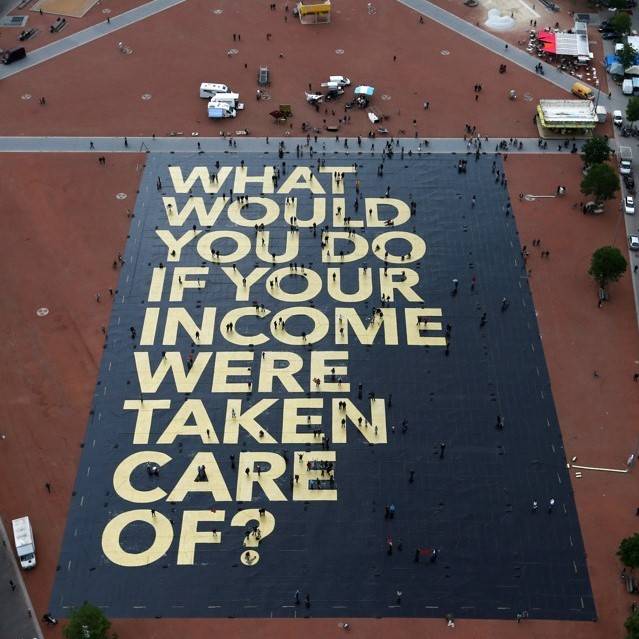
The much talked about idea of a Universal Basic Income in developed economies is now attracting greater political momentum, at the same time that a major new research project from an American think tank sets out the potential economic benefits. Yesterday, Scotland’s First minister Nicola Sturgeon called for research into the plausibility of a “citizens’ basic income” in a speech to the Scottish Parliament. Her appeal follows an announcement on the same day that Hawaii is to become the first US state to formally explore the idea. A trial is already under way in Finland, although a recent report in the New York Times suggests it is deeply flawed.

(more…)

The partners of men with flexible working hours have higher incomes

The partners of men with flexible working hours have higher incomes

A new study suggests that the partners of men who have access to flexible working earn significantly more than those who have more rigid working cultures. The study of German couples, conducted by Dr Laura Langner at the University of Oxford’s Department of Sociology, explored changes in incomes once at least one partner is able to begin flexible working. The study suggests that once men started working flexible hours, their wives’ hourly wages increased significantly, particularly if they were mothers (14.2 percent after four years). The husband’s own hourly wages also increased by 7.4 percent over the following four years.

(more…)

Podcast: Is universal basic income a Utopia for realists?

Podcast: Is universal basic income a Utopia for realists? 0

At his recent Harvard commencement ceremony, Facebook founder Mark Zuckerberg addressed the issue of universal basic income. In his speech he articulated the underlying premise of basic income as a way of redefining our relationship with work and society. “Every generation expands its definition of equality. Now it’s time for our generation to define a new social contract,” Zuckerberg said. “We should have a society that measures progress not by economic metrics like GDP but by how many of us have a role we find meaningful. We should explore ideas like universal basic income to give everyone a cushion to try new things.”

(more…)

Universal basic income is an idea whose time has come at last

Universal basic income is an idea whose time has come at last 0

Universal basic incomeIt is no longer a question of whether one of the world’s major economies will introduce a universal basic income for all of its citizens, but when. Over the weekend, the leader of the UK’s Labour Party Jeremy Corbyn announced in an interview in the Huffington Post that he was ‘instinctively looking’ at an idea that is already being discussed and piloted in Switzerland, the Netherlands, Norway and Canada. Corbyn may be one of the current glut of what would have once been political outliers in the Western World, but the idea of a universal basic income is one that is increasingly accepted in mainstream economic thinking. The RSA continues to campaign for it and has even put a number on it, suggesting that every UK citizen should be offered £308 between the ages of 25 and 65. Andrew Flowers offers up a masterful and detailed analysis of the economic and political issues involved in this piece on fivethirtyeight.com.

(more…)

Growing number of people past retirement age still work to boost income

Growing number of people past retirement age still work to boost income 0

grey poundFor all that everybody bangs on about Millennials, it’s increasingly apparent that the workforce in most nations is actually getting older and that it’s not just Governments who are keen to keep older staff in work, but also people themselves. A new study from MetLife based on Government data claims that nearly one in seven over-65s in the UK are boosting their retirement income by working, earning around £296 in addition per week. The data suggests that the numbers of over-65s working has increased from just 8 percent of the pensioner population to 13 percent in the last ten years, the equivalent of 1.1 million people.  Median earnings from working are £296 a week adding up to annual pay of nearly £15,400. The need to keep working is underlined by the continuing squeeze on saving and investment income, which generates just £312 a year for pensioners on average. The proportion of pensioners earning money from investments has dropped from 72 percent in 2004/05 to around 64 percent now. Around 72 percent of all pensioners have private or company pensions compared with 66 percent a decade ago.

Value of offices and property rental income across the UK hit two year high

Manchester Media CityThe value of commercial real estate in the UK rose for the fourth consecutive month during August, led by increases in the average value of offices, according to a report from Investment Property Databank (IPD). The average value of offices, warehouses, retail and industrial rose by a 0.4 percent across the country. Office buildings rose by 0.6 percent during the month while total return, which combines changes in real estate values and rental income, was 0.9 percent, to reach the highest level since March 2011. The report claims the upturn is down to the wider economic upturn and persistent  low interest rates which incentivise investors to acquire high income generating assets. The report also notes that investors are looking to acquire more property outside of London as the economic recovery spreads across the UK. (more…)

Time to admit we were wrong about Canary Wharf and other business districts

Time to admit we were wrong about Canary Wharf and other business districts

There was a time during and after the pandemic when it looked like time was up for the world’s major business districts. For a start Canary Wharf looked like it would need to completely reinvent itself as firms started to relocate to smaller more central premises. Instead of housing tenants such as HSBC it would focus on becoming a mixed-use space with more homes and leisure facilities. Hell, we even published a feature setting that all out ourselves. But it’s funny how things turn out. The latest news is JP Morgan’s announcement of a vast new headquarters building in the area. The bank, already one of the largest employers in the UK financial sector, has confirmed plans for a three million sq ft tower on the waterfront that will accommodate 12,000 staff and represent an investment estimated at £3 billion. (more…)

Shift to a low carbon economy could create millions of jobs but risks widening global divides

Shift to a low carbon economy could create millions of jobs but risks widening global divides

The shift to a low carbon economy is expected to reshape labour markets across the world over the next five years, with almost 14.4 million jobs set to be affected by 2030The shift to a low carbon economy is expected to reshape labour markets across the world over the next five years, with almost 14.4 million jobs set to be affected by 2030, according to a new report from the World Economic Forum. The research suggests that while 2.4 million roles will be phased out, the emergence of new industries and technologies will generate around 12 million new positions, resulting in a net gain of 9.6 million jobs. Yet the report warns that the scale of disruption, combined with persistent economic and geopolitical pressures, could deepen existing inequalities both within and between countries. (more…)

Most people think work has a positive effect on their overall wellbeing

Most people think work has a positive effect on their overall wellbeing

A large majority of workers believe that being in employment has a positive effect on their health and wellbeing, according to a new pollA large majority of workers believe that work has an overall positive effect on their health and wellbeing, according to a new poll from Cirencester Friendly. The survey, carried out by Opinium Research in August among 2,420 working adults, found that seven in ten respondents felt that work benefits their health, with just over a third strongly agreeing. The findings suggest a broadly consistent view across generations and genders. Almost seven in ten Gen Z workers said work has a positive impact on their health, a figure only slightly lower than the three quarters of Baby Boomers who expressed the same view. Women were marginally more likely than men to agree, although the difference was slight. (more…)

Not just cuckoo clocks. Why Switzerland is the world’s most innovative country

Not just cuckoo clocks. Why Switzerland is the world’s most innovative country

Switzerland retains its long-standing position as the world’s most innovative economy, followed closely by the United States, Sweden, the United Kingdom, and SingaporeIn Orson Welles’ famous scene-stealing cameo in The Third Man, his character Harry Lime comes out with that (in)famous speech about Swiss culture. “In Italy for thirty years under the Borgias, they had warfare, terror, murder, and bloodshed, but they produced Michelangelo, Leonardo da Vinci, and the Renaissance,” he says. “In Switzerland, they had brotherly love, they had five hundred years of democracy and peace, and what did that produce? The cuckoo clock.” This does the Swiss a disservice in a number of ways, not least that a major new report claims that Switzerland is maintaining a long tradition as the most innovative country in the world. (more…)

AI, automation anxiety and the future of work: lessons from Daniel Susskind

AI, automation anxiety and the future of work: lessons from Daniel Susskind

Jo Sutherland reports from an enlightening lecture on how automation anxiety and fears about the future of work may not be quite as you thinkWhen I joined the audience at Gresham College for Professor Daniel Susskind’s inaugural lecture on automation anxiety, I expected the familiar line: AI is coming for our jobs. That’s not what I heard. Instead, Susskind, Professor of Business at Gresham, made a surprisingly nuanced argument, explaining that the real story was less about the number of jobs losses, and more about how the very nature of work is shifting. This piece reports on that event (available to watch below) and reflects on what his ideas mean for workplace leaders – and, from my vantage point as a communications professional working with organisations through workplace and digital transformation, how we talk to and engage our colleagues through the change. (more…)