Search Results for: media

Benefits of mobile broadband to Australia run to tens of billions, claims report

mobile-broadbandWhile the UK Government continues to fuss over the rollout of broadband in the UK, bickering with the notoriously ponderous BT about a dysfunctional monopoly they created themselves, a new report from Australia claims that the economic benefits of mobile broadband in that country came to nearly AU$34 billion (£19 billion) last year. The report commissioned by the Australian Communications and Media Authority (ACMA) in partnership with the Centre for International Economics (CIE) and Analysys Mason found that although the mobile telecoms sector only accounts for 0.5 percent of economic activity in Australia, its impact on productivity is profound. Last year it accounted for an additional AU$33.8 billion in activity, 2.28 percent of Australia’s total gross domestic product. The report makes its claim on the basis that between 2006 and 2013, productivity growth was 11.3 percent per year, but would have been only 6.7 percent without mobile broadband.

(more…)

Rush to convert offices as demand for commercial property hits 14 year high

Supply and demandA new report from commercial property specialists Lambert Smith Hampton claims that demand for office space in the UK this year is set to hit its highest level since 2000. The firm claims in its annual Office Market Review that the take-up of office space could reach 30 million sq. ft in 2014, continuing the momentum from the remarkable 33 percent upswing in demand last year. However, the report also notes that, following the introduction of the Government’s new permitted development legislation in 2013, the number of notifications for conversions of office buildings to residential use jumped 500 percent in the first six months. The trend will act as a further constraint on supply and push up rents as businesses seek additional space for expansion or moves to new property at the end of leases although it will also remove obsolete office space in many less desirable business locations.

(more…)

Design of the Year shortlist contrasts what is practical with what is possible

MAKOKO FLOATING SCHOOL, NIGERIA crop

A great many of us pay architecture and design very little attention until it’s too late and we’re confronted with the workings of a mind that doesn’t consider whether just because we could really means we should. The kind of mind that designs a building that melts cars on the street or one with wind turbines that are so noisy they can’t be turned on. And so this week sees the announcement of nominees for the Design Museum Designs of The Year awards. It’s a studiedly eclectic list. In amongst the Lego calendars and texting fire alarms we also find a mobile gaming app designed to be used over many centuries (it is impossible to finish it in your lifetime, natch) that, it says here, “questions the inevitability of death, the meaning of legacy and the nature of progress”. I’ve searched for signs that this might be satire without success. However, we’ll focus our consideration on the nominations for designs for the built environment. (more…)

The enduring need to put a bit more of the M into facilities management

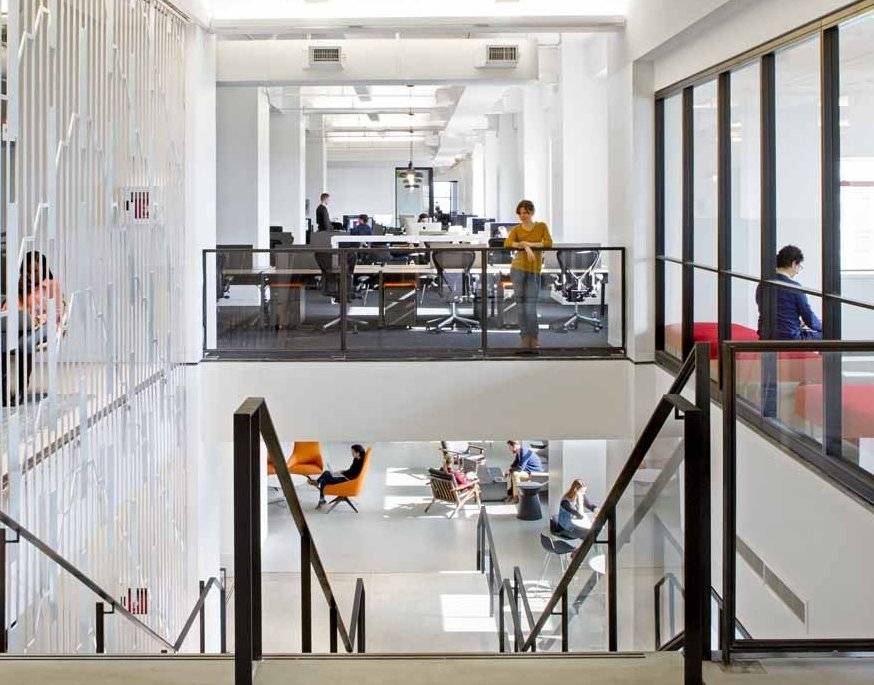
Shutterstock's new offices, Empire State Building

Shutterstock’s new offices, Empire State Building

It may well be a statement of the obvious, but it’s worth reminding ourselves sometimes that the term facilities management consists of two words. There is often a bit too much emphasis on the facilities and a bit too little on the management and sometimes we look for design and product solutions to problems that would be better managed in some way. You can put this down to a number of things but to some extent at least it’s down the idea that when you are determined to use a hammer, every job looks like a nail. Obviously the media takes some of the blame for this mindset because it often earns income from businesses who want to sell their stuff to solve particular problems rather than focus on the idea that many of them can be addressed either as a management issue or in combination with products and design.

(more…)

Employers welcome an age-diverse workforce, but need to be prepared

Age diversityA recent report by the UKCES that predicted that the workplace of the future will see four generations of employees working side by side is being welcomed, rather than feared by employers, but they need to begin planning for the future now, or risk a skills shortage and being at a competitive disadvantage. The revelation that by 2030 four-generation or “4G” workplaces – will become increasingly common as people delay retiring, even into their 80s, prompted UKCES Commissioner Toby Peyton-Jones to ask whether this emerging multi-generational workplace would spell stress and culture clashes or create positive tension leading to innovation. Now a new study, Managing an age-diverse workforce, from the CIPD, shows that employers and employees see clear benefits from an increasingly age diverse workforce but need to do more to take full advantage. (more…)

CIBSE’s new website inspired by iconic new City of London building

5 Broadgate

5 Broadgate in the City of London

The look and feel of the Chartered Institution of Building Services Engineers’ (CIBSE) new website, which was unveiled this week, has been inspired by a building. According to CIBSE the modular, precise design of 5 Broadgate, designed by Make Architects is echoed in the modern new design, improved user navigation and optimisation for mobile and smart devices of its new website. 5 Broadgate, the new City headquarters for financial services firm UBS, is a 700,000 sq ft, 12 storey building based on a single block form, featuring deep reveals to windows and openings that are designed to add to its overall feeling of substance. The new building will include up to four trading floors, each able to accommodate approximately 750 traders, allowing UBS to consolidate its London trading operations into one building, when fully occupied in 2016. (more…)

Employees have spent average of £500 on BYOD, claims European survey

Iphone-5It’s not so long ago that companies were looking to ban employees from using social media and their own phones during work hours, or at least introducing policies to make it a disciplinary issue. Oh, we can LOL about it now but at the time it was routinely compared to the smoking ban, forcing educated adults to huddle outside fire escapes for a quick Facebook fix while their old-school colleagues sat in the warmth, offline but manning the phones. Of course, all this was before firms worked out they could actually get employees to pay for their own stuff and save themselves the expense. All they had to do was label it BYOD and talk about empowerment and people would cheerfully fork out what turns out to be a reasonable amount of money so the firm doesn’t have to.

(more…)

Business continuity report confirms technology still biggest threat to firms

Lock backgroundForget the recent UK floods. When it comes to risks to their businesses, it’s still tech that keeps business leaders awake at night, according to the latest annual Business Continuity Institute Horizon Scan report. Technology related threats continue to rank higher than natural disasters, security and industrial action according to the report which gauges the threats that organisations consider to be their biggest concerns. Nearly four-fifths of business leaders fear that an unplanned technological event, cyber attack or data breach will harm their business. Nearly three quarters (73 percent) consider malicious attacks through the Internet a major threat that needs to be managed closely, while nearly two-thirds (63 percent) think that social media remains a challenge. Meanwhile, one of last year’s threats – supply chain resilience – dropped out of the top ten completely.

(more…)

By 2030 your colleagues could be old enough to be your great-grandparents

By 2030 your colleagues could be old enough to be your great-grandparentsBy 2030 four-generation or “4G” workplaces – will become increasingly common as people delay retiring, even into their 80s. Although the role of women in the workplace will strengthen, an increasing divide will mean that while highly-skilled, highly-paid professionals will push for a better work-life balance, others will experience job and income insecurity. Technology will continue to evolve, pervading work environments everywhere, with many routine tasks becoming the domain of the smart algorithm. Multi media “virtual” work presences will become the norm, and as businesses seek additional flexibility, they will decrease the size of their core workforces, instead relying on networks of project-based workers. This is all according to the Future of Work, published this week by the UK Commission for Employment and Skills (UKCES). (more…)

‘Big Data’ is shaping the human experience within buildings

Empire State Building

As the cost of implementation comes down, the same “Smart” technology that is harnessing the predictive power of “Big Data” to help solve congestion problems in cities is being more routinely deployed in buildings. The Changing Face of Smart Buildings: The Op-Ex Advantage, published by Jones Lang LaSalle, explains how bringing a Big Data analytics-based approach to facilities management can increase employee comfort, engagement and productivity; whether helping organisations adapt more readily to supporting flexible workplace practises or using sustainability as a hook for engaging employees. In one notable example; by adding smart building components to a major Empire State Building energy refit, real-time energy displays enable tenants to better monitor and control their energy consumption, and even compete with other tenants in the landmark building to achieve energy savings. (more…)

UK Government urged to push ahead with zero carbon commercial buildings

light bulb turbine croppedThe UK’s Green Building Council has fired off its latest salvo in an ongoing battle with the Government over the implementation of environmental legislation for commercial buildings. A new report from the organisation’s Task Group urges the Government to push ahead with plans to ensure that by 2019 all new non domestic buildings will be built to zero carbon standards. The report claims that the implementation of appropriate regulations is hampered by a lack of clarity, including confusion over what zero carbon actually means as well as the government’s own stop-start  approach to the environment. The current 2019 commitment to zero carbon buildings falls a year ahead of the deadline specified in European Law, but a recent focus from the coalition on reducing relevant legislation has added to confusion about the overall approach.

(more…)

HS2 is a project for today projected into an uncertain future

Barely a day passes in the media without some new battleground opening up in the debate about the UK’s plan to develop HS2, the high speed line connecting London with Birmingham, Leeds, Manchester, Sheffield and, for some reason, a place nobody’s heard of halfway between Derby and Nottingham called Toton (pop. 7,298). While the debate rages about the cost, the economic benefits, regional rebalancing, environmental impact, route and why the Scots and others are paying for a project that may leave them with worse train services,  one of the fundamental flaws with the case for HS2 goes largely disregarded. It is that this is clearly a project designed for today, but that won’t be complete for another twenty years. The world then will be very different and, unfortunately, time isn’t quite as malleable as the movies would have us believe.

(more…)