Search Results for: productivity

People are handing work to AI agents even though they are unreliable and lack accountability

People are handing work to AI agents even though they are unreliable and lack accountability

UK workers expect to hand over almost a third of their workload to AI agents within the next year, yet most say the technology is still unreliable and lacks clear accountabilityUK workers expect to hand over almost a third of their workload to AI agents within the next year, yet most say the technology is still unreliable and lacks clear accountability, according to a new poll from Asana’s Work Innovation Lab. The survey of more than 2,000 workers, including 1,021 in the UK, found that employees anticipate delegating 32 percent of tasks to AI within 12 months and 41 percent within three years. At present, only a quarter feel ready to do so. Despite the rapid spread of adoption, with nearly three-quarters already using AI agents, concerns about reliability and oversight remain high. (more…)

Hybrid working is now more about when work is done, rather than where

Hybrid working is now more about when work is done, rather than where

The defining issue in workplace flexibility and hybrid working is now time rather than locationA new report from Owl Labs suggests that the debate over where people work is being replaced by questions about when they work. The firm’s 2025 State of Hybrid Work report argues that the defining issue in workplace flexibility and hybrid working is now time rather than location. The study, based on a survey of 2,000 US workers, claims that almost half of respondents believe they do not have enough flexibility in their working hours. Thirty seven percent said they would turn down a job that did not provide flexible scheduling, an increase compared to last year. Around a quarter said they would find a four day week more attractive than a traditional arrangement, with many indicating they would be willing to take a pay cut in exchange for greater control over their time. On average, workers said they would give up around eight to nine percent of their salary to secure more flexible hours or a reduced working week. (more…)

AI, automation anxiety and the future of work: lessons from Daniel Susskind

AI, automation anxiety and the future of work: lessons from Daniel Susskind

Jo Sutherland reports from an enlightening lecture on how automation anxiety and fears about the future of work may not be quite as you thinkWhen I joined the audience at Gresham College for Professor Daniel Susskind’s inaugural lecture on automation anxiety, I expected the familiar line: AI is coming for our jobs. That’s not what I heard. Instead, Susskind, Professor of Business at Gresham, made a surprisingly nuanced argument, explaining that the real story was less about the number of jobs losses, and more about how the very nature of work is shifting. This piece reports on that event (available to watch below) and reflects on what his ideas mean for workplace leaders – and, from my vantage point as a communications professional working with organisations through workplace and digital transformation, how we talk to and engage our colleagues through the change. (more…)

Ten projects named as 2025 Urban land Institute Europe Awards for Excellence finalists    

Ten projects named as 2025 Urban land Institute Europe Awards for Excellence finalists    

Ten projects from eight countries across the EMEA region have been announced as the finalists in the sixth annual Urban Land Institute Europe Awards for ExcellenceTen projects from eight countries across the EMEA region have been announced as the finalists in the sixth annual Urban Land Institute Europe Awards for Excellence, which recognise exemplar projects and programmes in the private, public, and non-profit sectors. This year’s finalists comprise cutting edge refurbishment, restoration and new build projects, and include residential, healthcare, mixed use, education, community, laboratory and office projects from Italy, Germany, the UK, Belgium, Sweden, Denmark, France and Spain.    (more…)

Large companies see slowdown in adoption of AI tools

Large companies see slowdown in adoption of AI tools

Drawing on the US Census Bureau’s fortnightly survey of more than one million firms, the research shows a downward trend in reported adoption of AI tools among businesses with 250 or more employeesNew analysis from Apollo Academy suggests that large organisations may be losing momentum in their use of artificial intelligence tools. Drawing on the US Census Bureau’s fortnightly survey of more than one million firms, the research shows a downward trend in reported adoption among businesses with 250 or more employees. The survey asks firms whether they have used AI tools in the previous two weeks, including machine learning, natural language processing, virtual agents and voice recognition. While overall use of AI across the economy has grown steadily in recent years, the latest figures indicate that the largest companies are no longer leading the charge. Instead, their adoption rates appear to have stalled or declined slightly. (more…)

People want performance over quirky features in their offices

People want performance over quirky features in their offices

A new report claims that employees are less interested in quirky office features and more concerned about how well their workplaces support performance.A new report claims that employees are less interested in quirky office features and more concerned about how well their workplaces support performance. Mitie’s latest Productivity Reset Report [registration requires you to receive marketing – you can’t opt out] highlights that while games areas and other recreational facilities may generate headlines, only 14 percent of employees believe such features contribute meaningfully to workplace satisfaction or productivity. In contrast, almost nine in ten (88 percent) said that a safe, well-maintained office is a critical factor in their day-to-day working experience. (more…)

In spite of some headlines, hybrid working is not in decline in the US

In spite of some headlines, hybrid working is not in decline in the US

Gallup’s latest research on working patterns among remote-capable employees in the United States suggests that hybrid working is proving far more resilient than some headlines about a wholesale return to the office would implyGallup’s latest research on working patterns among remote-capable employees in the United States suggests that hybrid working is proving far more resilient than some headlines about a wholesale return to the office would imply. The data shows that hybrid work remains the dominant arrangement and has not significantly declined, even as political and organisational pressure grows to increase in-person attendance. The survey finds that just over half of employees who can work remotely are now in hybrid arrangements. This represents a slight decline from the previous two quarters, falling from 55 percent to 51 percent. (more…)

Councils discover hundreds of staff secretly hold second full-time jobs

Councils discover hundreds of staff secretly hold second full-time jobs

At least 288 local authority employees have been caught working second full-time jobs since 2020, often without informing their councils, according to new dataAt least 288 local authority employees have been caught working second full-time jobs since 2020, often without informing their employer, according to new findings from Witan Solicitors. The figures, obtained through Freedom of Information requests to more than 300 councils in England, show that 46 staff were either dismissed or formally disciplined after being discovered to have taken on additional full-time roles. So-called “overemployment” is a growing trend on platforms such as TikTok and Reddit, where users share tips on how to juggle multiple jobs undetected. Common tactics include the use of “mouse jigglers” to simulate activity and strategies for avoiding documentation that could attract attention. (more…)

Redefining the modern workplace: flexibility, zoning, and employee wellbeing

Redefining the modern workplace: flexibility, zoning, and employee wellbeing

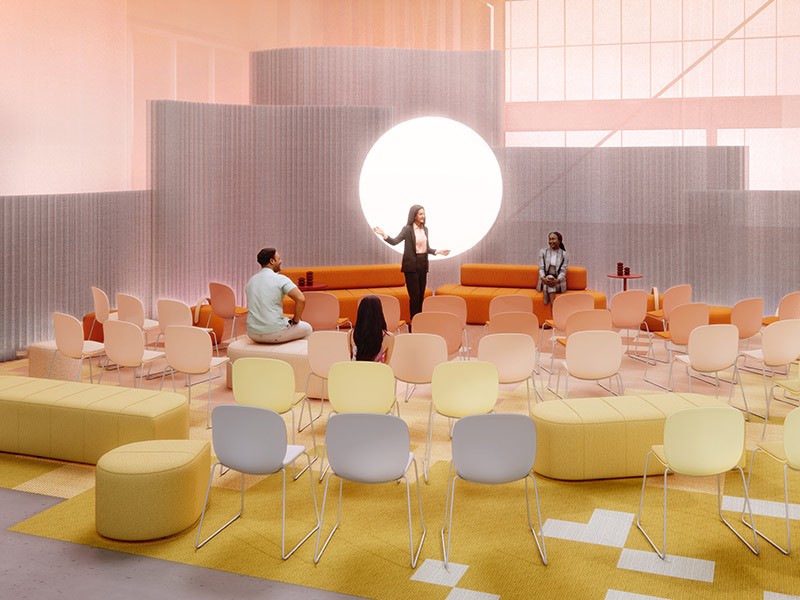
The modern workplace is evolving faster than ever. Traditional layouts of rows of desks and enclosed cubicles are giving way to offices designed around flexibility, collaboration, and employee wellbeingThe modern workplace is evolving faster than ever. Traditional layouts of rows of desks and enclosed cubicles are giving way to offices designed around flexibility, collaboration, and employee wellbeing. For organisations seeking to stay ahead, the key lies in thoughtful workspace zoning—creating adaptable environments that respond to how people actually work today. One of the most significant trends shaping office design is flexibility. Work patterns have changed: teams collaborate in bursts, focus deeply in concentrated periods, and switch between in-person and digital modes throughout the day. Workspaces that can transform to meet these changing needs without major disruption are becoming essential. Mobile partitions and modular systems allow offices to create temporary or permanent zones that can adapt in real time, supporting a mix of focused work, collaboration, and social interaction. (more…)

The power of play: how pool and table tennis can transform the workplace

The power of play: how pool and table tennis can transform the workplace

While workplace wellness programmes and flexible policies have their place, one of the most simple and effective interventions is often overlooked: playWorkplaces are under growing pressure to support both productivity and well-being. Hybrid schedules, long desk hours and rising stress levels mean organisations are rethinking what the office should provide. While wellness programmes and flexible policies have their place, one of the most simple and effective interventions is often overlooked: play. Games like pool and table tennis may once have been dismissed as gimmicks, but today they are increasingly recognised as part of a serious workplace strategy. Far from being distractions, they support movement, collaboration, mental health and focus – all of which are critical in a modern knowledge economy. (more…)

Memories of the Office Age 

Memories of the Office Age 

memories of the office ageOriginally published in November 2021. No author uses the built environment like J G Ballard. In his 1975 novel High-Rise, the eponymous structure is both a way of isolating the group of people who live and compete inside it and a metaphor for their personal isolation and inner struggles. Over the course of three months, the building’s services begin to fail. The 2,000 people within, detached from external realities in the 40-storey building, confronted with their true selves and those of their neighbours, descend into selfishness and – ultimately – savagery.  (more…)

Growing number of businesses want people back in the office, but not in all sectors

Growing number of businesses want people back in the office, but not in all sectors

Over two fifths (41 percent) of businesses have emphasised the need for people to work in a physical workspace such as an office over the past year, according to a new pollOver two fifths (41 percent) of businesses have emphasised the need for people to work in a physical workspace such as an office over the past year, according to a new poll from the British Chambers of Commerce (BCC). While most of the firms (67 percent) who require onsite working say it hasn’t impacted recruitment or retention, one in ten relevant businesses (9 percent) have seen staff leave in response. (more…)