Three ways in which the business case for green building design is moving on

Three ways in which the business case for green building design is moving on

ODD 02The case for sustainable building design used to be based on two straightforward principles. The first was that buildings had to offer up some sustainable features to comply with the ethical standards of their occupiers. The second was that there was some financial benefit. Often these principles went hand in hand, especially when it came to issues such as energy efficiency. They remain the foundations of the idea of green building design and are applicable across a range of building accreditations such as BREEAM as well as standards relating to specific products and policies. Over the past couple of years, however, we have become increasingly aware of other drivers that might make us all re-evaluate how we approach sustainability. These drivers are based on a more sophisticated understanding of green building design and the benefits for all of those involved.

(more…)

The latest issue of Insight weekly is now available for you online

The latest issue of Insight weekly is now available for you online

Insight_twitter_logo_2In this week’s issue; Mark Eltringham on the challenge for FMs in managing buildings not of their own making; and why Charles Eames came to tire of his association with his famous lounge chair. Douglas Langmead explains how the patterns of work and place in the Middle East evolved differently from the west and Lee Parsons warns that not enough thought is given to creating workspaces that support knowledge circulation. We provide a gallery of the winners of this year’s RIBA awards; the CIPD and BIFM identify ways the office environment influence workplace performance,  construction begins on the UK’s “greenest commercial building” and new DOH guidelines on creating a productive and healthy workplace. Subscribe for free quarterly issues of Work&Place and for weekly news via the subscription form in the right hand sidebar, follow us on Twitter and join our LinkedIn Group to discuss these and other stories.

CTBUH announces winners of best tall buildings awards for 2015

CTBUH announces winners of best tall buildings awards for 2015

one-world-trade-centerThe Council on Tall Buildings and Urban Habitat has announced the winners of the Best Tall Building Awards for 2015. The winners were selected from a pool of 123 entries based on an evaluation by a panel of industry experts. The organisers claim that not only do the winners exemplify best practice they also advocate ‘improvements in every aspect of performance, including those that have the greatest positive effect on the people who use these buildings and the cities they inhabit’. Many of this year’s winners demonstrate a commitment to sustainability, especially those that make use of greenery to enhance the looks and environmental credentials of the building. The organisers also note that buildings are better integrated into their surroundings which ‘has been a long-needed requirement’. The Best Tall Buildings have been named from 33 countries in four competing regions.

(more…)

Construction work completes on UK’s greenest commercial building

Construction work completes on UK’s greenest commercial building

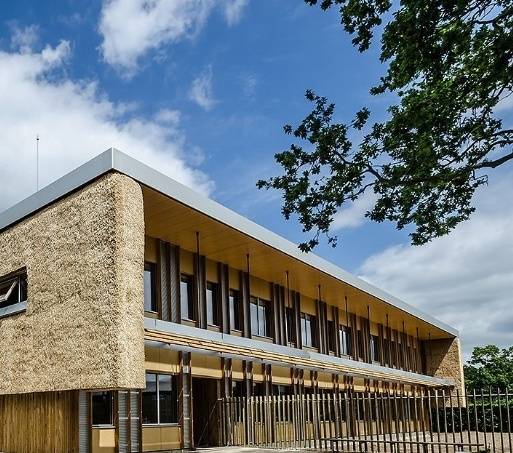
UK's greenest commercial buildingMorgan Sindall has completed construction of what is claimed to be the UK’s greenest commercial building, the Enterprise Centre at the University of East Anglia. The building boasts record-breaking sustainability credentials including both BREEAM Outstanding and Passivhaus accreditations. It has been designed to maximise the use of low embodied carbon materials over a projected 100-year life span. The building incorporates an innovation lab, a 300-seat lecture theatre, flexible workspaces, teaching and learning facilities, as well as business ‘hatcheries’ and incubator units for small businesses and start-ups in the low carbon sector. The developers believe that by placing like-minded academic and private sector occupiers side by side, the centre will foster innovation, stimulate smarter ways of working, promote industry standards and create new sustainable supply chains.

(more…)

A gallery of the workplace winners of this year’s RIBA Awards

A gallery of the workplace winners of this year’s RIBA Awards

DonmarDrydenSt workplaceThe full list of regional winners of the Royal Institute of British Architects (RIBA) Awards for 2015 has been finalised. The list of 37 winners will now go on to compete for the Stirling Prize in October. This year’s list is dominated by London projects, as is often the case, but also by homes whereas last year they were dominated by large scale projects, especially The Shard. We’ve rounded up a gallery of the major workplace projects in the list for England and Wales with some notes extracted from RIBA’s own commentaries (so don’t blame us). Each entry is hyperlinked for you to discover more about the project. Unfortunately, the regional winners for Scotland and Northern Ireland are not well served by their respective websites, which is a particular shame given the success Scotland in particular has in terms of the number and apparent quality of its winning projects.

(more…)

The London Festival of Architecture explores the workplace of the future

The London Festival of Architecture explores the workplace of the future

Alcove Plume Contract Metal Side Table workplace of the futureThe ongoing London Festival of Architecture (LFA) which is running for the entire month of June, continues what the organisers say are the ‘big workplace conversations’ with a week of focussed discussions, debates and contributions from a number of prominent designers, architects and industry commentators on the theme of the workplace of the future. Running in tandem with London Technology Week (15-21 June), week three of the festival will focus on what the organisers claim are several ‘game-changing’ workplaces as well as the smart technologies and architecture already being created by industry leaders shaping where we work, how we work and what the next generation office and employee will need. Exclusive access will also be given into the practices realising the new models of the workplace through the RIBA Open Studios programme.

(more…)

Trade bodies seek to boost inclusivity and diversity with new initiatives

Trade bodies seek to boost inclusivity and diversity with new initiatives

DiversityThree major trade associations in the built environment sector have announced initiatives to increase the inclusivity and diversity of their respective professions. The Royal Institution of Chartered Surveyors has launched its new Inclusive Employer Quality Mark, which is designed to help firms ‘gain a competitive advantage and a diverse workforce’. Meanwhile, the Royal Institute of British Architects (RIBA) claims it has strengthened its chartered practice criteria to incorporate requirements related to equality, diversity and inclusion. From 2016, chartered practices are required to have an equality, diversity and inclusion policy. In the US, delegates at the American Institute of Architects (AIA) agreed at congress to introduce a resolution known as Equity in Architecture, that calls for measures to increase representation of what are deemed underrepresented groups ‘to move the profession forward’.

(more…)

The latest issue of Insight weekly is now available for you online

The latest issue of Insight weekly is now available for you online

Four-Front-G-Adventures-mattchungphoto-lo-res-2-6-2In this week’s issue; Dan Callegari outlines the logical reasons we should apply emotion to workplace design; Maciej Markowski weighs up the pros and cons of the much maligned open plan; Sheppard Robson announce their plans for major development in Clerkenwell; Paul Doherty explores the interrelated strands of the global movements for smart cities, smart buildings and Big Data; Sara Bean outlines the steps firm are taking to deal with mental wellbeing in the workplace; Mark Eltringham reports on the lack of confidence the public sector has in its ability to buy more goods and services from smaller suppliers; and details on how you can access the complete Work&Place archive online. Please subscribe for free quarterly issues of Work&Place and for weekly news via the subscription form in the right hand sidebar, follow us on Twitter and join our LinkedIn Group to discuss these and other stories.
Sheppard Robson release details of new mixed-use scheme in Clerkenwell

Sheppard Robson release details of new mixed-use scheme in Clerkenwell

5278-68-86-Farringdon-Road-2Architects Sheppard Robson have released more details of their design for a major mixed-use project in the Clerkenwell district of London. The site is currently occupied by a multi-story car park and the new scheme, developed alongside Endurance Land will include a 3,900 sq m office development aimed predominantly at SMEs, particularly those in the media, technology and creative industries for which the area is known. The scheme includes a hotel and retail spaces at ground level. Sheppard Robson claims that ‘all elements of the development in-keeping with the vibrancy of Clerkenwell and nearby Exmouth Market, whilst also acknowledging the history of the site which is adjacent to two conservation areas’. The hotel will be operated by Premier Inn, and include a touchdown cafe open to guests and the public.

(more…)

The complete Work&Place archive is now available for you online

The complete Work&Place archive is now available for you online

WPThe complete Work&Place archive is now available for you online, with each issue in two formats. PDF and digital editions offer you a choice of how to access the thoughts of some of the world’s greatest practitioners and writers on workplaces, commercial property, urbanisation, technology and all of the key forces driving developments in the built environment. Each of the issues so far also offers you an international perspective which means not only do they offer an insight into the forces that shape workplace thinking worldwide, they also create a unique perspective on how national approaches are shaped by local forces related to legislation, the economy, environment, culture and business practice. Work&Place is now published quarterly with the next issue set for July 2015. It will continue to create an era defining body of work about the rapidly changing world of work and workplaces.
TfL to occupy first commercial property at International Quarter

TfL to occupy first commercial property at International Quarter

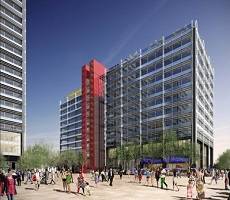
The Transport for London Building at The International Quarter Stratford 3 commercial propertyConstruction is to begin this summer on the first of a number of office buildings planned for the second stage of the International Quarter, a £2.1 billion mixed-use development in Stratford in East London. Transport for London (TfL) has signed a pre-let with Lend Lease and London and Continental Railways (LCR) to occupy all of the space in the 265,000 sq ft commercial property. An estimated 3,000 TfL workers will relocate to the International Quarter’s new offices and, once completed, an estimated 25,000 people will work at and visit the site each day. The developers claim they are in discussions with other tenants about moving to The International Quarter – which, at a total of four million square feet, will be one of the largest new commercial property developments in the capital.

(more…)

A responsible approach needed for the design and build of London’s towers

A responsible approach needed for the design and build of London’s towers 0

Developers must take a responsible approach to the design and build of London's towersThere are currently over 260 new towers either proposed, approved or under construction in Greater London, a 12 per cent increase on last year. There has been much debate and concern about the impact of the design and build of so many new towers on the capital and in particular the visual impact. The Skyline Campaign was launched last year with signatures from over 80 public figures hoping to halt the ‘destruction’ of London’s skyline. London is a busy city, on a small island with limited space. Towers allow us to create residential and commercial property using a minimal amount of land. However it is vital that new buildings that are tall enough to have a visual impact have the right design, are in the right place, and are built at the right time.

(more…)