Search Results for: information

Facilities managers should harness information to show the value of what they do

empty-toilet-rollOf the various myths that plague the facilities management profession, the most pernicious may well be that the role of facilities managers is largely to carry out what the early feminists called shit-work – the kind of job that only becomes visible when it is done badly or isn’t done at all. Conversely, when it is done well, nobody seems to notice or even care that much. The proto-feminists of the 50s and 60s applied the term to housework, but the term is equally apposite for the work of many facilities managers who may only come to the attention of their organisation when the air-conditioning stops working, the toilet floods or there is a problem with the car park.

(more…)

Building Information Modelling is unstoppable finds survey

BIMNearly three quarters (71 per cent) of building design and construction experts agree that BIM (Building Information Modelling) represents “the future of project information” and 39 per cent confirmed that they are already using it. But the annual industry-wide BIM survey, undertaken by NBS, reveals a lack of clarity around the subject which could prove an obstacle to its more rapid adoption. 74 per cent of those polled agreed that the industry is “not clear enough on what BIM is yet” and only around one-third claim to be “very” or “quite” confident in their BIM knowledge and skills.


(more…)

Information Commissioner warns on poor BYOD practice

Data theftThe Information Commissioner’s Office (ICO) has published new guidance on the practice of Bring Your Own Device (BYOD) following the findings of a YouGov poll  which reported that while nearly half of UK workers use  their own phones, tablets and other devices for work, under a third of have been offered any form of formal guidance by employers. The ICO warns that without a policy or guidance in place, staff run the risk of theft of their personal information and other data.  In addition, employers need to be reminded that the Data Protection Act is also relevant for personal technology used in a work context.

Registration opens for Workspace Design Show London 2027

Registration opens for Workspace Design Show London 2027

Registration has officially opened for Workspace Design Show London 2027, which returns to the Business Design Centre on 24–25 FebruaryRegistration has officially opened for Workspace Design Show London 2027, which returns to the Business Design Centre on 24–25 February, bringing together leading figures from architecture, design, real estate and workplace management to explore the future of the working environment. The two-day event will focus on the human experience of work, challenging conventional approaches to workplace design and examining how physical environments can better support the changing needs of organisations and their employees. Workplace Insight, Works and Sustainability Works magazine are once again media partners for the event, which will feature more than 140 speakers across four stages, alongside immersive installations, product launches and exhibitions from leading workplace furniture and design brands. (more…)

Two-thirds of UK businesses plan to increase workplace and employee investment in 2027

Two-thirds of UK businesses plan to increase workplace and employee investment in 2027

Almost two-thirds of UK finance chiefs expect their organisations to increase investment in 2027, with the workplace, employee wellbeing, recruitment and technology among the main prioritiesAlmost two-thirds of UK finance chiefs expect their organisations to increase investment in 2027, with the workplace, employee wellbeing, recruitment and technology among the main priorities, according to new research from financial management platform Pleo. The survey of 400 UK chief financial officers found that 65 percent anticipate an increase in overall business investment next year compared with 2026, while the same proportion are more optimistic about their organisation’s growth prospects. (more…)

Interface embraces colour, pattern, and dynamic transitions with pivotal moment carpet tile collection

Interface embraces colour, pattern, and dynamic transitions with pivotal moment carpet tile collection

Interface, Inc., the global flooring and sustainability leader, launches Pivotal Moments™, a new carpet tile collection inspired by Scandinavian geometric design principlesInterface, Inc., the global flooring and sustainability leader, launches Pivotal Moments™, a new carpet tile collection inspired by Scandinavian geometric design principles. Rooted in dynamic movement, expressive pattern, and coordinated colour, the collection gives designers more flexibility to shape how today’s commercial spaces transition, connect, and stand apart. One warm base colour holds the system together as the pattern gently builds from small-scale details to defining moments. Designed for high-traffic spaces, including corporate offices, hospitality environments, and education facilities, the collection explores both plush textures and soft geometrics for transitions that feel as calm or as bold as the space requires. As a coordinated carpet tile system, Pivotal Moments can be used to create full rug-like areas, quiet learning zones, or bold statement moments helping reduce cognitive load. (more…)

UK ranks fourth for youth AI readiness but skills gap threatens £95bn economic opportunity

UK ranks fourth for youth AI readiness but skills gap threatens £95bn economic opportunity

The UK has been ranked fourth among 56 Commonwealth countries for its readiness to help young people benefit from artificial intelligenceThe UK has been ranked fourth among 56 Commonwealth countries for its readiness to help young people benefit from artificial intelligence, although new research suggests that weaknesses in education and practical AI skills could limit its economic potential. The Ayre Index, launched at the Commonwealth Heads of Government Meeting in Antigua and Barbuda, gives the UK a score of 70.8 out of 100, placing it behind Singapore, Malta and Australia but ahead of Canada, New Zealand and India in addressing the skills gap. (more…)

Unity Place shows how a day in the office can be worth the commute

Unity Place shows how a day in the office can be worth the commute

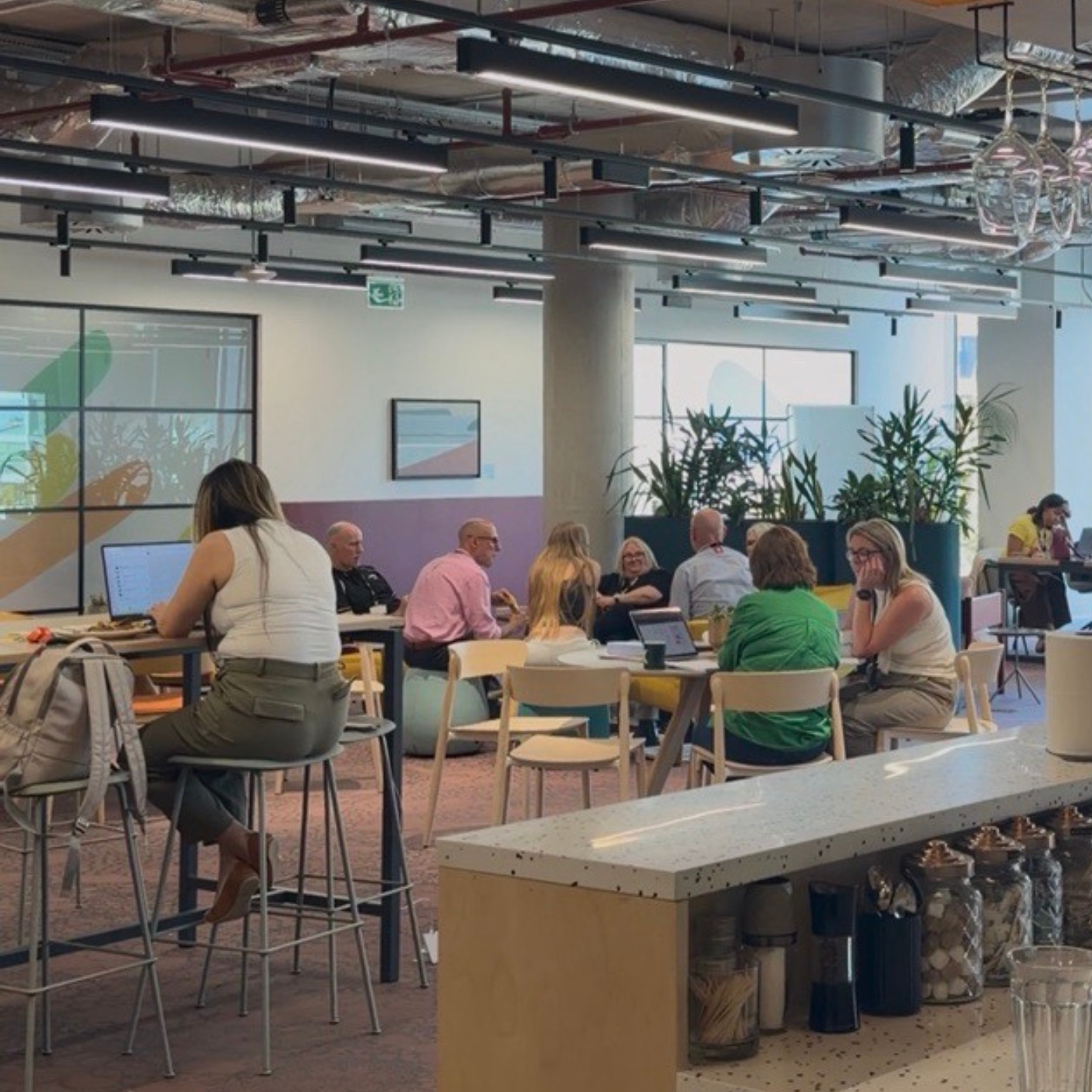
At Unity Place, the trend to split time between office and home is being seen across coworking, informal workspaces, meeting rooms and event spacesHybrid working may have changed how often people travel into the office, but businesses in Milton Keynes are becoming more intentional about what they want from face-to-face time. At Unity Place, the trend is being seen across coworking, informal workspaces, meeting rooms and event spaces, with people increasingly using in-person days for collaboration, team catch-ups, client meetings, networking and shared experiences rather than simply sitting at a desk. At x+why Unity Place (main image), there have been 868 meeting room bookings so far this year, with around 5,800 visitors year to date. The coworking provider has also seen regular repeat bookings from businesses that do not need a permanent office, but still want a flexible place to bring their teams together. (more…)

What AI activity counts leave out

What AI activity counts leave out

Two employees can use AI all day and be doing very different things. One dictates an email, checks the transcription and sends the words they intended to write. Another asks a system to choose a response to a customer complaint and accepts its recommendation. An activity report might call both employees frequent users. It tells us little about who did the thinking, who made the decision or what would happen if the output were wrong. (more…)

AI isn’t replacing meetings, it’s changing their purpose

AI isn’t replacing meetings, it’s changing their purpose

Throughout the years in the workplace technology industry, I’ve heard one common question among organization leaders: How can we have fewer meetings and how can we make the ones we do have more effective? When AI came along, many thought that it would be the solvent to this long-standing challenge. But it turns out, as individuals utilize AI to help them automate routine work, the need to collaborate with team members on the outputs has become more prominent. Rather than focusing on reducing the number of meetings, organizations should ask themselves: Are we designing the workplace with intentionality for meetings that are actually worth having? (more…)

Cognitive access is a workplace design issue

Cognitive access is a workplace design issue

Workplace inclusion is still too often organised around a private conversation between an individual and HR. Someone encounters a barrier, decides whether it is safe to disclose a condition, explains what is happening and waits for an adjustment. That process matters, but it should not carry the whole weight of inclusion. Many barriers described as personal needs are predictable features of work: continuous noise, back-to-back calls, unclear priorities, scattered instructions and unwritten rules. When these conditions are treated as fixed, individuals must negotiate around a design problem.

(more…)

How people move may offer clues to their mental health

How people move may offer clues to their mental health

The way people move may provide clues about their mental health and associated patterns of behaviour and symptomsThe way people move may provide clues about their mental health and associated patterns of behaviour and symptoms, according to new research that could ultimately have implications for how psychological wellbeing is understood and assessed. Researchers from Northwestern University in Illinois and other institutions examined the relationship between a range of movement characteristics and psychological symptoms, including anxiety, depression, mania, dissociation, substance use and psychosis. (more…)