







September 5, 2017
The United Workplace launches to support business workplace strategy on a global scale
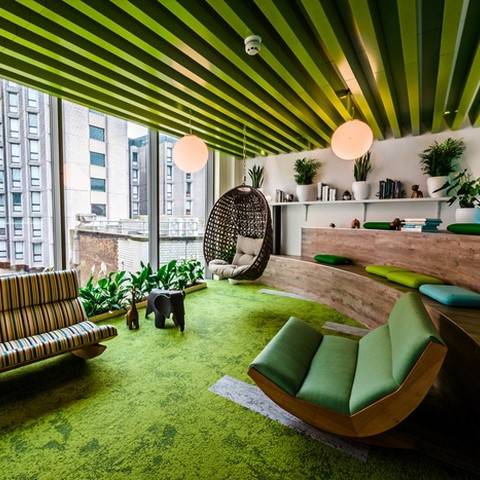 A global collaboration of workplace experts has been formed to assist companies in the development of their workplaces. Workplace specialists Fourfront Group and Amicus are the founding partners of The United Workplace (TUW), an organisation set up to share expertise and knowledge and deliver workplace design, fit-outs and commercial furniture consultancy and installation worldwide. The network comprises of Fourfront Group in the UK, Amicus which delivers workplace design and fit-out projects in Australia, Ware Malcomb an architectural practice in the US, and Summertown Interiors, a United Arab Emirates fit-out contractor.
 A new scheme to help the NHS cut the costs of empty space in their buildings has been launched this week by NHS Property Services (NHSPS). Properties that qualify for the scheme must be deemed surplus to NHS requirements and may be re-let, disposed of or considered as a development opportunity. The new Vacant Space Handback Scheme comes in response to feedback from commissioners who want to reduce the cost of maintaining space that is no longer needed for clinical services. The cost of maintaining vacant space is kept as low as possible, though some costs are unavoidable where rent, business rates and some service charges remain payable. The total amount and cost of maintaining vacant space in the NHS is difficult to calculate, but costs are estimated to be in excess of £10 million a year on the NHS Property Services estate.





 Commercial property occupiers remain cautious about the future, and hard data indicates that demand has, so far, been largely unaffected by Brexit, claims a new report from the British Council for Offices (BCO) . ‘Brexit and its Potential Impact on Office Demand’, examines how Brexit might impact on demand for office space on a national and regional basis through to 2022. According to the report, almost one year on from the Brexit vote the situation is one of uncertainty, feeding through to slower growth, with ‘an almost palpable sense that choppy waters lie ahead, particularly with regard to trade and movement of labour’. However, businesses continue to make long-term investments in the national economy and even in the City, some large investment banks have committed to large new office buildings. There is much variation in the relative performance of the UK’s major office centres, though, with some expanding and others apparently in decline.











August 23, 2017
I’ve got some real estate here in my bag
by Paul Carder • Comment, Flexible working, Property, Technology
We’ll marry our fortunes together.
I’ve got some real estate
Here in my bag.
So we bought a pack of cigarettes,
And Mrs. Wagner’s pies,
And walked off
To look for America.
“Kathy”, I said,
As we boarded a Greyhound in Pittsburgh,
Michigan seems like a dream to me now.
(more…)