Search Results for: discrimination

Wellbeing and flexibility are the keys to workplace success

Wellbeing and flexibility are the keys to workplace success

A new poll from BSI claims that employee health and employer flexibility are key elements to harness a future age-diverse workforce. Evolving Together: Flourishing in the age-diverse workforce considers how today’s business leaders think businesses and policymakers can respond to demographic changes to enable individuals to thrive and organizations to grow as greater numbers work beyond the age of 65. (more…)

Trust gap on AI in the workplace must be overcome if businesses are to get ahead

Trust gap on AI in the workplace must be overcome if businesses are to get ahead

With many AI firms increasingly pivoting towards developing specialised tools for easier integration into the workplace, it may come as a surprise that half of the companies Freeths recently surveyed have no plans at all to implement them, with only 15 percent reporting that investing in artificial intelligence tools for human resources was a strategic priority. (more…)

Government to scrap employment programme for disabled people

Government to scrap employment programme for disabled people

two people talking to illustrate the growing number of disabled people in self-employmentA £100 million program designed to help disabled people find work in England and Wales has been quietly cancelled, raising concerns as the government pursues plans to reduce disability benefits. The Work and Health Programme (WHP), launched in 2017, will cease operation this autumn. This news comes amidst Prime Minister Rishi Sunak’s proposed benefit cuts for 420,000 sick and disabled individuals, aiming to push them into employment. Charities warn these cuts could leave many in poverty. (more…)

The significance of women’s health is increasingly acknowledged in the modern workplace

The significance of women’s health is increasingly acknowledged in the modern workplace

addressing the disparities in women's health could dramatically reduce this statistic, enhancing the lives of billions globallyWomen, on average, outlive men but, as reported by the World Economic Forum (WEF, 2024), spend approximately 25 percent of their lives in poor health. According to the WEF, addressing the disparities in women’s health could dramatically reduce this statistic, enhancing the lives of billions globally. Notably, strategic improvements in women’s healthcare could add an average of seven days of healthy living per year for each woman, cumulatively offering more than 500 additional healthy days over a lifetime. This progression not only promises to elevate the quality of life for women but also holds the potential to boost the global economy by at least $1 trillion annually by 2040. (more…)

It’s vital employers understand the new EHRC guidelines on menopause 

It’s vital employers understand the new EHRC guidelines on menopause 

Having a sound understanding of both menopause and perimenopause in the workplace has therefore become vital for employersRecent guidelines issued by the Equality and Human Rights Commission (EHRC) aim to simplify employers’ legal obligations to support workers going through menopause. A growing topic of conversation in the workplace and beyond, menopause has become increasingly recognised in employment guidance. (more…)

A just in time lesson about office design

A just in time lesson about office design

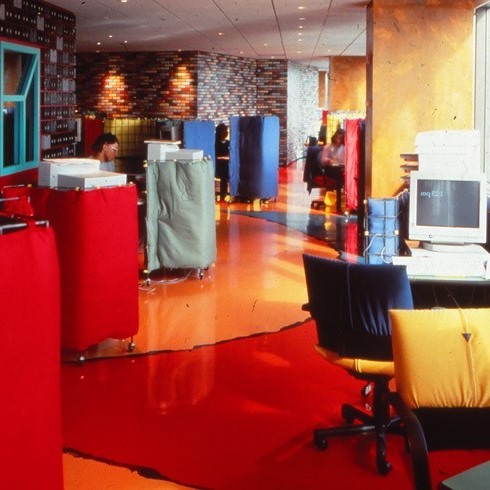
The nascent years of new ways of working in the late 80s and early 90s coincided with a widely held but soon to be discarded belief that the Japanese had cracked management practices. So it was perhaps inevitable that the principles of a process called just in time manufacturing – most famously applied in the factories of Toyota – should migrate to new forms of office design and the rapidly developing practice of flexible working.

(more…)

Moral posturing of charitable organisations can go hand in hand with unethical behaviours

Moral posturing of charitable organisations can go hand in hand with unethical behaviours

The aura of moral goodness coming from within charitable organisations can blind their employees and volunteers, according to new research from the Rotterdam School of Management, Erasmus University (RSM). Lead researcher, Dr Isabel de Bruin found that people in charities’ can glorify their charities’ noble goals, noble values, and noble people. This self-glorification can lead to unethical behaviour, which she terms as the “NGO halo effect”.  (more…)

Hybrid working helps women into senior management roles

Hybrid working helps women into senior management roles

The widespread adoption of hybrid working has opened the door for women to apply for senior positions within their companiesThe widespread adoption of hybrid working has opened the door for women to apply for senior positions within their companies, according to a new report released ahead of International Women’s Day. IWG’s 2024 report Advancing Equality: Women in the Hybrid Workplace, based on research among more than 1,000 female hybrid workers, found that flexible working had allowed over half (53 percent) to pursue promotions or apply for more senior roles  – which, in an encouraging move for advancing equality, rises to more than three in five (61 percent) of women from minority backgrounds. For almost three quarters (73 percent) of women in minority groups, flexible working has opened up new opportunities that they would not have had otherwise. (more…)

British workers don’t want people to think of them as ambitious

British workers don’t want people to think of them as ambitious

Ambition is a word now out of favour in the British workplace, according to Randstad’s latest global Workmonitor survey [registration] with workers in the UK less willing to describe themselves as ambitious than workers in other countries. The research, which surveyed 27,000 workers in 34 countries across Europe, Asia Pacific and the Americas, shows that while more than half (56 percent) of workers globally consider themselves to be ambitious, only 42 percent of workers in the UK do. Workers in other countries — including China (80 percent), Malaysia (73 percent), and India (90 percent) — are more likely to describe themselves as “having career ambition”. (more…)

One in ten working mothers quit jobs because of childcare pressures

One in ten working mothers quit jobs because of childcare pressures

The ongoing challenges that come with balancing childcare with work have forced over 249,124 working mothers of children aged 4 or under to leave their employerThe ongoing challenges that come from balancing childcare with work have forced over 249,124 working mothers of children aged 4 or under to leave their employer due to a lack of childcare support, according to new research. The new report from Totaljobs and the Fawcett Society, Paths to parenthood: Uplifting new mothers at work, claims to demonstrate the disproportionate impact childcare responsibilities have on women and their careers. (more…)

Report links economic growth with the idea of ‘good work’

Report links economic growth with the idea of ‘good work’

CIPD sets out core themes for skilled, fair and healthy good work that should underpin a new workforce strategy for the next UK GovernmentIn advance of the main party conferences, the CIPD is calling for the next UK Government to develop a long-term workforce strategy to underpin a broader, bolder vision for economic growth. This is a central message in its new ‘Manifesto for Good Work’ which outlines the public policy changes needed to address the UK’s multiple challenges, for all the main UK political parties. These challenges include stagnating productivity, rising skills shortages and our ageing working population. (more…)

Exploring the gender pay gap in Germany: a closer look at salary inequality

Exploring the gender pay gap in Germany: a closer look at salary inequality

This article explores the gender pay gap in Germany, investigating the underlying factors and possible remedies to tackle the problemIn Germany, just like in numerous other nations, the gender pay gap remains a subject of significant worry and discussion. The persistent issue of unequal pay between men and women, where women frequently earn less than their male colleagues for the same job, persists. This article seeks to explore the gender pay gap in Germany in more detail, investigating the underlying factors that contribute to this gap and considering possible remedies to tackle this problem. (more…)