Search Results for: employee satisfaction

Workplace conflict leads to poor mental and physical health

Workplace conflict leads to poor mental and physical health

People who experience workplace conflict have lower job satisfaction and are more likely to experience poorer mental and physical healthPeople who experience conflict in the workplace have lower job satisfaction and are more likely to experience poorer mental and physical health, according to the CIPD Good Work Index 2024. The CIPD’s latest report showed a quarter (25 percent) of UK employees – an estimated eight million people – have experienced workplace conflict in the past year. (more…)

People say hybrid working has reduced their risk of burnout

People say hybrid working has reduced their risk of burnout

new poll claims that the vast majority of workers who have shifted to a hybrid working model say that it has helped them to greatly reduce burnout in their working livesA new poll claims that the vast majority of workers who have shifted to a hybrid working model say that it has helped them to greatly reduce burnout in their working lives. The survey of more than 1,000 people, undertaken by hybrid working firm International Workplace Group, suggests that three quarters (75 percent) reported a dramatic reduction in burnout symptoms, defined as a syndrome resulting from chronic workplaces stress, since moving to a hybrid model. (more…)

A new generation of workplace apps is transforming people’s experience of work

A new generation of workplace apps is transforming people’s experience of work

These days, workplace apps promise a much more sophisticated experience, which can be accessed in the palm of your handDisseminating information about a building to the people who occupy it has come a long way from a basic, intranet desktop interface with warnings about wet floors or notices about charity fundraising. These days, workplace apps promise a much more sophisticated experience, which can be accessed in the palm of your hand. Gartner has a useful definition of workplace apps’ capabilities, stating, “They are used to explore and reserve workspaces, navigate the workplace, find colleagues, plan the best days to attend the workplace, access services and ensure that employees could feel safe in a future post pandemic workplace.” (more…)

Most people feel disengaged from their work, but managers can still make all the difference

Most people feel disengaged from their work, but managers can still make all the difference

The percentage of employees who feel an engagement with their work is at a record high. But, the majority of employees are still not engagedEmployee engagement worldwide has remained steady according to  the latest edition of Gallup’s State of the Global Workplace report. The good news, according to the authors, is that the percentage of engaged employees – those enthusiastic about their work – held at a record high of 23 percent from 2022. However, the bad news is that the majority of employees are still not engaged (62 percent) and just show up to do the minimum, while a significant number (15 percent) are actively disengaged, meaning they dislike their jobs and managers and are looking to leave. (more…)

Workplace conflict makes daily life a misery for millions. But there is hope

Workplace conflict makes daily life a misery for millions. But there is hope

People who experience conflict in the workplace have lower job satisfaction and are more likely to experience poorer mental and physical health, according to the CIPD Good Work Index 2024.People who experience conflict in the workplace have lower job satisfaction and are more likely to experience poorer mental and physical health, according to the CIPD Good Work Index 2024. The CIPD’s latest report showed a quarter (25 percent) of UK employees – an estimated eight million people – have experienced workplace conflict in the past year. Among those who reported at least one form of conflict, the most common forms were: being undermined or humiliated at work (48 percent), being shouted at or having a heated argument (35 percent), verbal abuse or insult (34 percent) or discriminatory behaviour (20 percent). (more…)

As sickness absence rises, firms indulge in ‘wellbeing washing’

As sickness absence rises, firms indulge in ‘wellbeing washing’

A new survey claims to reveals a potential gap between perception and reality when it comes to wellbeing initiatives, which the report labels 'wellbeing washing'A new survey commissioned by law firm Winckworth Sherwood suggests there has been a shift in workplace culture, with a majority of both employers (86 percent) and employees (69 percent) agreeing it’s more acceptable to take time off for illness, especially mental health issues. However, the survey also reveals a potential gap between perception and reality, which the report labels ‘wellbeing washing’. While employers say improved productivity is the main reason they offer wellness programs, some employees may be sceptical. The survey claims that only half of employers actually offer practices considered most effective for mental health, such as fair pay (51 percent), flexible work options (49 percent), and what the study calls “good work” (55 percent), which likely refers to manageable workloads and positive work environments. (more…)

Four simple ways to embrace neurodiversity in the workplace

Four simple ways to embrace neurodiversity in the workplace

Around a fifth of people have some form of neurodiversity, so it's essential that the workplace is as welcoming as possible It is thought that up to 20 percent of the UK population is neurodivergent and while many companies now are more educated on the need for diversity, many still have some way to go to adapt their workplaces both culturally and physically to ensure these individuals feel they are truly supported, valued, respected and able to the excel in their role. Sadly, a recent study by Birkbeck found that 65 percent of employees with a form of neurodiversity fear discrimination at work, despite companies increasingly recognising the need for inclusivity. (more…)

We need a cultural revolution in the way we talk about women’s health

We need a cultural revolution in the way we talk about women’s health

Recent advancements in workplace inclusivity, focused on flexible working arrangements, parental leave, neurodiversity, and gender equality, have set the stage for the next significant corporate challenge: improving attitudes towards women’s health in the workplaceRecent advancements in workplace inclusivity, focused on flexible working arrangements, parental leave, neurodiversity, and gender equality, have set the stage for the next significant corporate challenge: improving attitudes towards women’s health in the workplace. Human Resources leaders are pivotal in driving this necessary cultural shift. Consider the fact that about three-quarters of people, regardless of gender, believe menopause could impact career progression into senior roles. And that almost a quarter of women in tech experiencing menopausal symptoms have delayed or cancelled promotion plans. Clearly there’s some work to do here. (more…)

Wellworking recognised as one of the UK’s Best Places to Work

Wellworking recognised as one of the UK’s Best Places to Work

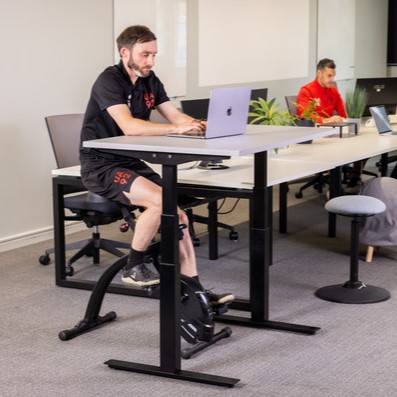
Wellworking, an award-winning UK supplier of home and office furniture and specialist in workplace wellbeing, has been recognised as one of The Sunday Times Best Places to Work 2024. This prestigious nationwide workplace survey celebrates Britain’s top employers, and highlights where employee happiness and wellbeing is prioritised. (more…)

Hybrid working era means a boom time for workplace apps

Hybrid working era means a boom time for workplace apps

A new generation of workplace apps, coupled with a choice of settings, help people tailor their days and their experiencesDisseminating information about a building to the people who occupy it has come a long way from a basic, intranet desktop interface with warnings about wet floors or notices about charity fundraising. These days apps promise a much more sophisticated workplace experience, which can be accessed in the palm of your hand. Gartner has a useful definition of workplace apps’ capabilities, stating, “They are used to explore and reserve workspaces, navigate the workplace, find colleagues, plan the best days to attend the workplace, access services and ensure that employees could feel safe in a future post pandemic workplace.” (more…)

Stress, anxiety and a beamish response to it all

Stress, anxiety and a beamish response to it all

Stress, uncertainty and the medicalisation of dissatisfactionWe now have a policy of not offering ourselves as an outlet for any of the deluge of comment pieces and surveys that are published each year to accompany the various days – and increasingly weeks and months – dedicated to certain conditions like stress and anxiety. They are a gift both to and from the PR industry. This is largely because we cover such issues year round so don’t feel the need to add to the PR feeding frenzy they generate. Whatever you make of the findings of the reports and others like them, even cynics would have to acknowledge they tap into an unmistakable feeling that work is not as enjoyable as it should be. (more…)

AI is not coming for your job. But it will make it better

AI is not coming for your job. But it will make it better

Barry Murphy, Vice President GTM - Cloud, Applications & Infrastructure, Unisys, explains how business leaders can reassure workforces that AI will enhance their jobs, not replace them. “Artificial intelligence will outsmart humans, resolve all IT and business problems, and humans will not be needed in the workforce!” These are some of the most common misconceptions that too many companies and workforces currently have around AI and automation. To date, workforces have been inclined to broach AI with apprehension due to concerns that it will negatively affect or eliminate their jobs. Conversations have skewed towards the technology as a disruptive force, here to steal jobs and ultimately leave people redundant. A study found that 60 percent of workers are concerned about job loss in regards to working with Gen AI. Additionally, a further third worried that,  despite AI being unable to completely  replace them, it could make them less useful in the workplace. (more…)