







May 18, 2018
Office take-up in London at highest point in last 12 months, boosted by pre-let activity
 Central London commercial offices under offers are at the highest point in the last 12 months and take-up is ahead of 2017 levels compared with this point last year, new data from CBRE has shown. Central London office take-up for April 2018 stood at 547,900 sq ft, largely driven by pre-letting activity. Office take-up for the year to the end April 2018 was 4 percent higher than the corresponding period in 2017, standing at 3.4m sq ft. Take-up was boosted by 139,600 sq ft of pre-letting activity. Over the last 12 months, the business services sector has represented the largest proportion of take-up at 32 percent, driven by a large number of deals to flexible office providers. Take-up in April was dominated by the creative industries sector, accounting for 44 percent of take-up. The banking and finance sector (26 percent) and the business services sector (21 percent) also represented notable proportions of take-up in April.



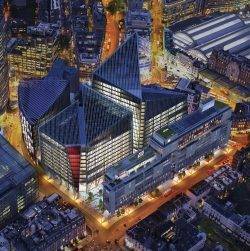 Take up of commercial office leases in London’s West End had its strongest start to the year since 2012, with the banking and finance sector continuing to actively seek space, new figures from CBRE have revealed. The amount of office space under offer on in Central London at the end of Q1 2018 stood at 3.2m sq ft, representing an increase of 6 percent on the previous quarter and showing a 3 percent increase on the same point last year. Take-up in Central London reached 2.8m sq ft in Q1 2018, with its largest deal boasting a 65,900 sq ft letting to WS Atkins at Nova North in Victoria. Availability in Central London increased by 7 percent to 14.3m sq ft but that is still below the total 12 months ago. A total of 1.1m sq ft of development and refurbishment space completed in Q1. A further 2.3m sq ft is expected to complete before the end of the year, of which 54 percent has already been committed to be leased. By the end of the quarter, 9.1m sq ft was being actively sought by occupiers, primarily from the banking and finance sector (26 percent) and creative industries sector (24 percent).




 Corporate real estate departments need to become more effective partners in the agile transformation of their broader organizations., claims a new survey conducted by CBRE, in partnership with CoreNet Global. When describing Portfolio Agility, i.e. the ability to rapidly adapt, scale and reposition the organization’s real estate portfolio to support shifting enterprise needs, 67 percent consider portfolio agility as the most important type of agility for business success, yet only 14 percent consider themselves highly agile in this area. The most prevalent portfolio agility practices included negotiating flexible space options in the lease, seeking shorter and/or more flexible lease terms, supporting an enterprise-wide flex-work program and delivering free address work environments. The report states that new workplace guidelines for efficiency have altered the way companies plan for density and more occupiers are incorporating third-party ‘agile space’ into their overall real estate strategy.
 A new report a new report by the Centre for Ageing Better has called for government and employers to support older workers to stay in work for longer, help those who have fallen out of work involuntarily to return and to create workplaces that work for all, irrespective of age. The report claims that ensuring older workers are able to stay in good quality employment is essential to the future of the UK economy and will relieve pressure on public finances. It makes some key recommendations that include access to flexible working hours and workplace adaptations to help people manage pressures such as caring responsibilities and health conditions, which become more prevalent with age. It also calls for equality of opportunities in the workplace as older workers in the UK experience age discrimination in recruitment and progression. They are less likely to be offered opportunities for development – across the whole of the OECD only Turkey and Slovenia have lower levels of on-the-job training for older workers than the UK. Research shows they are also the most likely to be stuck on low pay and feel most insecure about their jobs.
 There have been 18 months of faltering net effective rents within the commercial office market in the Capital since the Brexit referendum, with ten of the 18 Central London office submarkets monitored in Cluttons’ latest London Office Market Outlook report registering rent falls in the final quarter of 2017, buoyed by additional incentives such as contributions to fit out costs and even delayed completions becoming commonplace in many locations. The report also raises concerns about the potential for an oversupply of serviced offices within the Capital. However, despite this and a perception that Central London offices are currently fully prices or possibly over-priced, by both occupiers and domestic investors, London remains a resilient city, continuing to attract high volumes of overseas capital. Employment growth is of course expected to be influenced by both the levels of GDP growth during 2018 and the Brexit divorce proceedings, which in turn will affect rental values. But says the report, aside from concerns over Brexit, there is no evidence from recruitment agencies to suggest a current, or planned exodus of finance and banking professionals from the City.









June 4, 2018
Your happiness at work is not just down to your employer
by Cary Cooper and Ivan Robertson • Comment, Wellbeing, Workplace design
(more…)